
This site uses cookies. By continuing to browse the site you are agreeing to our use of cookies. For more information, See our Privacy and Cookie Policy.

This function is disables on your cookie management.
To activate it, click on the link "Edit cookie settings" in the upper
right corner of this page.
We use cookies to offer you a convenient web browsing experience, to suggest personalized ads for you, and to keep improving functions through traffic analysis.
By clicking on ‘ACCEPT ALL’, you consent to our use of cookies. Click ‘Cookie Settings’ to choose whether to accept or disable certain cookies. To find out more, please read our Privacy Policy. | Cookie Settings
-
- Functional Cookies
-
These cookies are used to provide you with convenient functions, such as product reviews and product video playback, during your web browsing.
-
- Analytics Cookies
-
These cookies allows our website to keep improving functions through website traffic analysis and to suggest personalized content for you.
-
- Advertising Cookies
-
These cookies enable us to show you ads and other content that we think is most attuned to your interests and digital behavior.
This function is disables on your cookie management.
To activate it, click on the link "Edit cookie settings" in the upper
right corner of this page.


Part 12. Heart of future Mobility delivered by LG Electronics, IoB
by Soonin Chung Professional Researcher, Vehicle component Solutions Company, LG Electronics
-
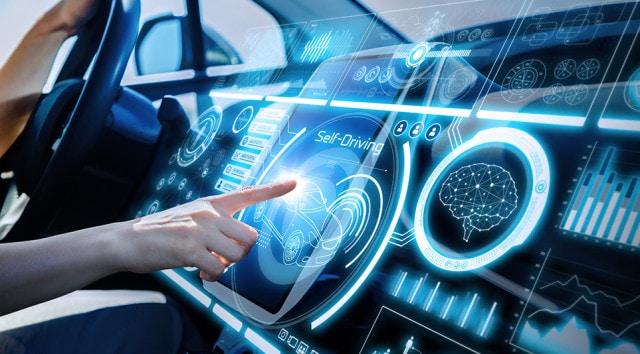
We often come across this word, IoT (Internet of Things), in different media. IoT means various devices such as TVs, refrigerators, and air conditioners being connected to the internet, sending and receiving data. Now it is evolving from the relationship between things to IoB (Internet of Behaviors) which focus on human behaviors.
-
IoB refers to human behaviors connected to the internet. It means to capture, analyze, understand, and monetize people's behaviors through the internet. IoB is also closely connected to the automotive industry. Let's look at four examples that show the kind of behaviors that future automobiles would collect and use through IoB technologies.
-
1. Driver's Driving Tendency
-
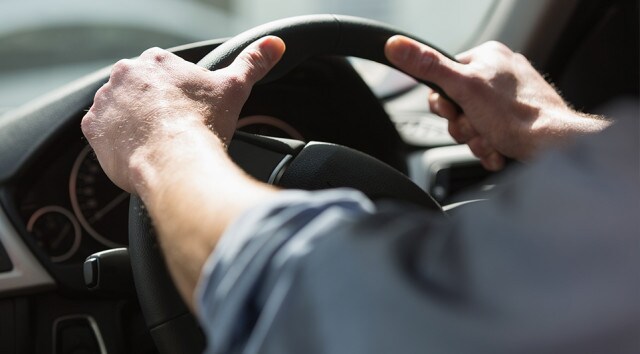
Do you remember "Telematics" mentioned in the previous article? It is a vehicle information communication technology that connects a vehicle to the network. A variety of information can be collected with Telematics, such as driver's driving habits or preferred driving patterns. This kind of behavioral data can be combined with different personal data about the driver including age, sex, and driving history to create a new kind of data.
(Refer to: Heart of Future Mobility Delivered by LG Electronics #11 Telematics)
Using this data, it is possible to divide customers into groups to analyze them. Different types of analyses can be done: what feature is mostly used by men in their twenties during weekends? Do women in their thirties have certain driving patterns on days with certain weather? We can improve our vehicles' performances, remedy any shortcomings, and produce vehicles that would suit our customers' taste based on this information.
-
2. Driver Face Recognition and Gesture Control
-
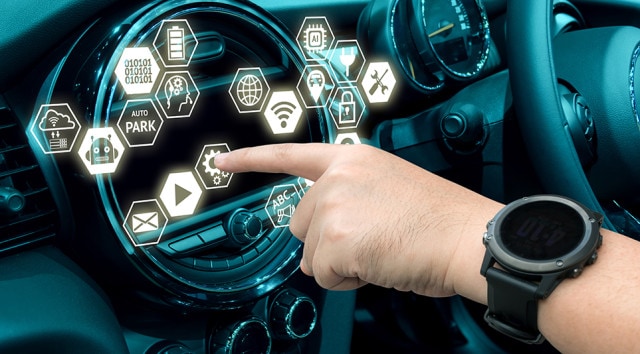
"Touchless" technologies will be used in future mobility, as automotive features will be controlled by the driver's face or gestures. A vehicle would recognize the driver's biometric information or gestures via cameras installed in the vehicle to start the engine, increase the audio volume, or make a call.
(Refer to: Heart of Future Mobility Delivered by LG Electronics #8 Touchless)
To make this happen, we need data for different gestures. There's the hand gestures people make and angles of the fingers when they want to make a call, the swiping gesture to go to the next page of a navigation, and the general position of the pupils that are checked during facial recognition. All of this can be part of the behavioral data. The more such data is accumulated, the more accurate the result will be. All this contributes to a convenient driving experience.
-
3. Driver's Voices
-
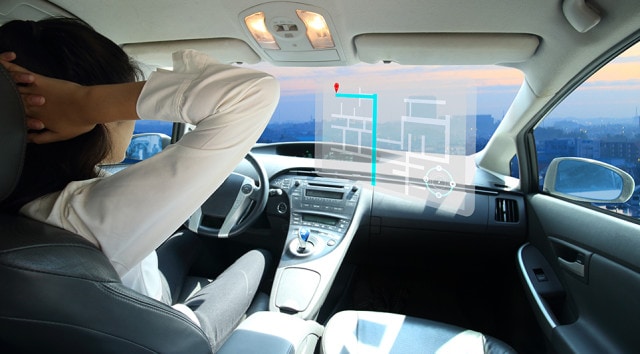
If a vehicle can be controlled by voice, it'd free both of the driver's hands and enable more convenient driving. For this reason, many automobile manufacturers provide a variety of in-vehicle convenience features controlled by voice. "Is it going to rain tomorrow?" "Would it be quicker to take the expressway now?" "Where's the closest cafe?" A vehicle can recognize the driver's questions and provide various answers such as weather or directions.
Such voice data is collected via audio devices within vehicle. This data can then be evolved into an advanced intelligent dialog service. It means the vehicle won't take human words at just their literal meaning, but understand the context and intentions behind them. For instance, if a passenger says "It's too hot," then an AI speaker might answer "Would you like to open the window?" or automatically start circulating outside air. This is why voice data is an important resource for auto manufacturers who want to build better driving and in-car experience.
-
4. Behaviors of Other Vehicles and Non-Drivers
-
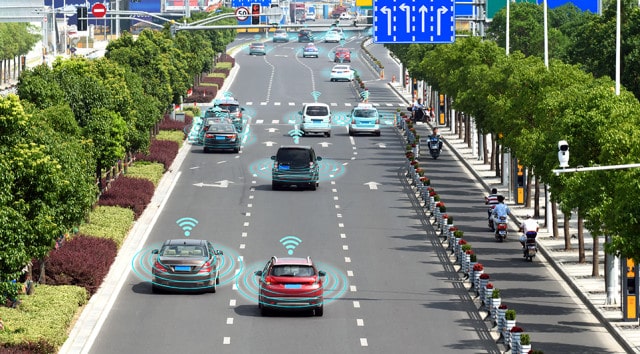
Different circumstantial data outside the vehicle as well as inside is collected for future mobility. A variety of information is taken and checked, such as speed, direction, or the particularities of other vehicles passing your own. The behaviors of pedestrians as well as other vehicles must also be monitored. Various behaviors are collected and recognized, such as a person who suddenly jumps into the road, or someone who is expected to pass in front of the car in a few moments.
This information is even more useful when designing autonomous driving vehicles. That's because the vehicle must be able to make decisions such as when to brake, to when accelerate, which direction to move toward, etc. By collecting external data like this, IoB technology is put to good use to make future mobility come true.
-
IoB Utilized in Other Industries
-
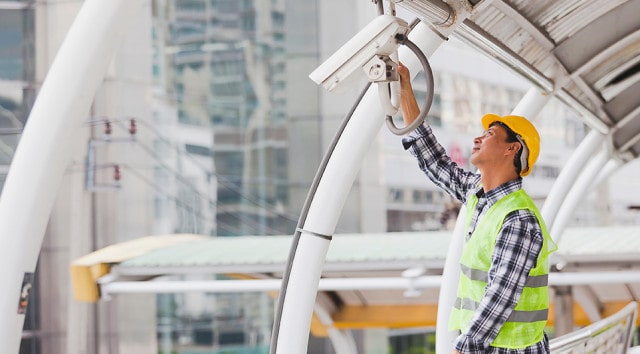
IoB can be used in not just the automobile industry, but also in various different areas. At an industrial site where safety is very important, cameras can check if the employees are wearing safety helmets and let their supervisor know without the supervisor checking them one by one.

-
In the area of disease control, a variety of sensors for temperature, color, or sound attached to a sink may automatically check to see if employees working in a certain building are regularly washing their hands.

-
An AI interviewer can objectively identify interviewees' dispositions and personalities through voice recognition, face recognition, or thermal detection at a contactless interview. This can minimize a human interviewer's subjective judgments by using objective behavioral data as judgment criteria.

-
Auto insurance companies may measure their subscribers' average driving patterns, vehicle speed, driving distance, driving time, etc., analyze driving habits, assess how safely they are driving, and use it to calculate the insurance premiums.
-
IoB's Roles in Future Mobility Industry
-
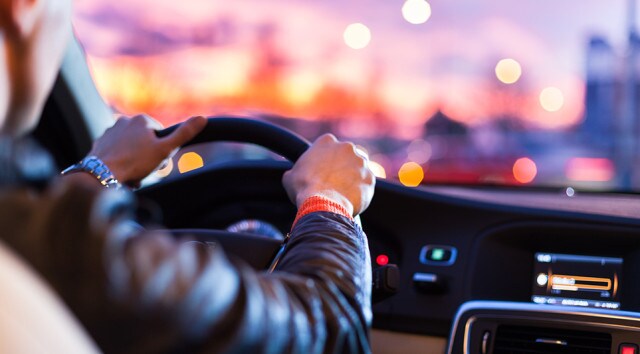
Software will be very important because it will be responsible for realizing more than half of the potential of future mobility. A driver's driving experience will not be dependent on their car's brand. Instead, they'll be able to set up their own driving experience by selecting and adjusting different options.
Therefore, the drivers' IoB data is a core element for making better driving software. Drivers' behavioral data is collected, analyzed, and understood to be used to produce better hardware, software, or services for automobiles. IoB is also going to change the behaviors of drivers, customers, and people around you and create new lifestyle changes.
-
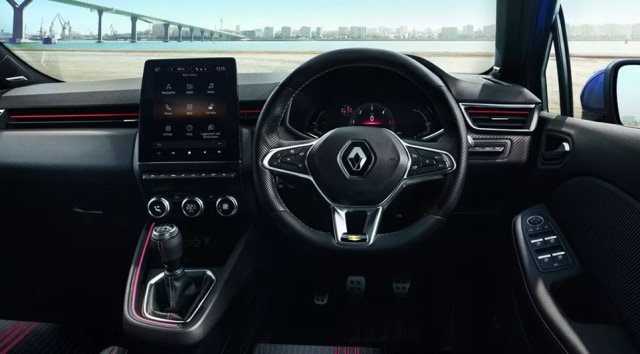
To keep up with these trends, LG Electronics' Vehicle Components Solution division is developing different automobile components such as infotainment, CID, Telematics, wireless charging module for vehicles, etc., based on various technologies including facial recognition, voice recognition, and gesture control. LG Electronics's continues to endeavor toward realizing a new mobility experience that will change and develop people's lifestyles.


