


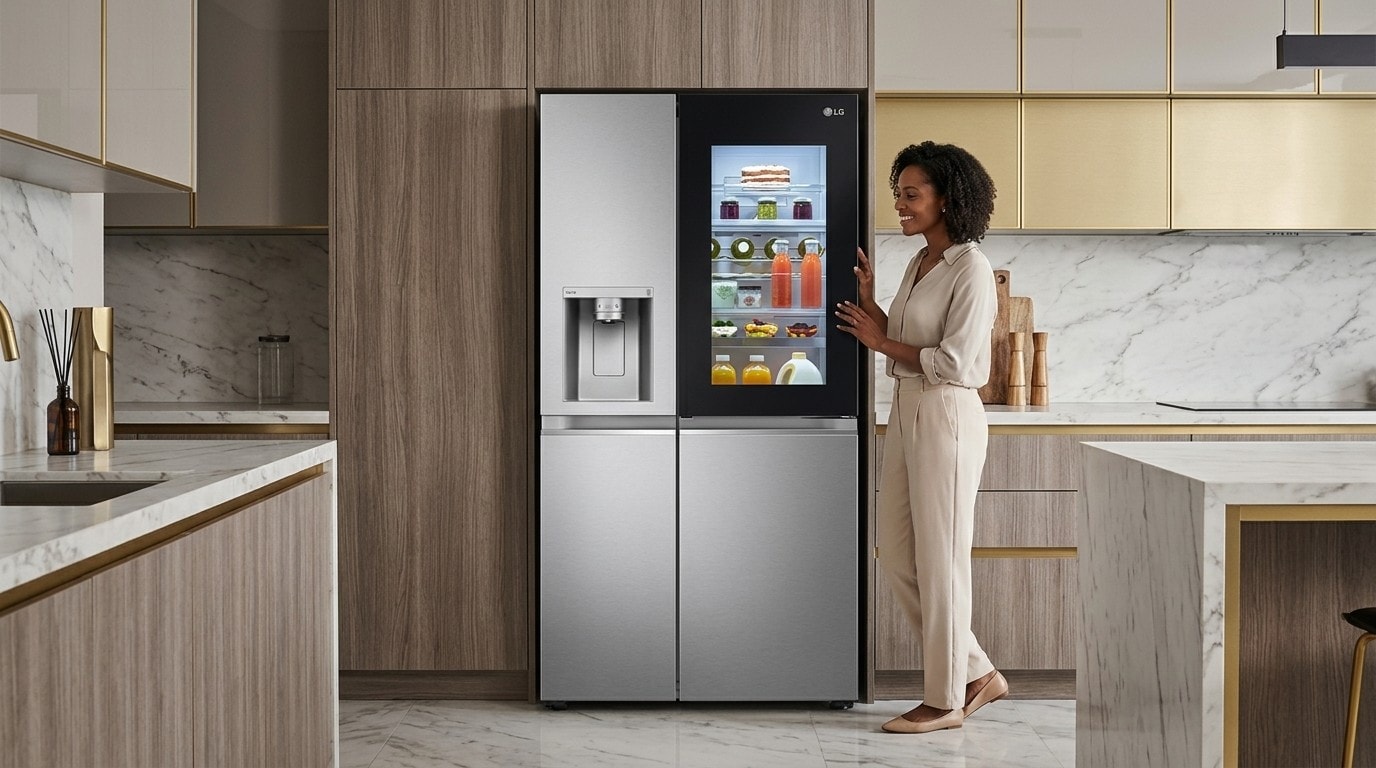
What Is the Ideal Refrigerator Temperature? Tips to Keep Your Food Fresh
-
Keeping the correct refrigerator temperature is essential to ensure food safety and extend the shelf life of your food. A properly adjusted fridge protects your family, prevents waste, and enhances the performance of innovative features in LG models, such as NatureFRESH™ and the Door-in-Door™ system.
-
What Is Refrigerator Temperature and Why Does It Matter?
Refrigerator temperature refers to the internal temperature maintained by the fridge in its main compartment, usually measured in degrees Celsius. This regulation is vital to inhibit the growth of micro-organisms and preserve the texture and flavor of food. Data from the Ministry of Health indicates that temperatures above 4 °C increase the risk of bacterial proliferation, while values below 1 °C can harm fruits and vegetables that are sensitive to cold.
-
How to Set the Ideal Refrigerator Temperature?
The recommended range for refrigerator temperature is between 1 °C and 4 °C for the fridge compartment. This temperature preserves meat, dairy, and vegetables without freezing sensitive items.
In addition, NatureFRESH™ technology uses smart sensors to monitor refrigerator temperature in real time, ensuring stability even after frequent door openings.
• 1 °C to 2 °C: ideal for meats and cold cuts
• 3 °C to 4 °C: suitable for dairy, fruit, and vegetables
• Freezer temperature: keep at -18 °C to freeze without excessive crystal formation
Models with digital control make precise adjustment easy, while the ThinQ app allows remote monitoring.
-
What Precautions Should You Take Before Adjusting the Temperature?
A few simple measures ensure that the refrigerator temperature is correctly maintained and distributed. Make sure your fridge is level and positioned away from heat sources. Leave space between food items for cold air circulation and avoid overloading the shelves, as this hinders even cooling.
• Check if the appliance is installed in a well-ventilated area
• Wait 2 hours after switching on the fridge before stocking it
• Use a thermometer to check the refrigerator temperature in different areas
-
How to Adjust the Refrigerator Temperature Step by Step
Adjusting the refrigerator temperature is a quick and safe process, especially in models with a digital panel or ThinQ™ connectivity. Follow these steps to ensure accuracy and efficiency:
1. Locate the control panel or internal temperature selector
2. Press the adjustment button until you reach the range between 1 °C and 4 °C
3. Wait 24 hours for the fridge to stabilize at the new setting
4. Check with a thermometer to ensure the refrigerator temperature is even
5. In ThinQ models, use the app for remote adjustments and automatic alerts
Avoid opening the door repeatedly during the stabilization process to ensure accuracy in the refrigerator temperature.
-
How to Solve Common Refrigerator Temperature Problems?
Fluctuations in refrigerator temperature can cause bad smells, spoiled food or even unwanted freezing. Energy efficiency studies show that keeping the temperature between 1°C and 4°C is essential to preserve food quality and avoid waste.
• Check if the door seals are intact and clean
• Avoid placing food against the back wall, where the cold is more intense
• Do not overload the shelves, as this impairs air circulation
• If abnormal noise is detected, check if the fridge is level
• In models with NatureFRESH™, the multiple air outlet system ensures even distribution, minimizing thermal variation points; tests carried out confirms greater temperature uniformity in these models
-
How to Extend the Lifespan of Your Fridge?
Regular care with refrigerator temperature and correct use of the appliance increase its durability and reduce energy consumption. Clean the shelves regularly, keep the condenser free from dust, and use technologies such as Inverter Direct Drive, which reduces energy consumption by up to 32% compared to conventional compressors.
• Defrost the freezer when there is ice build-up
• Avoid placing hot food directly in the fridge
• Carry out annual preventive maintenance with authorized professionals
Refrigerators with NatureFRESH and Door-in-Door also minimize thermal losses, ensuring stable refrigerator temperature and prolonged freshness.
-
What Expert Tips Help with Refrigerator Temperature?
Experts recommend monitoring refrigerator temperature weekly, especially during periods of intense heat. Use intermediate shelves for more sensitive foods and take advantage of solutions such as the Multi Air Flow air circulation system, which distributes cold throughout the compartment.
• Keep bottles and containers closed to avoid sudden temperature changes
• Do not block internal air outlets
• For long trips, set the refrigerator temperature to the minimum recommended range
Discover models with NatureFRESH™ technology and find out how to enhance the preservation of your food.
-
Looking to enjoy more value on your next LG purchase?
Explore the exciting promotions, exclusive offers, and rewards currently available on selected products.
View Current Promotions
FAQ
-
Q.
What is the ideal refrigerator temperature for preserving food?
-
A.The ideal refrigerator temperature is between 1 °C and 4 °C. This range prevents the proliferation of bacteria and keeps food fresh for longer, as indicated by health authorities and manufacturers.
-
Q.
How do I adjust the refrigerator temperature in LG fridges?
-
A.To adjust the refrigerator temperature in LG fridges, use the digital panel or the internal selector. Models with ThinQ allow adjustment via the app, making precise control easier without opening the door.
-
Q.
Why does my fridge make noise after adjusting the temperature?
-
A.Some noises are normal after adjusting the refrigerator temperature, as the compressor works to stabilize the cooling. Excessive noise may indicate the appliance is unlevelled or overloaded.
-
Q.
Food is freezing at the bottom of the fridge. What should I do?
-
A.If food freezes at the bottom, the refrigerator temperature may be below the ideal or internal circulation is blocked. Organize the food and set the thermostat to 3 °C or 4 °C.
-
Q.
How do I know if the refrigerator temperature is correct?
-
A.Use a thermometer designed for fridges and place it in the center. The reading should remain between 1 °C and 4 °C. Models with a digital display show the exact refrigerator temperature.
-
Q.
Can I trust the fridge's internal thermometer?
-
A.The internal thermometer in LG models is quite accurate, but for maximum safety, it is recommended to periodically check with an independent thermometer in different areas inside.