


How do I choose the right air conditioner?
Choosing the right air conditioner involves more than simply comparing specifications. Selecting a product that does not match your environment or cooling needs may result in higher electricity bills, uneven cooling performance, or poor energy efficiency.
A capacity that is too small may result in weak cooling and continuous operation, while a unit that is too large may cool the room too quickly before dehumidification is complete, leading to reduced efficiency and a cool but humid indoor environment.
Explore the key considerations that can help you choose an air conditioner designed for your space, environment, and everyday needs.
In this guide, you'll learn:
• How space size and room conditions affect cooling needs
• How usage patterns, climate and weather conditions impact cooling requirements
• How to compare different air conditioner types
• How to find features and solutions that fit your lifestyle
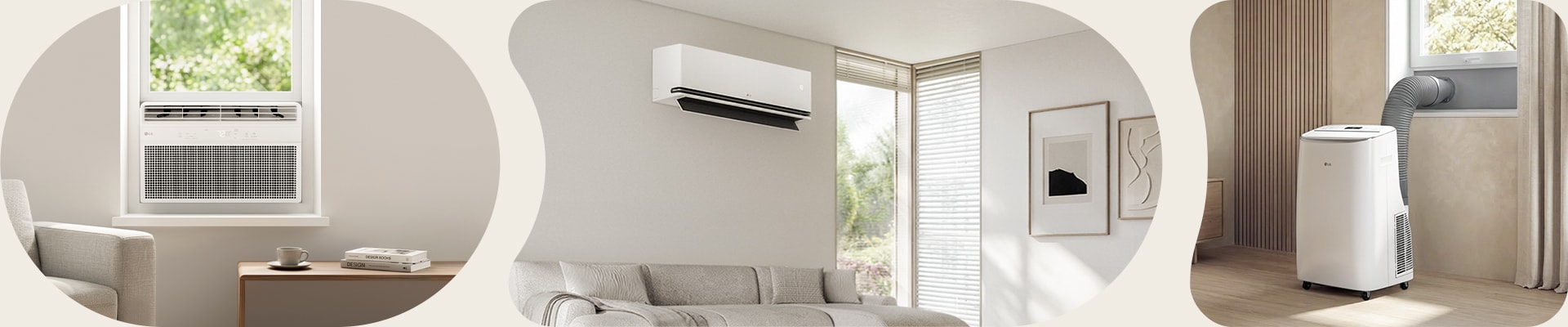
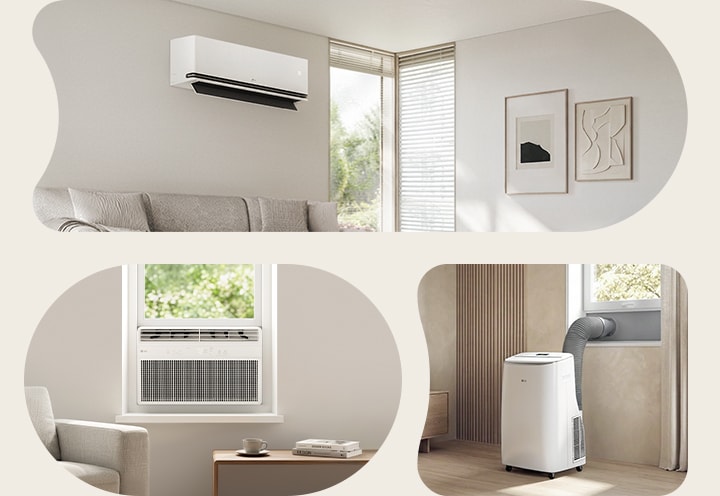
What affects air conditioner capacity?
How much cooling capacity do I need?
Air conditioner capacity is commonly expressed using units such as BTU (British Thermal Unit), kW (kilowatt), or HP (horsepower). While the units may differ by market or product category, they all indicate the cooling capacity of an air conditioner—how much heat it can remove from a space over a given period of time.
※ 1 kW ≒ 3,412 Btu/h ≒ 0.379 HP*
In general, higher capacity ratings are designed to handle larger cooling demands. Actual BTU, kW, and HP ratings may vary depending on the manufacturer, product model, and market. Please refer to the product specifications for accurate information.
*HP conversion standards may vary by country.
Room size is the starting point
The size of the space you want to cool is the most practical starting point when selecting an air conditioner. As room size increases, a higher cooling capacity is generally required to maintain comfortable indoor temperatures.
The following table provides a general guideline based on widely recognized standards, including those from the U.S. Department of Energy (DOE) and ENERGY STAR, which outline typical cooling capacity ranges according to room size.
Once you have identified a suitable capacity range based on room size, you can refine your selection by considering other factors that influence cooling demand.
| Area to be cooled (m²) | 9–14 m² |
|---|---|
| Capacity needed (BTUs per hour) | 5,000 |
| Area to be cooled (m²) | 14–23 m² |
| Capacity needed (BTUs per hour) | 6,000 |
| Area to be cooled (m²) | 23–28 m² |
| Capacity needed (BTUs per hour) | 7,000 |
| Area to be cooled (m²) | 28–33 m² |
| Capacity needed (BTUs per hour) | 8,000 |
| Area to be cooled (m²) | 33–37 m² |
| Capacity needed (BTUs per hour) | 9,000 |
| Area to be cooled (m²) | 37–42 m² |
| Capacity needed (BTUs per hour) | 10,000 |
| Area to be cooled (m²) | 42–51 m² |
| Capacity needed (BTUs per hour) | 12,000 |
| Area to be cooled (m²) | 51-65 m² |
| Capacity needed (BTUs per hour) | 14,000 |
| Area to be cooled (m²) | 65-93 m² |
| Capacity needed (BTUs per hour) | 18,000 |
| Area to be cooled (m²) | 93-111 m² |
| Capacity needed (BTUs per hour) | 21,000 |
| Area to be cooled (m²) | 111-130 m² |
| Capacity needed (BTUs per hour) | 21,000 |
| Area to be cooled (m²) | 130-139 m² |
| Capacity needed (BTUs per hour) | 24,000 |
Capacity is about more than room size
Selecting the right capacity involves more than matching a product to the size of a room. Industry guidance from organizations such as DOE recognizes that cooling requirements are influenced by a combination of factors that affect the heat load within a space. Room size provides a useful starting point, but it should be considered alongside the characteristics of the environment and how the space is used.
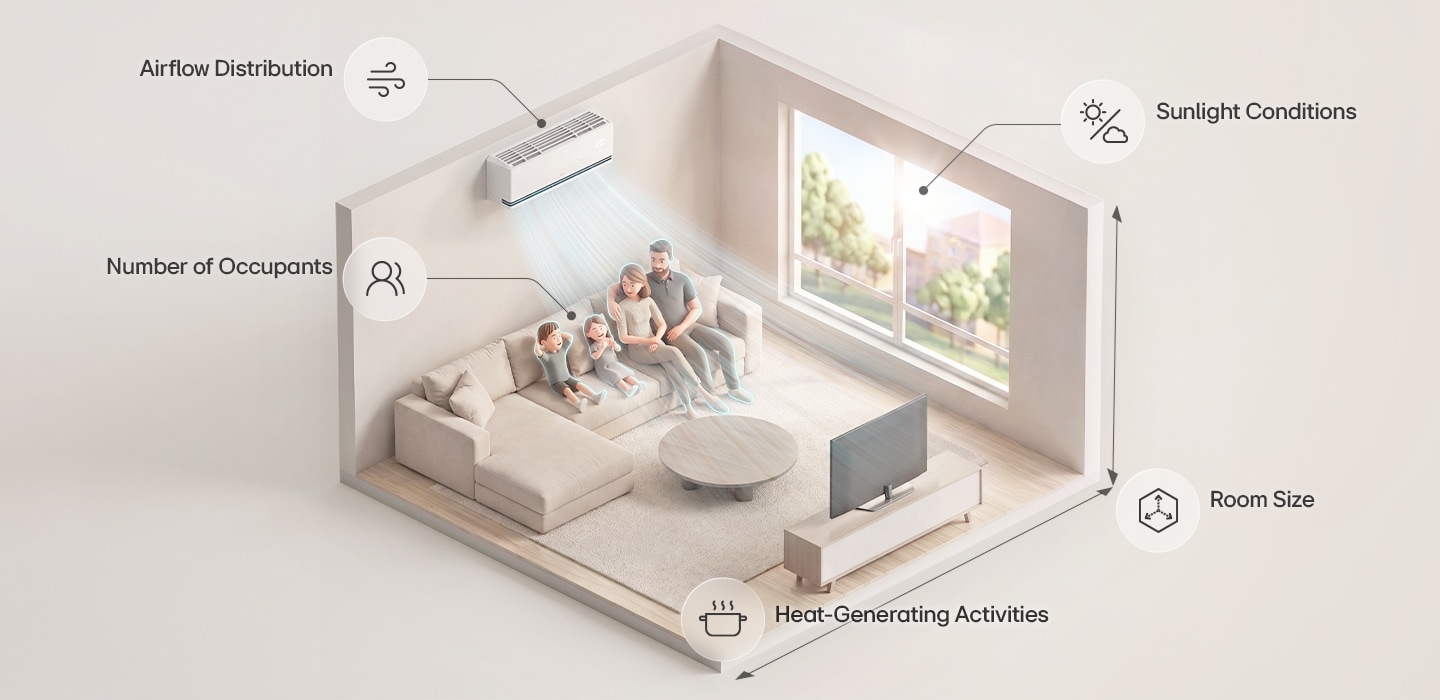
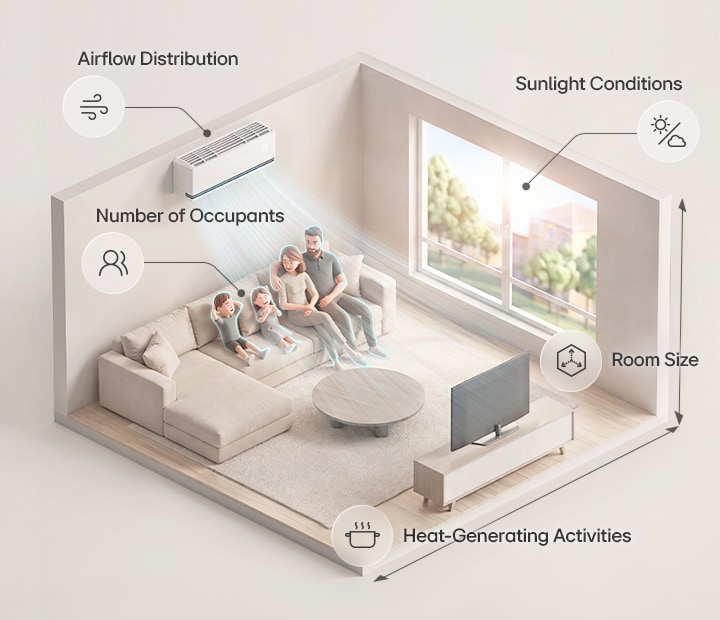
• If the room is heavily shaded, reduce capacity by 10 percent.
• If the room is very sunny, increase capacity by 10 percent.
• If more than two people regularly occupy the room, add 600 BTUs for each additional person.
• If the unit is used in a kitchen, increase capacity by 4,000 BTUs.
• Consider where you install the unit. If you are mounting an air conditioner near the corner of a room, look for a unit that can send the airflow in the right direction.
Which AC type best fits my space?
-
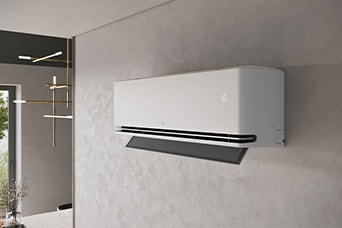
![A white wall-mounted air conditioner with its bottom louver open, installed on a gray textured interior wall.]()
Single split air conditioner
• Designed to cool individual rooms or dedicated living spaces
• Suitable for bedrooms, home offices, apartments, and family living areas
• Ideal for spaces that require consistent everyday cooling
• Balanced combination of cooling performance and energy efficiency
• Provides personalized cooling for everyday living space -
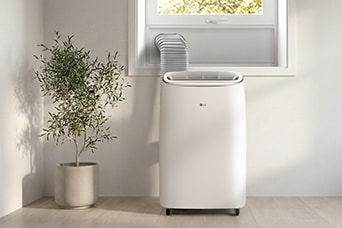
![A white portable air conditioner connected to a window with an exhaust hose in a room next to a potted plant.]()
Portable air conditioner
• A self-contained solution that does not require a separate outdoor unit
• Designed for spaces for occacional or secondary usage
• Movable design allows cooling to be used in different rooms as needed
• Ideal for occasional or seasonal cooling needs
• Easy to remove and store during the off-season -
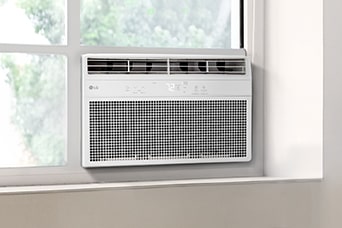
![A white window air conditioner unit installed in a window frame, showing its digital display and grilles.]()
Window air conditioner
• Installed directly in a window or wall opening
• All-in-one unit that operates without a separate outdoor unit
• Suitable for smaller rooms and compact living spaces
• Space-efficient design for bedrooms, studios, and apartments -
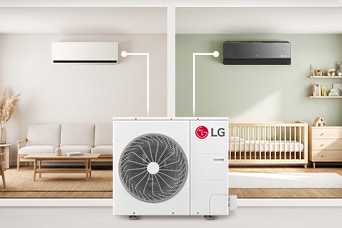
![A multi-split air conditioner system showing one outdoor unit connected to two indoor wall units, white and black.]()
Multi split air conditioner
• Connects multiple indoor units to a single outdoor unit
• Designed to cool several rooms simultaneously
• Suitable for large spaces and multi-room living environments
• Supports different cooling needs across separate spaces
• Independent control available for individual rooms
• Helps create a customized cooling experience throughout the home
What additional features should I consider?
Different homes, climates, and daily routines can create different cooling needs. From managing energy use and maintaining comfort during sleep to controlling your AC remotely, certain features can help support a cooling experience that better fits the way you live. Explore key LG air conditioner technologies and discover the benefits they may bring to your everyday environment.
| If you want to | Enjoy a more personalized cooling experience with less manual adjustment |
|---|---|
| Feature | AI Air |
| If you want to | Control, monitor, and prepare your home remotely before you arrive |
| Feature | ThinQ™ |
| If you want to | Enjoy a comfortable night's sleep with automatic temperature adjustment |
| Feature | Sleep Timer+ |
| If you want to | Manage energy use based on your preferred electricity consumption |
| Feature | kW Manager |
| If you want to | Keep your AC clean with easy-access, tool-free parts designed for quick and simple maintenance |
| Feature | Easy Care |
| If you want to | Maintain cleaner internal components with an automatic cleaning cycle |
| Feature | AI Freeze cleaning |
| If you want to | Stay warm and comfortable when outdoor temperatures drop |
| Feature | Heating |
Our Picks for You




 There is no availabel product.
component-recommendedRetailRriceInfo
OBS_MEMBERSHIP_MSG $*obsMembershipPrice*
*obsMemberShipLinkEnd*( *obsWelcomePriceDescription* $*obsWelcomePrice* )
Related articles
-
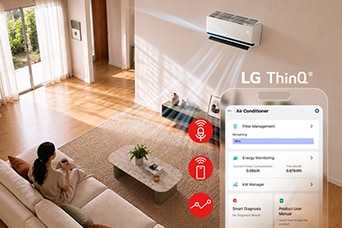
![A woman sitting on a sofa in a living room with a wall air conditioner and a smartphone app overlay.]()
The Smart Way to Control Your Air Conditioner
-
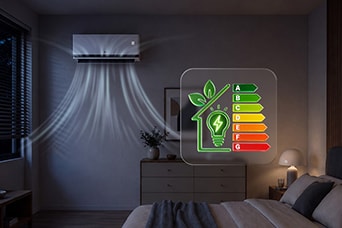
![A wall-mounted air conditioner blowing cool air in a bedroom, with an energy efficiency rating graphic overlay.]()
Understanding Air Conditioner Efficiency
-
![A woman holding a remote control pointed at a wall-mounted air conditioner in a bright room.]()
5 Ways to Use Your Air Conditioner More Efficiently
-
![A technician maintaining a wall-mounted air conditioner.]()
Air Conditioner Maintenance for Better Cooling
FAQs
-
Q.
What should I check before installation?
-
A.Installation requirements can vary depending on your home layout, available installation space, and local building conditions. Take a few simple measurements before purchasing and make sure which product is suitable for your environment and avoid unexpected installation issues. If permanent installation is not possible, Portable or Window AC may be practical alternatives.
• Measure the available wall, window, or floor space where the air conditioner will be installed.
• Confirm there is enough space for the outdoor unit, including the required clearance for proper airflow and servicing.
• Check the distance between the indoor and outdoor installation locations, as allowable piping length may vary by model.
• Verify that a suitable power supply is available near the installation area.
• Review any installation restrictions that may apply to apartments, condominiums, or rental properties before purchase.
-
Q.
What if my room falls between two capacity sizes?
-
A.If your room size falls between two recommended capacity ranges, avoid choosing based on room size alone. When multiple conditions increase the cooling load, selecting the higher capacity can help maintain more consistent comfort and efficient operation.
Still unsure? These tips will help you choose:
• Choose the higher capacity if your room receives strong direct sunlight or has large windows.
• Consider the higher capacity if several people regularly use the room or heat-generating appliances(ex. TV, monitor, laptop, projector) are frequently in operation.
• Stay with the standard capacity if the room is well shaded, lightly occupied, and used only occasionally.
• Also consider consulting an authorized LG installer if your space has too many complicated variable factors.
-
Q.
How much maintenance does an air conditioner require?
-
A.Follow simple maintenance steps. Most routine care only takes a few minutes and can be completed as part of your regular home maintenance.
• Clean or wash the air filter regularly to help maintain airflow and cooling performance.
• Keep the indoor and outdoor units free from dust, leaves, or other obstructions to allow proper air circulation.
• Wipe the air outlet and exterior surfaces periodically to prevent dust buildup around the unit.
• Check for unusual noise, odors, or reduced cooling performance, and arrange professional service if needed.
*LG features that help:
• All Cleaning conveniently performs a complete internal cleaning sequence through the ThinQ™ app, combining condensation, AI Freeze Cleaning, and Auto Clean+ in one process.
• ThinQ™ with Smart Diagnosis™ helps monitor system status, identify potential issues, and provides troubleshooting guidance when needed.
*Feature availability may vary depending on product specifications. Please check the specifications before purchasing.
-
Q.
How do I stay comfortable with the AC on all day?
-
A.LG's AI-powered technologies help deliver comfort only where and when it is needed, reducing unnecessary cooling while maintaining a comfortable indoor environment. Especially, AI Air automatically senses indoor conditions and adjusts airflow to deliver personalized comfort. Once the desired temperature is reached, it can switch to Soft Air mode, maintaining a pleasant indoor environment with a gentle, indirect breeze instead of continuous strong airflow.
To improve everyday comfort, you should:
• Choose an air conditioner with the right cooling capacity for your room size and environment.
• Keep doors and windows closed to reduce unwanted heat gain during operation.
• Clean the air filter regularly to help maintain efficient airflow.
• Use AI Air instead of relying on manual airflow adjustments throughout the day.
-
Q.
Can I reduce energy consumption while using my air conditioner?
-
A.Yes. Reducing energy consumption is not just about using your air conditioner less—it is also about using the right features for your cooling needs. LG provides energy management tools that help you control cooling performance and electricity usage more easily throughout the day.
How LG helps you save energy:
• Use Active Energy Control to select an energy-saving level that matches your comfort needs instead of always operating at maximum cooling.
• Set your preferred electricity usage target with kW Manager and let the system help manage cooling operation within your selected energy goal.
• Access both features through the ThinQ™ app, making it easy to adjust energy settings whenever your cooling needs change.
• Combine these energy-saving features with the right AC capacity to help improve everyday cooling efficiency.
*Feature availability may vary depending on product specifications. Please check the specifications before purchasing.