

-
LG Pro Tips: LG ThinQ Smart Diagnosis Makes Appliance Care Easier
-
Smart homes are often talked about in terms of convenience. People think about turning appliances on remotely, checking status from a phone, or building routines around daily life. But one of the most practical smart-home benefits is much simpler: knowing what to do when something does not seem right.
That is where LG ThinQ Smart Diagnosis becomes especially valuable. On LG Levant’s ThinQ page, LG presents Smart Diagnosis as a way to troubleshoot devices quickly, check whether they are working properly, receive issue notifications, and get solutions immediately through the app. In everyday life, that means less guessing and a clearer starting point when an appliance needs attention.
This is one of the strongest reasons to talk about ThinQ in a simple way. Many smart-home features sound impressive, but customers often care most about practical value. Smart Diagnosis is easy to understand because it answers a real user question: If something feels wrong with my appliance, what can I do right now?
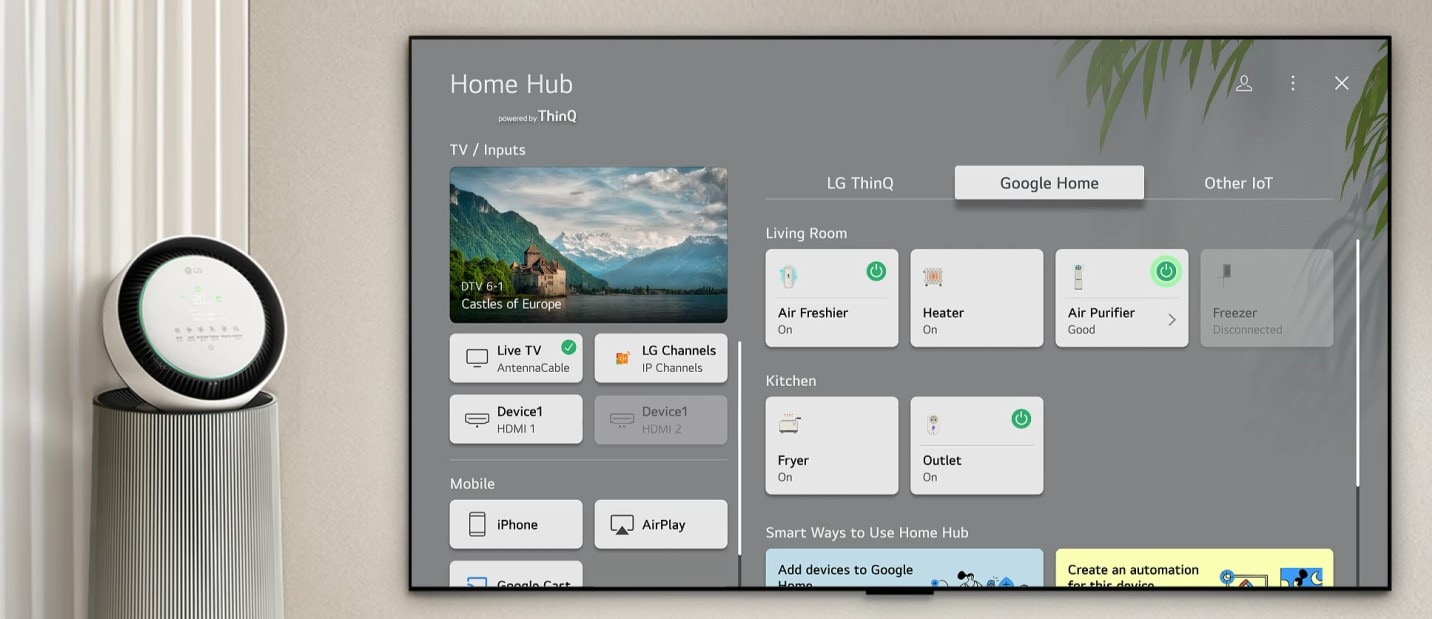
Instead of making the app story only about control, Smart Diagnosis gives LG ThinQ a stronger care-and-support angle. It helps turn the app into something more useful in daily ownership, especially for people who want reassurance, faster self-service, and a more confident way to handle small issues before they become bigger frustrations. LG also presents ThinQ more broadly as a platform for managing devices in one place, which makes Smart Diagnosis part of a wider connected-home experience rather than a standalone tool.
-
Why this matters
Smart features are most powerful when they solve a real-life problem. Smart Diagnosis matters because it makes LG appliance care feel less stressful and more actionable. Instead of waiting, guessing, or searching blindly, users can start with the app and get clearer guidance right away.
-
What Smart Diagnosis means
- • Check whether supported devices are working properly
- • Get notifications when an issue appears
- • Receive a solution they can implement immediately
-
Who benefits most
- • usy families managing multiple home appliances
- • Customers who want quicker self-service
- • Users who value reassurance before contacting support
- • Households that already use multiple LG connected products
-
Key takeaways
- • LG ThinQ Smart Diagnosis is a strong practical benefit, not just a technical feature.
- • LG Levant says it helps users check device status, receive notifications, and get quick solutions through the app.
FAQ
-
Q.
What is LG ThinQ Smart Diagnosis?
-
A.It is an LG ThinQ feature that helps users troubleshoot supported appliances, check device condition, receive alerts, and get immediate guidance through the app.
-
Q.
Why is Smart Diagnosis a strong benefit?
-
A.Because it connects smart-home technology to a very practical need: easier self-service and faster problem-checking.