We use cookies, including cookies from third parties, to enhance your user experience and the effectiveness of our marketing activities. These cookies are performance, analytics and advertising cookies, please see our Privacy and Cookie policy for further information. If you agree to all of our cookies select “Accept all” or select “Cookie Settings” to see which cookies we use and choose which ones you would like to accept.
Home
How Much Water and Energy Does a Dishwasher Use?
How Much Water Does a Dishwasher Use?
When contemplating the purchase of a new dishwasher, one of the most common questions that arise are, "How much water does a dishwasher use?" Generally speaking, modern dishwashers are designed to be highly efficient, using significantly less water than traditional hand washing methods. According to the "Hand dishwashing behavior study: compared to dishwashers," modern dishwashers use an average of only 14 liters of water per wash. This demonstrates the substantial water-saving capability of dishwashers, making them a water-efficient choice for your kitchen.
Dishwasher vs. Hand Washing: Water and Detergent Usage
While washing dishes by hand might seem like a more water-saving option, the design of dishwashers inherently helps in reducing water consumption. Comparing the water usage between dishwashers and hand washing reveals a contrast.
Study on Dishwasher vs. Hand Washing Behavior1)
| Wash Type | Number of Tests or Individuals | Water Usage (L) | Detergent Usage (g) |
| Dishwasher | 4 times | 14 | 20 |
| Hand Washing | 15 Individuals | 140 | 56 |
- Significant Water Savings: The study shows that dishwashers use substantially less water compared to hand washing. Specifically, dishwashers used only 14 liters of water on average per test, while hand washing required 140 liters of water. This represents a reduction of nearly 90%, which can make dishwashers a water-efficient option. This drastic difference highlights the water-saving potential of investing in a quality dishwasher.
- Reduced Detergent Usage: In terms of detergent consumption, dishwashers again prove to be more efficient. The study indicates that dishwashers used only 20 grams of detergent per test, whereas hand washing used 56 grams. This means that dishwashers use almost 65% less detergent, which can save money and can be less harmful to the environment.
In conclusion, dishwashers can be superior to hand washing in terms of water and detergent efficiency.
Does a Dishwasher Use Hot Water?
Understanding whether a dishwasher uses hot water is crucial. In many homes, dishwashers are connected to the household hot water supply and use hot to clean and sanitize dishes. The hot water helps to dissolve grease and food particles more effectively than cold water.
Most dishwashers come equipped with built-in water heaters, like LG’s TrueSteam™ technology. These internal heaters help ensure that the water reaches the optimal temperature for cleaning, regardless of the temperature of the water supply. This feature not only improves cleaning performance but also allows the dishwasher to operate independently of the household hot water system.
Do Dishwashers Heat the Water?
Yes, many modern dishwashers heat the water as part of their cleaning process. The built-in heaters in these dishwashers enable the water to reach the necessary temperature to effectively clean the dishes. This is especially beneficial for removing stubborn food residues and helping to keep dishes hygienically clean.
For instance, LG dishwashers with steam functionality provide an added layer of cleaning power. The steam helps to loosen tough food particles and clean dishes, making it an excellent feature for households with high standards for cleanliness. This steam technology not only enhances cleaning performance but also reduces the need for pre-rinsing, saving both water and time.
Do Dishwashers Use a Lot of Electricity?
Another important consideration when evaluating dishwashers is their electricity consumption. Modern dishwashers are designed to be energy-efficient, consuming relatively low amounts of electricity per cycle. The energy usage of a dishwasher depends on various factors, including the model, cycle type, and additional features.
Dishwashers with LG’s inverter motor are particularly noted for their energy efficiency. This motor is designed to deliver powerful cleaning performance while using less energy. Additionally, LG’s dishwashers often include the auto open door feature, which automatically opens the door at the end of the cycle to allow vapor to escape and speed up the drying process. This reduces the need for additional heating, further conserving electricity.
Efficient Dishwasher Cycles
Generally, modern dishwashers offer a variety of cycle options to suit different needs. Energy-saving cycles are particularly noteworthy as they use less water and energy, making them suitable for everyday use. Additionally, quick wash cycles are efficient for lightly soiled dishes, saving both time and resources. These cycle options enhance the overall efficiency and convenience of using a dishwasher, allowing users to choose the best setting for their specific dishwashing needs.
Introducing Efficient LG Dishwashers
For consumers seeking efficient dishwashing solutions, a range of dishwashers can offer a compelling choice. With features such as QuadWash™, inverter motor, and steam cleaning, these LG dishwashers are designed to maximize cleaning performance.
QuadWash™ Technology
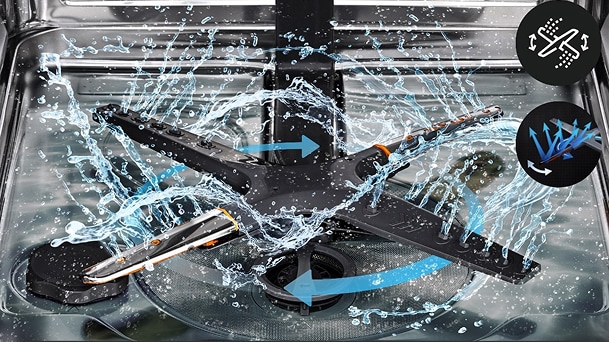
LG’s QuadWash™ technology uses four spray arms instead of the traditional two, ensuring that dishes are cleaned from multiple angles. This innovation enhances cleaning efficiency by improving spray coverage and delivering more even water distribution throughout the dishwasher.
Inverter Motor
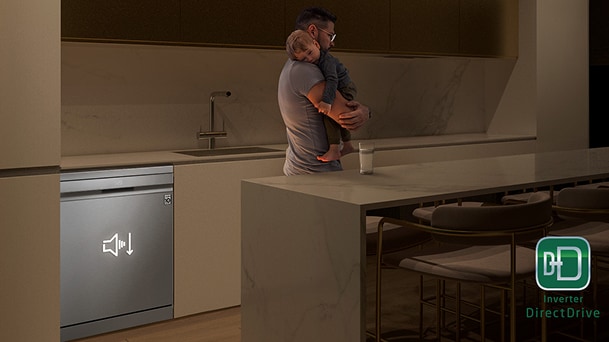
The inverter motor in LG dishwashers is designed for great energy efficiency and durability. Additionally, the motor operates quietly, making it ideal for open-plan living spaces.
Steam Cleaning
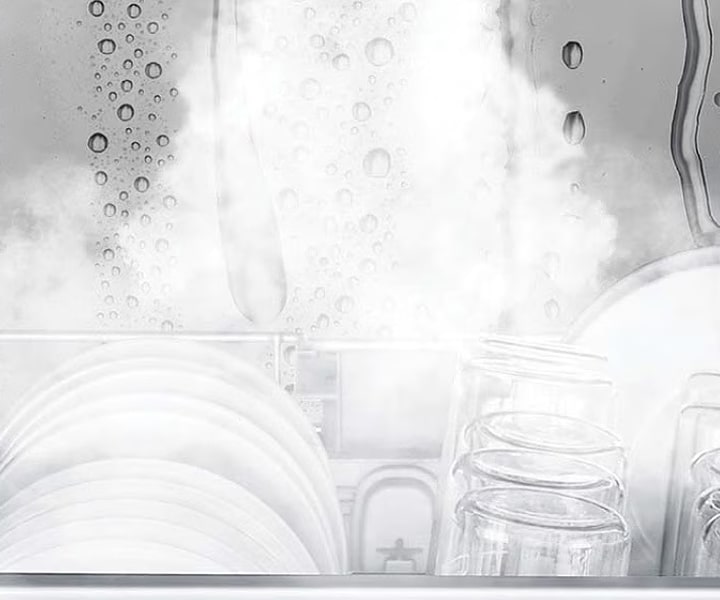
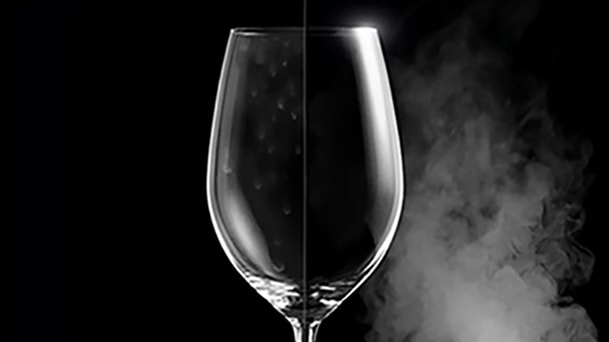
LG dishwashers equipped with steam functionality provide an extra level of cleaning power. Generally, the steam helps to loosen tough food residues and makes dishes sparkling clean. This advanced steam cleaning technology can offer users enhanced cleaning performance and added convenience.
*The comparison images are not actual photographs; they are simulated for illustrative purposes only.
Auto Open Door
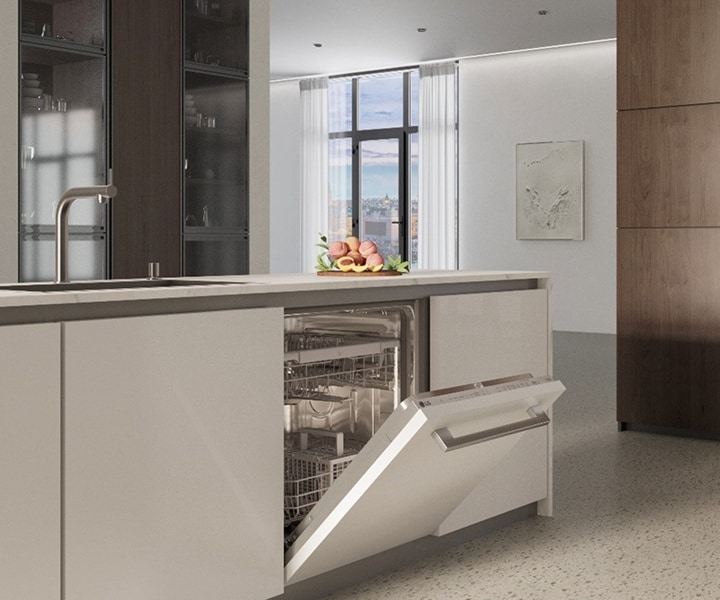
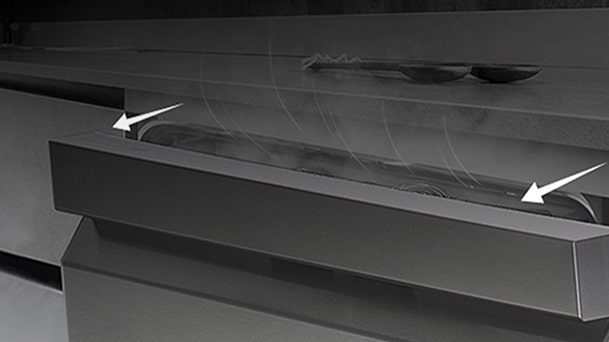
The auto open door feature in LG dishwashers automatically opens the door at the end of the cycle, allowing vapor to escape and speeding up the drying process. This reduces the need for additional heating, conserving energy and ensuring that dishes are dry and ready to use.
LG ThinQ™ App
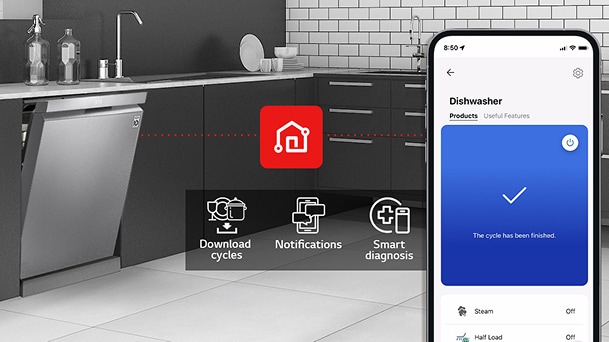
LG’s ThinQ™ app allows users to control their dishwasher remotely using a smartphone app. This smart technology enables users to start or stop a cycle, monitor energy usage, and receive notifications when the cycle is complete. This level of convenience and control enhances the overall user experience and contributes to efficient household management.
Conclusion
In summary, investing in a modern dishwasher, particularly one with advanced features like LG’s QuadWash™, inverter motor, steam cleaning, and auto open door, can improve the efficiency of your dishwashing routine. According to the Dishwasher vs. Hand Washing Behavior Study, dishwashers tend to use less water compared to traditional hand washing methods, making them a water-saving choice. By choosing a dishwasher with these innovative features, you can enjoy spotless dishes while also contributing to water conservation. Whether you’re looking to purchase your first dishwasher or upgrade to a more efficient model, LG dishwashers can offer a range of benefits that meet your needs for performance and convenience.
FAQ
Does a dishwasher use less water than hand washing?
Yes. According to a comparative behavior study conducted by Pusan National University Sensory Science Laboratory (2019), a dishwasher used 14 liters of water per wash, while hand washing used 140 liters on average. This indicates that dishwashers used about 90% less water than hand washing under the test conditions.
How much detergent does a dishwasher use compared to hand washing?
Based on the study by Pusan National University Sensory Science Laboratory (2019), a dishwasher used 20 grams of detergent per wash, whereas hand washing used 56 grams. This means dishwashers used approximately 65% less detergent than hand washing in the experiment.
Do dishwashers use a lot of electricity?
No. Modern dishwashers are designed to be energy-efficient and typically use a relatively small amount of electricity per cycle. Electricity usage mainly depends on the selected wash cycle and drying method.
Several LG dishwashers are designed to help reduce electricity consumption through features such as the inverter motor, which operates more efficiently, and the Auto Open Door function, which releases vapor at the end of the cycle to speed up drying without relying heavily on electric heating. These technologies help minimize energy use while maintaining effective cleaning performance.
Related Articles
*The images shown in this article are for illustrative purposes only and may differ from the actual product.
*Service features on dishwashers may vary depending on country, model, and version, etc.
1)Study on Dishwasher vs. Hand Washing Behavior
-Research conducted by Pusan National University Sensory Science Laboratory
-Hand dishwashing behavior study: compared to dishwashers (April 2019)
-Variations in hand washing results may occur due to differences in individual performance, whereas dishwashers perform washing and rinsing uniformly.
-Preparation and Contamination of Dishes: In accordance with the "Regulations on the Management of Energy-Using Products" by the Ministry of Knowledge Economy Announcement No. 2010-124, dishes for 12 people were used for washing.
-Test Conditions:
•Ambient Temperature: 19 ± 2 ℃
•Relative Humidity: 41 ± 5 %
•Detergent: LG Household & Health Care 'Nature Pong’
•Scrubber: Scotch-Brite Scrubber
•Water Temperature: Adjusted by consumers themselves (practical use evaluation) (Kyungdong Electric Water Heater 80L, maximum temperature 75℃)
•Water Usage: Measured using a simple water meter
•Number of Tests: 4 tests for the dishwasher, 15 tests for hand washing by different individuals
•Dishwasher Model Info: DFB22S(Launched in Korea)
•Dishwasher Cycle: Standard Cycle
-This is an experimental result and the result may vary depending on the actual usage environment.