We use cookies, including cookies from third parties, to enhance your user experience and the effectiveness of our marketing activities. These cookies are performance, analytics and advertising cookies, please see our Privacy and Cookie policy for further information. If you agree to all of our cookies select “Accept all” or select “Cookie Settings” to see which cookies we use and choose which ones you would like to accept.
Helpful Hints
What is the Best Energy Efficient Refrigerator?
When it comes to your home’s total energy bill, the refrigerator is often one of the biggest contributors. In Mexico, where warm temperatures are common and families rely on their refrigerator every day for fresh food and beverages, choosing an energy efficient refrigerator isn’t just a smart move for the planet—it’s a decision that can save you thousands of pesos over the years. This article explores why energy efficiency in refrigerators matters, how to identify the most efficient models, and practical tips to maximize your savings without sacrificing convenience or freshness.
Refrigerators and Energy Savings
Refrigerators work 24 hours a day, 365 days a year. That means even small differences in energy consumption can have a big impact on your electricity bill over time. Selecting a high-efficiency refrigerator is one of the simplest ways to cut household costs and shrink your carbon footprint. But how do you know which refrigerator is truly energy efficient? The answer lies in two key areas: understanding energy labels and knowing which features make the biggest difference.
Energy Efficiency Label of a Refrigerator
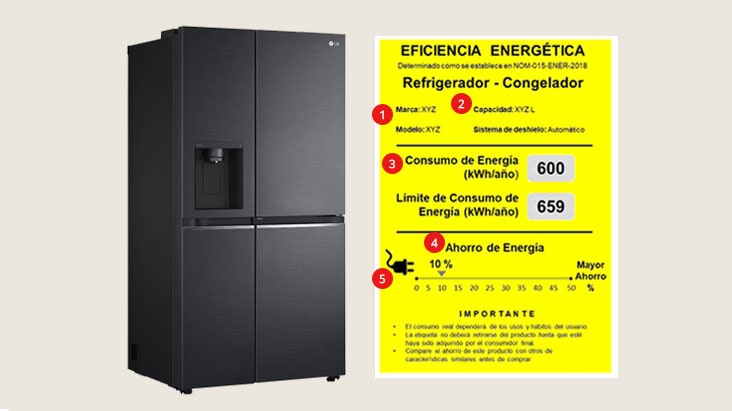
In Mexico, all household refrigerators and freezers must comply with the official standard NOM-015-ENER-2018. This standard—sometimes simply called “NOM-ENER”—sets strict requirements for maximum and minimum energy consumption, and it defines the testing methods manufacturers must follow to ensure fair, accurate comparisons between products.
NOM-ENER
Every new refrigerator should have a yellow and black energy efficiency label. Here’s what you’ll find on this label:
1. The annual energy consumption in kilowatt-hours (kWh/year)
2. The model’s capacity in liters
3. A comparison of the product’s energy use versus similar models
4. The brand and model information
5. The range of energy consumption for the product type(so you can see if it’s closer to the best or worst in its class)
When shopping, look for refrigerators at the lower end of the consumption scale. LG refrigerators, for example, are often rated among the best for energy efficiency, thanks to their advanced technologies and commitment to sustainability.
* The numbers in the image are examples; please refer to the actual product information for the real figures.
Inverter Technology: The Heart of Savings
Not all refrigerators are built the same. One of the biggest breakthroughs in recent years is the introduction of inverter compressor technology. But what does this mean, and why does it matter for your energy bill?
Traditional refrigerators use a compressor that turns on and off at full power to maintain the right temperature. This constant stopping and starting uses a lot of electricity and can lead to temperature swings that affect your food’s freshness.
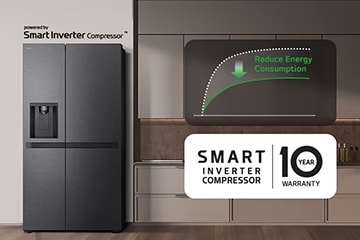
Inverter compressors, on the other hand, adjust their speed automatically to match the cooling demand. This means they run more smoothly and efficiently, using only as much energy as needed at any moment. The result? Up to 40% less electricity consumption compared to old-fashioned models, quieter operation, and more stable internal temperatures.
LG, for example, incorporates inverter compressors in many of its energy-saving refrigerators, often backing them with 10-year warranties for peace of mind. If you want the best energy efficient refrigerator in Mexico, look for models that explicitly mention inverter technology.
Type of Refrigerator Consumes Less Energy
Did you know that the layout of your refrigerator can impact how much energy it uses?
In Mexico, the most common types are:
Generally, top freezer refrigerators are the most energy efficient. This is because cold air naturally sinks, so these models require less energy to keep both compartments at the right temperature. Side-by-side and French door models often use a bit more energy due to their larger size and additional features.
It’s also worth noting that built-in ice and water dispensers on the door, while convenient, can slightly increase energy consumption. If you value absolute efficiency above all else, choose a model without these extras—or make sure the dispenser is insulated and energy rated.
Tips for Saving Energy by Using Your Refrigerator Efficiently
✓ Fill the Refrigerator Properly
A full refrigerator actually stays cooler more efficiently than an empty one, because the mass of cold items helps stabilize the temperature when you open the door. However, don’t overpack—it’s important to allow air to circulate freely between shelves and compartments. Organize food so cold air can move and reach every corner.
✓ Regular Maintenance
Dust and dirt on the condenser coils (usually found at the back or bottom of your refrigerator) can make your refrigerator work harder and use more energy. Clean the coils every six months, and check the door seals for cracks or gaps—tight seals keep cold air in and warm air out. Also, defrost the freezer if you notice ice buildup (unless you have a no-frost model).
✓ Strategic Location
Where you place your refrigerator matters. Keep it away from direct sunlight, stoves, ovens, or other heat sources that make the compressor work overtime. Make sure there’s enough space around the refrigerator for air to circulate at the back and sides—this helps the cooling system run efficiently.
✓ Temperature Settings
Set your refrigerator between 3°C and 5°C (37°F to 41°F) and your freezer at -18°C (0°F). Setting the temperature lower doesn’t make your food last longer—it just wastes energy. Use a refrigerator thermometer to double-check, as built-in dials aren’t always precise.

Conclusion
By combining a high-efficiency refrigerator—preferably one with inverter technology and a strong NOM-ENER rating—with smart usage habits, you can dramatically lower your household’s energy costs. In the end, the best energy efficient refrigerator is one that fits your family’s needs, complies with Mexican standards, and helps you build a more sustainable, comfortable home for years to come.