Share this content.

You can share the items you like with

your friends

Helpful Tips

What Is a Refrigerator & How It Keeps Food Fresh


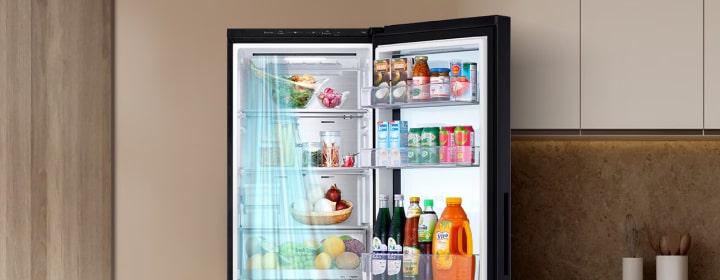
Open LG refrigerator in a modern kitchen showing organized food storage to explain how refrigeration keeps food fresh.

Open LG refrigerator in a modern kitchen showing organized food storage to explain how refrigeration keeps food fresh.

Refrigerators are essential home appliances that preserve food, maintain freshness, and offer long-term value. As they run continuously, they consume electricity. Choosing a refrigerator size larger than necessary increases power consumption. Therefore, selecting a standard refrigerator size appropriate for the number of users is crucial. This article compiles information on choosing a standard refrigerator size to help you save electricity and use it cost-effectively.

How Refrigerators Work to Preserve Food and Maintain Freshness


The primary purpose of a refrigerator is simple yet vital: to keep food cold. Low temperatures dramatically slow down the growth rate of bacteria, yeasts, and molds – microorganisms responsible for food spoilage. By maintaining a consistently cool environment (typically between 1-4°C in the fridge section), a refrigerator preserves food significantly longer than it would last at room temperature. This function is essential not only for convenience but also for food safety, preventing the rapid multiplication of harmful pathogens. Essentially, a refrigerator creates a controlled microclimate where freshness is locked in and nutrients are better preserved.

How It Keeps Food Cold


The magic of refrigeration lies in a continuous process called the vapor compression cooling cycle. It manipulates the physical properties of a refrigerant to move heat from inside the fridge to the outside. Here's a simplified breakdown:

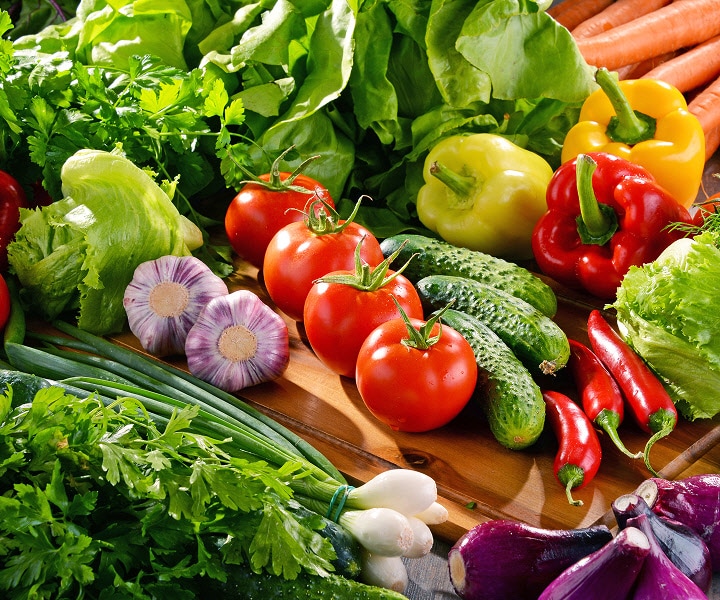
Fresh vegetables on a wooden surface, illustrating how refrigeration slows spoilage by keeping food cool and fresh.

Fresh vegetables on a wooden surface, illustrating how refrigeration slows spoilage by keeping food cool and fresh.

1. Evaporation (Heat Absorption): Inside the refrigerator (evaporator coils), the liquid refrigerant absorbs heat from the food, evaporating into a low-pressure gas. This cools the interior.


2. Compression: The compressor sucks in this gas and compresses it, increasing its pressure and temperature.


3. Condensation (Heat Release): This hot gas flows into the condenser coils (outside the fridge), releases heat to the room air, and condenses back into a liquid.

4. Expansion: The liquid passes through an expansion valve, reducing its pressure and temperature drastically.


5. Repeat: This cold liquid flows back into the evaporator coils to start the cycle again.

Key Components of a Refrigerator and Their Roles


Understanding the main parts helps appreciate how your refrigerator functions

1. Compressor: The 'heart' of the fridge, circulating and compressing the refrigerant. LG's Inverter Linear Compressor™ is known for efficiency, quietness, and durability.

2. Condenser Coils: Located outside, they release heat absorbed from inside as the refrigerant condenses. Keeping them clean aids efficiency.


3. Evaporator Coils: Located inside, these coils absorb heat from the interior air as the cold refrigerant flows through. Frost build-up here can reduce efficiency – modern models with auto-defrost prevent this.

4. Expansion Valve: Reduces the refrigerant's pressure and temperature before it enters the evaporator.


5. Refrigerant: The fluid circulating through the system, changing state to transfer heat. Modern LG models use eco-friendly R600a refrigerants.


6. Thermostat: Monitors temperature and controls the compressor to maintain the set coolness.

How to Choose the Right One


Choosing the right type of refrigerator depends on your kitchen layout, family size, and storage habits. Here’s how to choose a refrigerator that fits:

1-Door Refrigerator


Compact, energy-efficient, ideal for singles or small spaces. Limited freezer space.

2-Door Refrigerator (Top/Bottom Freezer)


Classic choice for small to medium families (3-4 people). Separate fridge/freezer compartments.

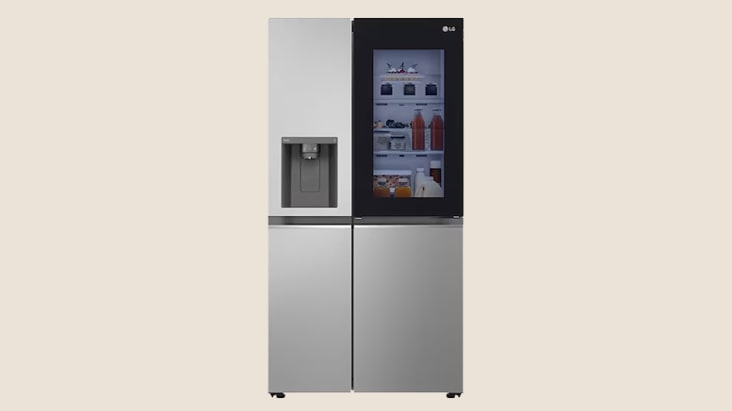
Side-by-Side Refrigerator


Vertical fridge/freezer compartments. Ample freezer space, narrow doors suit limited swing space.

Multi-Door Refrigerator (French Door)


Wide fridge shelves on top, freezer drawers below. Ideal for larger families or entertaining. LG's InstaView Door-in-Door™ models add convenience.

How to Use Your Refrigerator Efficiently and Safely


Proper use of a refrigerator saves energy and extends its life:


✓ Set the Right Temperature: Aim for 3-4°C (fridge) and -18°C (freezer).

✓ Don't Overcrowd: Allow air circulation.

✓ Cool Hot Foods First: Let leftovers cool before refrigerating.

✓ Minimize Door Openings: Decide what you need beforehand. LG's Door-in-Door™ helps reduce cold air loss.

✓ Store Food Properly: Use airtight containers. Raw meat on the bottom shelf.

✓ Regular Cleaning: Clean spills immediately and deep clean periodically.

The Evolution of Refrigerators and Their Impact on Modern Life

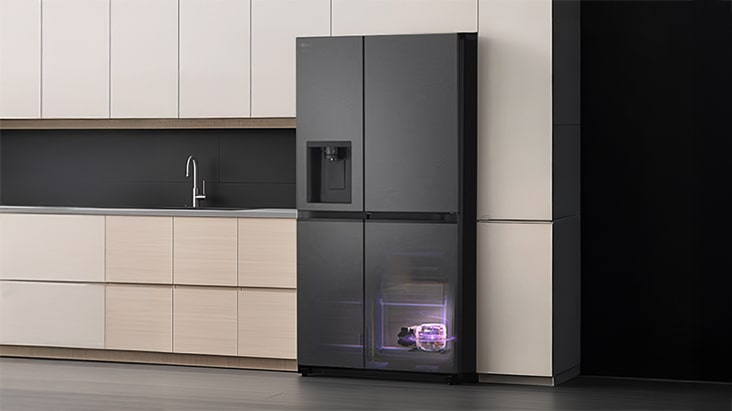
LG refrigerator installed in a slick interior

LG refrigerator installed in a slick interior

The history of the refrigerator transformed daily life, enabling safe food storage and reducing illness. Modern refrigerators continue this evolution. LG has pioneered technologies like:


✓ Inverter Linear Compressor™: Offers precise temperature control, energy savings, quiet operation, and durability.

✓ LinearCooling™ & DoorCooling+™: Minimize temperature fluctuations, keeping food fresher longer.

✓ Hygiene Fresh+™: An air filter system removing bacteria and odors for a hygienic environment.

Find the Perfect LG Refrigerator for Your Kitchen

FAQ

Q.

What is the science behind how a refrigerator works?

A.

A refrigerator works through the vapor compression cooling cycle, which moves heat from inside the fridge to the outside. The refrigerant repeatedly evaporates, compresses, condenses, and expands to absorb heat from food and release it externally.

Q.

What are the main components of a refrigerator?

A.

The main components include the compressor, condenser coils, evaporator coils, expansion valve, refrigerant, and thermostat. These parts circulate refrigerant, remove heat, and maintain the set temperature.

Q.

What does the compressor do in a refrigerator?

A.

The compressor acts as the heart of the fridge by compressing and circulating the refrigerant. LG’s Inverter Linear Compressor™ improves efficiency, reduces noise, and enhances durability.

Q.

How do I choose the right type of refrigerator?

A.

Choose based on your kitchen layout, family size, and storage habits:1-Door for singles or small spaces, 2-Door for small–medium families, Side-by-Side for more freezer space, and Multi-Door for large families and frequent entertainers.

Q.

How should I use my refrigerator efficiently and safely?

A.

Use your refrigerator efficiently by setting 3–4°C for the fridge and –18°C for the freezer, avoiding overcrowding, cooling hot food first, minimizing door openings, storing food in airtight containers, and cleaning regularly.