Share this content.

You can share the items you like with

your friends

Helpful Tips

Standard Refrigerator Size: Which One Should You Choose to Meet Your Needs?


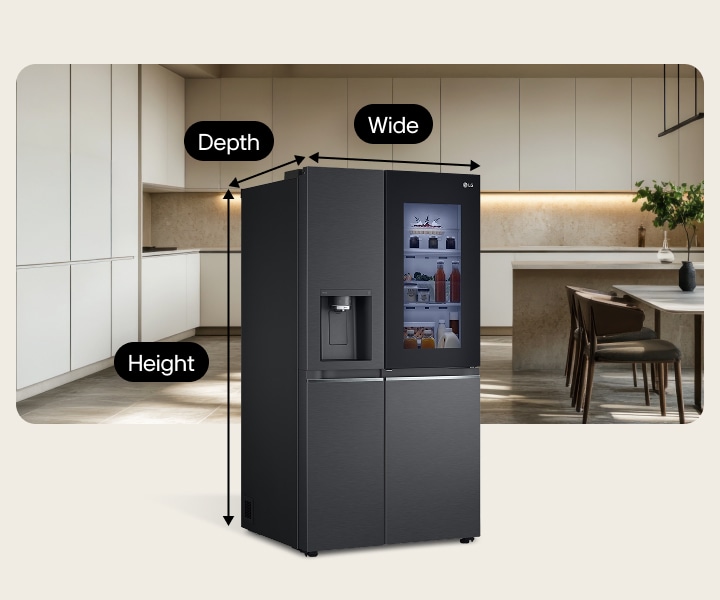
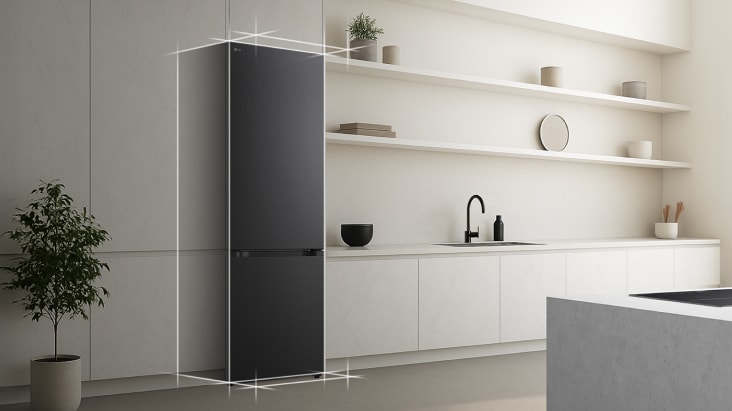
LG refrigerator in a modern kitchen with height, width, and depth labels

LG refrigerator in a modern kitchen with height, width, and depth labels

Refrigerators are essential home appliances that preserve food, maintain freshness, and offer long-term value. As they run continuously, they consume electricity. Choosing a refrigerator size larger than necessary increases power consumption. Therefore, selecting a standard refrigerator size appropriate for the number of users is crucial. This article compiles information on choosing a standard refrigerator size to help you save electricity and use it cost-effectively.

Choose A Refrigerator Based On The Size Of The Space


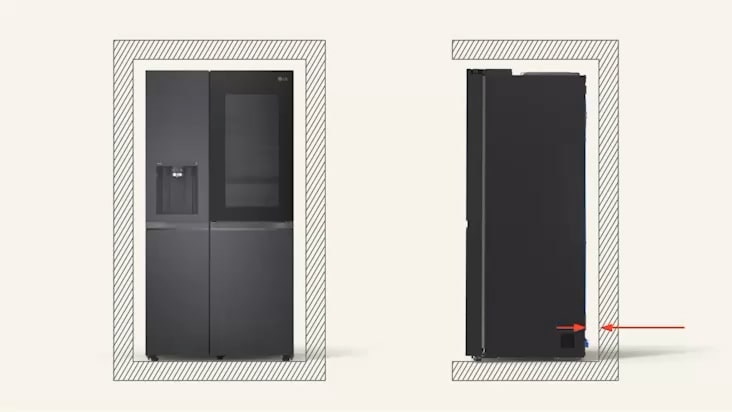
Refrigerators constantly release heat. When installing, allow space for heat dissipation. Allow at least 5 cm clearance above and 5 cm at the rear for heat dissipation. For the sides, ensure at least 5 mm or more, depending on the model and installation type (freestanding or built-in). Always consult the specific model's manual for the most accurate clearance recommendations. If space is limited, measure accurately. Also consider handle thickness and door opening angle to prevent interference with walls or furniture.

1. Basic Functions Of a Refrigerator


Most refrigerators have similar basic functions but differ in design. Look for removable shelves, crisper drawers, adjustable door bins, and separate drawers with temperature control.

2. Durable Materials


Choose refrigerators made with strong, safe, easy-to-clean materials that can support weight well.

3. Quiet Operation


Since refrigerators run constantly, choose a model known for quiet operation. Inquire about materials and noise levels before purchasing.

Innovative Energy-Saving Refrigerators


Modern refrigerators feature innovations that enhance freshness and save energy, such as even cooling systems that distribute cold air effectively throughout the compartments and advanced air filtration (like carbon filters) to reduce odors. Energy-saving models optimize performance and reduce unnecessary energy use.

Select According to Suitability


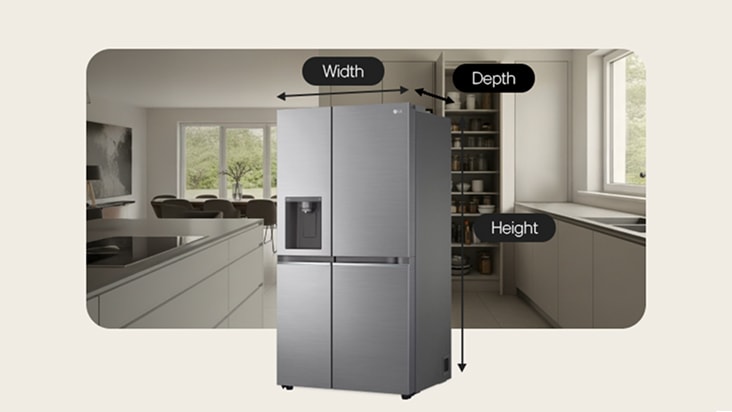
Choose a size appropriate for your needs. Small refrigerators suit small rooms. 1-door refrigerators fit general residences. 2-door refrigerators separate freezer space. Side-by-side models are for large storage volumes. Consider suitability for cost-effective use.

What is the Standard Size of a 1-Door Refrigerator?


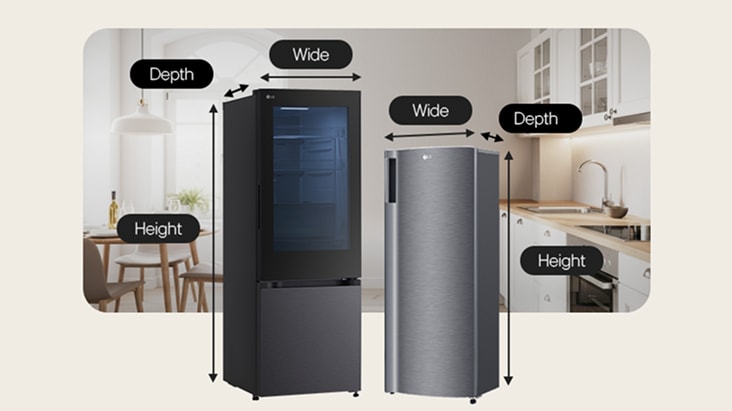
The size of a 1-door refrigerator typically offers a compact footprint, ideal for smaller kitchens, apartments, or as a secondary fridge. Standard dimensions often range from 50-60 cm in width, 55-65 cm in depth, and 120-160 cm in height. Their main advantage is space efficiency and often lower energy consumption. They are best suited for individuals or couples who don't require extensive frozen food storage.

What is the Standard Size of a 2-Door Refrigerator?


A 2-door refrigerator, whether top-freezer or bottom-freezer, is the most common refrigerator size. They offer separate compartments for refrigeration and freezing. The standard size of a 2-door refrigerator generally falls between 60-85 cm in width, 65-80 cm in depth, and 150-185 cm in height. This type is suitable for small to medium-sized families (typically 3-4 people).

Standard Refrigerator Size According to Family Members


When choosing a standard refrigerator size, consider the capacity measured in cubic feet (cu ft or Q) or Liters (L). Recommended sizes based on household members:

✓ 1-2 members: 7-13 Q (approx. 200-380 L)

✓ 3-4 members: 12-18 Q (approx. 350-530 L)

✓ 5+ members: 15 Q and up (approx. 440 L and up)


If you live alone or rarely cook, you might opt for a slightly smaller model. Conversely, if you frequently store large beverages or fresh produce, consider a slightly larger model.

Recommends Standard Size Refrigerators


LG offers quality refrigerators with complete functions and elegant designs.

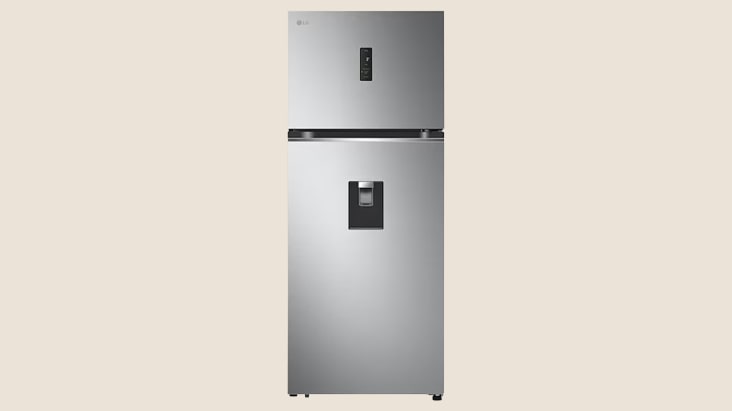
LG 2-Door Refrigerator Model


Features LG ThinQ™ connectivity and uses the energy-efficient LG Smart Inverter Compressor™ with a 10-year warranty.

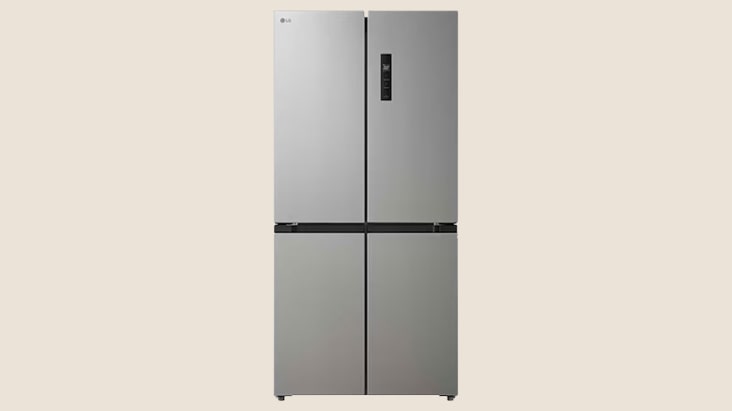
LG Multi Door Refrigerator Model


Features LG ThinQ™ connectivity and uses the energy-efficient LG Smart Inverter Compressor™.

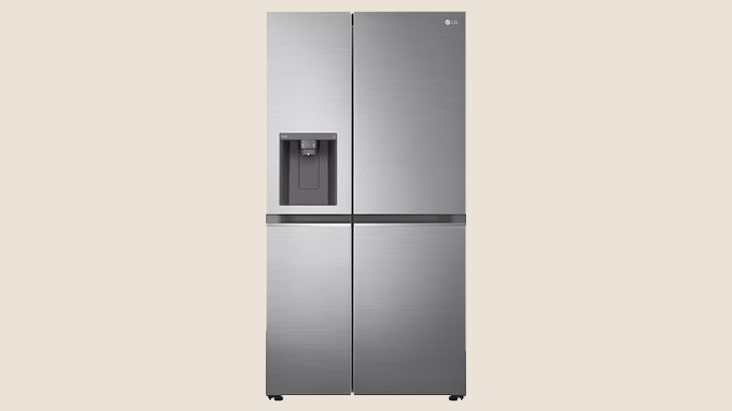
LG Side-by-Side Refrigerator Model


Inverter Linear Compressor ensures freshness and quiet operation. Features the latest InstaView Door-in-Door™ (knock twice to see inside, reduces cold air loss*).


*Performance may vary depending on the model and actual usage environment.

FAQ

Q.

What is the standard size of a 1-door refrigerator?

A.

A standard 1-door refrigerator typically ranges from 50–60 cm wide, 55–65 cm deep, and 120–160 cm high, offering a compact design ideal for small kitchens, apartments, or secondary use. It provides good space efficiency and generally consumes less electricity, making it suitable for individuals or couples who do not require large freezer capacity.

Q.

What is the standard size of a 2-door refrigerator?

A.

A standard 2-door refrigerator usually measures 60–85 cm in width, 65–80 cm in depth, and 150–185 cm in height. With separate fridge and freezer compartments, it suits small to medium households of about 3–4 people.

Q.

How much installation space should I leave when placing a refrigerator?

A.

For proper heat dissipation, leave at least 5 cm above, 5 cm behind, and around 5 mm or more on the sides depending on whether the model is freestanding or built-in. Always check the manual for model-specific clearance requirements, and measure carefully in tight spaces.

Q.

Which refrigerator type is suitable for small rooms or large families?

A.

Small rooms work best with compact or 1-door refrigerators, while typical households benefit from 2-door models. Side-by-side or multi-door refrigerators are ideal for large storage needs and bigger families