How do I choose the right air purifier?


Managing PM2.5 and keeping indoor air clean starts with an air purifier—but with so many options available, finding the right one can be challenging. Indoor air problems aren't always visible, yet dust, allergens, odors, and seasonal air quality changes can all affect everyday comfort. By understanding what shapes the air in your home, you'll be better equipped to compare products and choose the air purifier that best fits your space and lifestyle.


In this guide, you'll learn:

• How your lifestyle and everyday habits influence indoor air quality

• How space size, room layout, and occupancy affect air purification needs

• How outdoor air pollution, seasonal PM2.5, allergens, and ventilation shape filtration requirements

• How to compare air purifier types, filters, and smart features to choose the best solution for your home

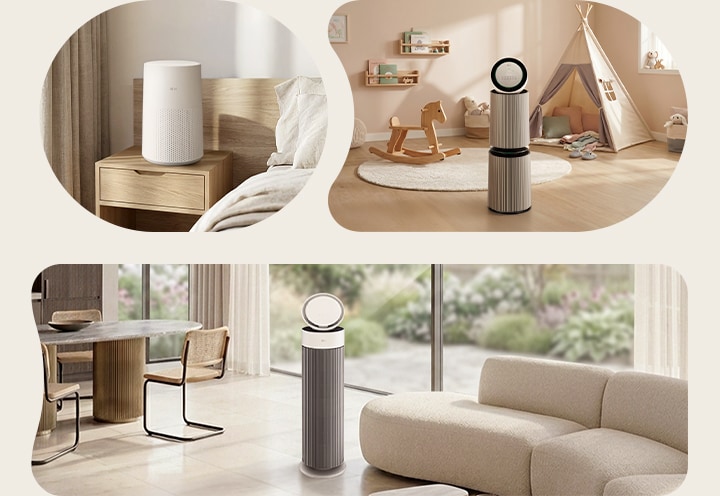
Shows air purifiers placed in a bedroom, children's room, and living room to suit different home spaces.

Shows air purifiers placed in a bedroom, children's room, and living room to suit different home spaces.

How much air purification does my space need?

Room size comes first


Room size is the foundation of choosing the right air purifier. A purifier that is too small may struggle to circulate clean air effectively, while an oversized model may provide more capacity than needed. Airflow performance, fan power, and air quality sensors all work together to deliver cleaner air, but they are most effective when matched to the size and layout of your space. 


As a general recommendation, choose an air purifier with a recommended coverage area approximately 130% of your room size to help maintain more consistent air purification performance. Coverage area should be used as the primary indicator when selecting an air purifier. CADR (Clean Air Delivery Rate) can be used as a secondary reference to understand performance under standardized test conditions.

Room sizeRecommended coverage area*
Up to 20㎡26㎡
Up to 40㎡52㎡
Up to 80㎡104㎡

*The recommended coverage area is based on guidance cited by the Korea Consumer Agency, which suggests approximately 130% of the actual usage space as a general capacity reference.

Consider your everyday air quality challenges


According to organizations such as the WHO* and the U.S. EPA**, indoor air quality is influenced by pollutant sources, ventilation, and the characteristics of your living space. Understanding how these factors affect your home can help you choose an air purifier with the right coverage, filtration, and features for your living environment.


Seasonal PM2.5 and outdoor air pollution, ventilation through open windows and everyday cooking habits can all introduce or circulate airborne particles and odors. Small living spaces and high-density urban housing may further concentrate indoor pollutants, while localized conditions such as humid seasons, roadside environments, and frequent cooking can create different air purification needs. 

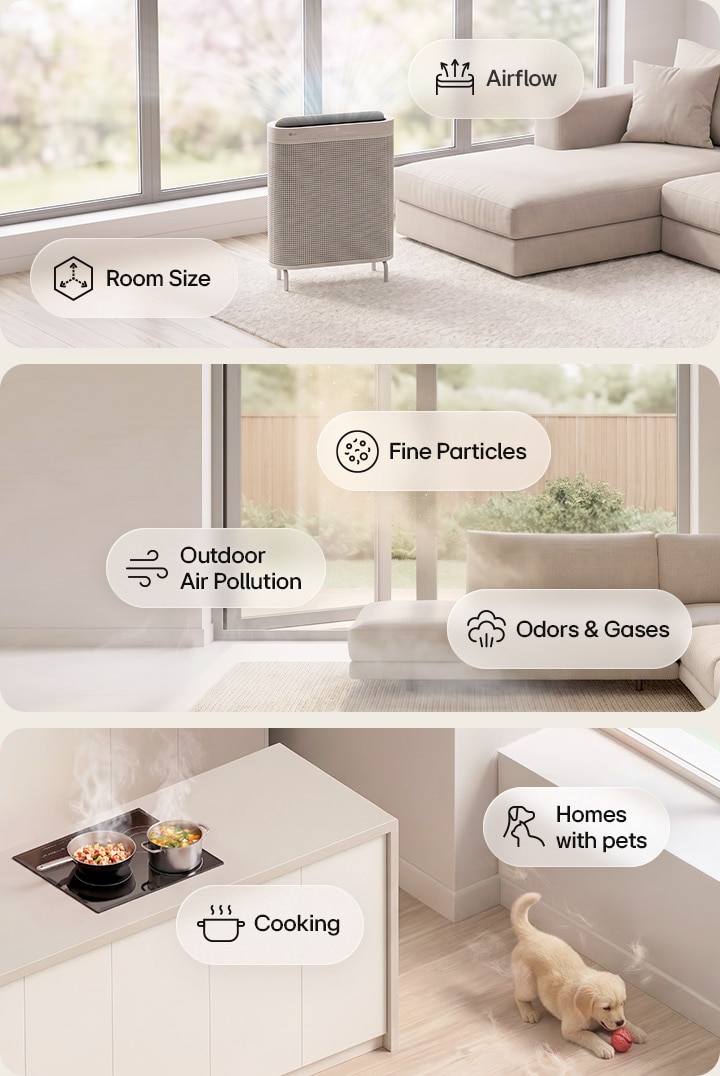
Shows indoor air quality factors including space, pollutants, and lifestyle considerations for air purifier selection.

Shows indoor air quality factors including space, pollutants, and lifestyle considerations for air purifier selection.

Space

• Room size and coverage area 

• Open-plan or enclosed layouts 

• Airflow

Pollutants

• Fine particles from both indoor and outdoor sources (PM2.5, dust, pollen) 

• Odors & gases (VOCs, smoke, cooking fumes)

• Pet-related pollutants

Lifestyle

• Cooking frequency

• Window opening

• Homes with pets or children

How LG air purifiers clean your air


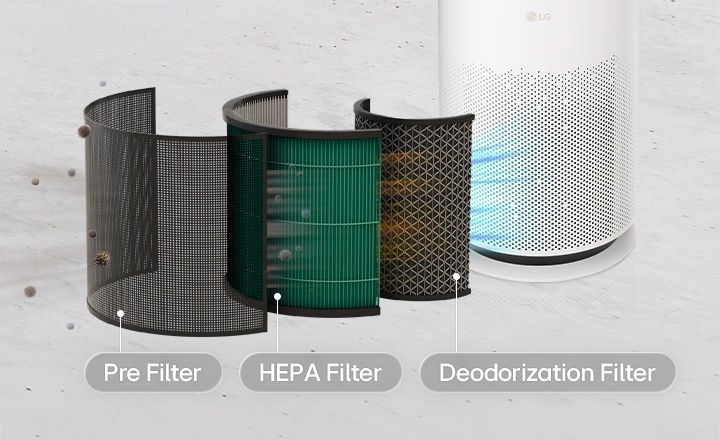
Every LG air purifier uses a multi-filtration system that combines the functions of a Pre Filter, HEPA Filter, and Deodorization Filter to address a wide range of indoor air quality concerns. Rather than relying on a single filter, each layer is designed to target different types of pollutants as air passes through the system. 


The Pre Filter captures large dust particles, pet hair, and visible debris before they reach the main filters. The HEPA Filter helps capture fine dust, PM2.5, pollen, and other microscopic airborne particles, while the Deodorization Filter helps reduce household odors, cooking smells, smoke, and gaseous pollutants. Working together, these filtration stages help deliver clean, fresh air by addressing both visible and invisible pollutants commonly found in everyday living environments.

An exploded view showing an air purifier's three layers: Pre Filter, HEPA Filter, and Deodorization Filter.

An exploded view showing an air purifier's three layers: Pre Filter, HEPA Filter, and Deodorization Filter.

Pre Filter

• Captures large dust, pet hair, and visible debris

• Protects the main filter by trapping larger particles first

HEPA Filter

• Captures fine dust, PM2.5, and microscopic airborne particles

• Helps prevent pollutants from recirculating throughout your living space

Deodorization Filter

• Helps reduce cooking odors, smoke, and everyday household smells

• Targets gaseous pollutants that can affect indoor comfort

Find the air purifier for your needs


Now that you've explored the key factors affecting indoor air quality, it's time to find the air purifier that best matches your home. The recommendations below combine room size with your living environment to help narrow down the suitable products based on your needs. Start by selecting a model with the recommended coverage area for your space, then consider whether you need everyday air purification or additional pet care. 


If you live with cats or dogs, pet-specific models offer enhanced filtration designed to help manage pet hair, dander, and pet-related odors. Use the table below as a practical starting point to compare product categories and identify the solution that best fits your space, lifestyle, and air quality needs.

CategoryRoom sizeRecommended Product
Everyday air careLarge spaces up to 80㎡PuriCare 360 Alpha (Dual),
Medium spaces up to 40㎡

AeroBooster, WallFit 1Fan,

PuriCare 360 Alpha (Single), PuriCare 360 Hit

Small spaces up to 20㎡Aero Mini
Pet-friendly homesLarge spaces up to 80㎡

PuriCare 360 Pet (Dual),

PuriCare 360 Alpha Pet (Dual)

Medium spaces up to 40㎡AeroBooster Pet
Small spaces up to 20㎡Aero Cat Tower

What additional features can I consider?

*WHO reference link: https://www.who.int/publications/i/item/9789240034228

**EPA reference link: https://www.epa.gov/indoor-air-quality-iaq

***Available features may vary by model. Please refer to the product detail page for feature availability.


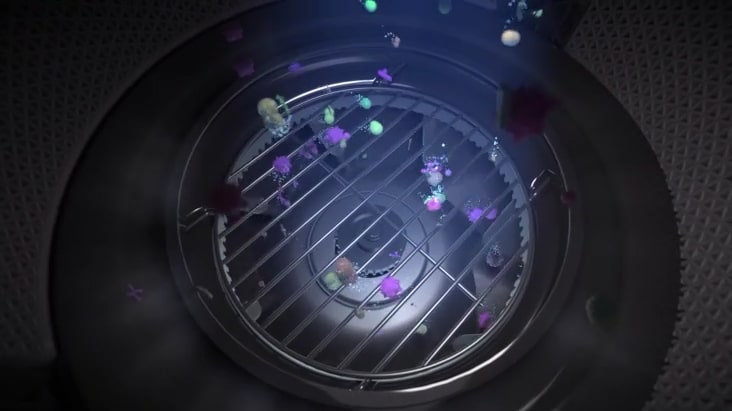
1) UVnano

-Test application number: TBK-2024-009193

-Test date: '24.09.04~24.09.07

-Target model: AS55*G***

-Test agency: KOTITI

-Test conditions: Temperature 20±5℃, humidity 50±10%, fan with low wind, UVC LED (6 hours On/1 hours Off)

-Test method: Confirmation of sterilization performance for three bacteria using UV LED (low wind, 1 hour) on the upper and lower fans

-Test strains:

Staphylococcus aureus ATCC 6538p

Klebsiella pneumoniae ATCC 4352

Staphylococcus epidermidis ATCC 12228

-Test Results:

Staphylococcus aureus: Top 99.999%, Bottom 99.999%

Klebsiella pneumoniae: Top 99.999%, Bottom 99.999%

Staphylococcus epidermidis: Top 99.999%, Bottom 99.998%

-The test result is based on a lab environment, and can vary if conditions change.


2) Ion generation and antibacterial performance

-Test application number: KR24K5K2 001

-Test date: '24.11.7 ~ '24.11.11

-Test model: AS55*G***

-Test agency: TÜV Rheinland

-Test conditions: Temperature 20±3℃, humidity 40±10%, Test chamber 30.2㎡, Booster mode, 4 stages (rated air volume)

-Test method: Place the ion counter at 100mm along the wind direction from the air discharge outlet. After drying period, it is exposed without unit operation for 60 min at the center of the chamber floor.

-Test result: 100mm distance max concentration 5,000,000, Antibacterial performance (Escherichia coli) Average 99.5%


3) LG ThinQ

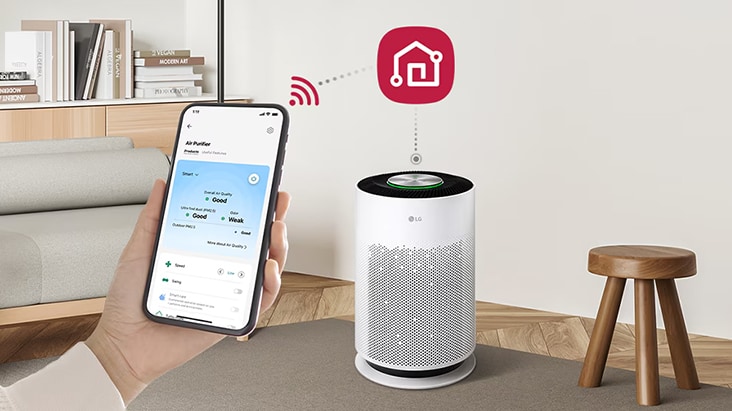
-Wi-Fi connectivity and product registration on the LG ThinQ app are required.

-Google and Google Home are trademarks of Google LLC.

-Amazon, Alexa, Echo and all related logos and motion marks are trademarks of Amazon.com, Inc. or its affiliates.


4) AI+

-Test application number: KR24J9U2 001  

-Test date: '24.10.24 ~ '24.10.25  

-Target model: AS55*G***  

-Test agency: TÜV Rheinland  

-Test conditions: Temperature 23±5℃, Humidity 55±15%  

-Test method: Integrated Power Consumption of each operation mode (8 hours after 15 minutes from the start of each operation mode).  

-Test result: AI+ mode for the air purifier has 49.6% higher energy saving performance than Smart+ mode (Integrated Power Consumption (Wh) AI+ Mode 28.260Wh Vs. Smart+ Mode 56.085Wh)

Our picks for you

Related articles

FAQs

Q.

What is CADR and why does it matter?

A.

CADR (Clean Air Delivery Rate) measures how quickly an air purifier can remove airborne pollutants such as dust, pollen, and smoke. While coverage area indicates the size of the room a purifier is designed for, CADR helps indicate how efficiently it can clean the air. Considering both specifications together can provide a better understanding of overall purification performance.

Q.

Does my air purifier require professional installation?

A.

Most LG air purifiers are designed for quick and simple setup. After removing the packaging and filters' protective materials, simply install the filters, place the unit on a flat surface with sufficient surrounding space, and connect the power. No professional installation is typically required for standard air purifier models.


Follow the steps below:

1) Remove all filter packaging

2) Place the unit on a flat, stable surface

3) Leave enough space around the air inlet and outlet

4) Plug in the unit and complete the initial setup


*Helping Tip: Register your product with LG ThinQ™ (where supported) to access smart controls, maintenance notifications, and product management features.

Q.

Where should I place my air purifier for the best results?

A.

The best location depends on where pollutants are generated and where you spend the most time. Rather than placing the purifier in the center of your home, prioritize the room where clean air matters most—such as your bedroom, living room, or home office. Once the room is selected, place the purifier where airflow is not blocked to help maximize purification performance.


Choose the right location based on:

• Your primary living or sleeping area

• Cooking or pet activity

• Frequent window opening

• Open or enclosed room layouts


*Helping Tip: If you use only one air purifier, place it in the room where you spend the longest continuous time rather than trying to cover your entire home. Choose the room with the highest daily occupancy before considering less frequently used spaces.

Q.

How often should I replace the filters?

A.

Filter maintenance is designed to be simple. The Pre Filter is washable and is generally recommended to be cleaned about once a month, while the HEPA and Deodorization Filters are non-washable and are typically recommended for replacement every 12 months. Actual replacement intervals may vary depending on your environment, usage time, and indoor pollution levels.


*Helping Tip: Many LG air purifiers notify you when filter maintenance or replacement is needed through the display or the LG ThinQ™ app, making it easier to keep your purifier performing at its best.

Q.

Will an air purifier use a lot of electricity?

A.

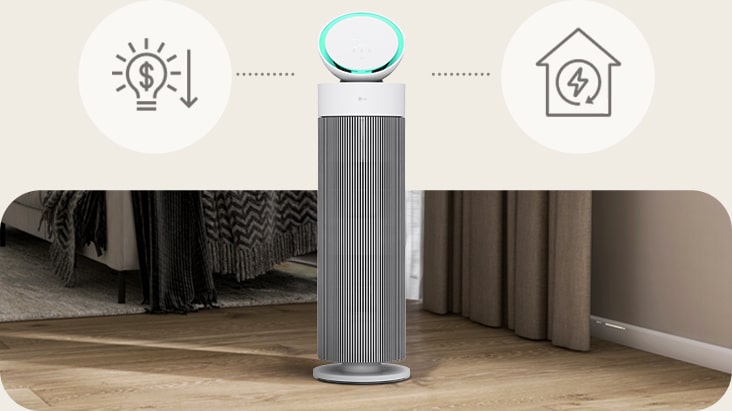
Air purifiers are designed for continuous, everyday operation while helping keep energy consumption under control. Especially, LG AI+ Energy Saving Mode automatically adjusts fan speed based on indoor air quality, helping reduce unnecessary power consumption. Actual energy use may vary depending on your home environment and usage patterns.


Electricity usage may vary depending on:

• Room size and recommended coverage area

• Indoor air quality conditions

• Daily operating hours

• Selected operation mode


*Helping Tip: For everyday use, AI+ Energy Saving Mode automatically optimizes fan speed according to indoor air conditions. It can reduce energy consumption by over 49% compared with Smart+ Mode while maintaining effective air purification.