Share this content.

You can share the items you like with your friends.

Helpful Hints

Vacuum Cleaner Suction Power: A Practical Guide


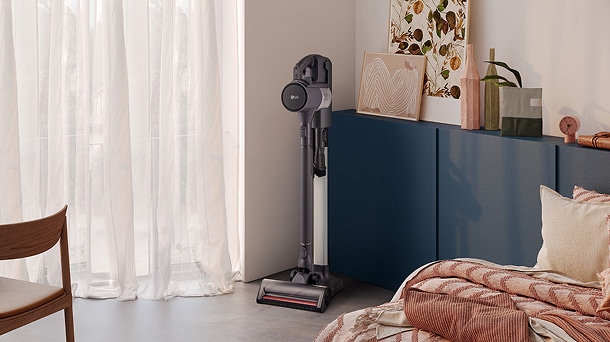
LG cordless stick vacuum cleaner in matte black and silver, upright on a dark gray studio floor with shadowed wall.

LG cordless stick vacuum cleaner in matte black and silver, upright on a dark gray studio floor with shadowed wall.

Vacuum cleaner suction power plays an important role in how effectively dust, dirt, and debris are removed from household surfaces. Understanding how suction power works and how it is measured can help you choose a vacuum cleaner that suits your home and cleaning habits. This practical guide explains suction power fundamentals and key considerations when selecting a vacuum cleaner. 

What Is Vacuum Cleaner Suction Power?


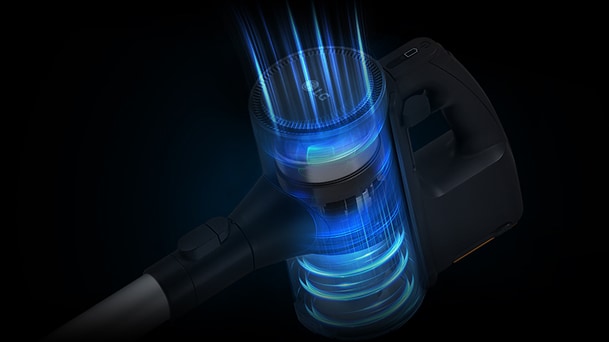
Suction power refers to the force that pulls air, along with dust and debris, into a vacuum cleaner. This airflow movement supports the pickup of particles from floors, carpets, and other surfaces. Higher suction may help lift embedded debris, while moderate suction levels are often suitable for hard floors and delicate surfaces.


Vacuum cleaner performance depends not only on suction strength but also on airflow design, attachments, and regular maintenance. Results may vary based on usage conditions and surface types.


Suction performance may be described using measurements such as Air Watts, airflow, or suction pressure.


Specifications should be reviewed alongside real-world cleaning needs.

How Is Suction Power Measured? 

Vacuum cleaner suction power is measured under controlled laboratory conditions1). Air Watts are commonly referenced for cordless and stick vacuums, combining airflow volume and suction pressure into a single comparative metric.


  • Airflow: Indicates the volume of air moving through the vacuum.
  • Suction pressure: Reflects the vacuum’s lifting capability.
  • Air Watts: A combined indicator used for general comparison purposes.

* Testing standards and measurement methods may vary by region and product category. As a result, measured values serve as reference information rather than performance guarantees.

* The image above is for illustrative purposes only. Product availability may vary by country and region.

What Suction Power Is Suitable for Home Cleaning?

There is no single suction level that fits all homes. Suitable suction power depends on factors such as floor material, household size, and cleaning frequency.


  • Hard floors: Moderate suction often supports effective daily cleaning.
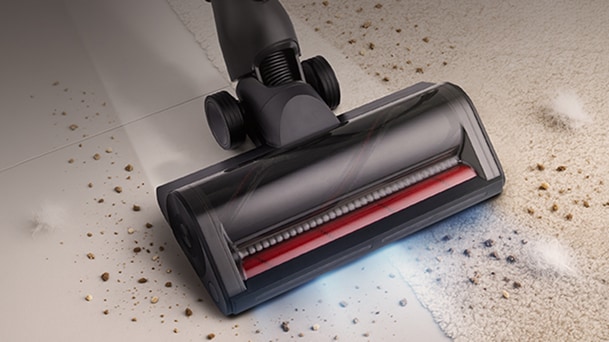
  • Carpets and rugs: Higher suction may help lift dust and debris from deeper fibers.
  • Mixed flooring homes: Variable power modes allow suction by surface type for consistent cleaning across surfaces.


Balanced suction performance supports cleaning efficiency while helping to protect flooring surfaces. 

* The image above is for illustrative purposes only. Product availability may vary by country and region.

Key Factors to Consider When Choosing Suction Power

Floor and Surface Types


Different surfaces respond best to different suction levels. Using appropriate settings can help maintain flooring condition while supporting effective debris removal. 

Homes with Pets or Dust Sensitivity


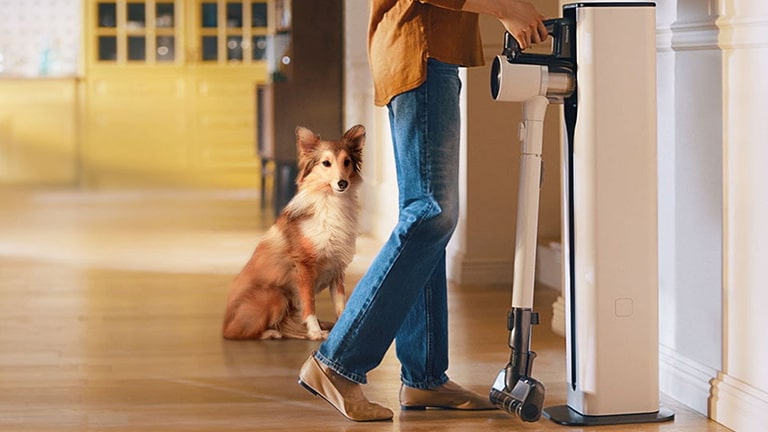
Pet hair and fine dust may require stronger suction and suitable brush designs. Filtration systems are designed to help capture dust under test conditions when maintained properly. 

Vacuum Cleaner Format


Stick, upright, canister, and robotic vacuum cleaners are designed for different household needs. Compact designs focus on ease of use, while larger formats may prioritize longer cleaning sessions.

Noise Considerations


Noise levels vary based on motor design and operating mode. Some vacuum cleaners are designed to reduce operational noise while maintaining functional suction under certain conditions.

Explore LG Vacuum Cleaners Designed for Everyday Cleaning


LG offers a range of vacuum cleaners designed to support everyday household cleaning needs. By balancing suction performance, usability, and maintenance considerations, these models are developed to help users manage different floor types and living environments.

To find a vacuum cleaner that fits your home and cleaning habits, explore LG’s vacuum cleaner range and review product specifications based on your individual needs. 

Explore LG Vacuum Cleaners Designed for Everyday Cleaning
Product SeriesLG CordZero™ A9 SeriesLG CordZero™ All-in-One TowerLG Robotic Vacuum Models
LG cordless stick vacuum, matte black and silver, full-length front view.
* Image for reference only
LG CordZero tower-style vacuum stand with docked cordless stick vacuum, floor nozzle, and side accessory.
* Image for reference only
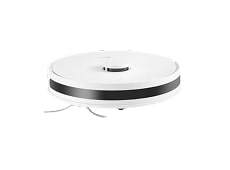
LG round white robot vacuum with raised center lidar module, black bumper band, and two side brushes.
* Image for reference only
Suction PerformanceUp to 200 Air Watts (under test conditions)Up to 200 Air Watts (under test conditions)Designed for automated cleaning performance
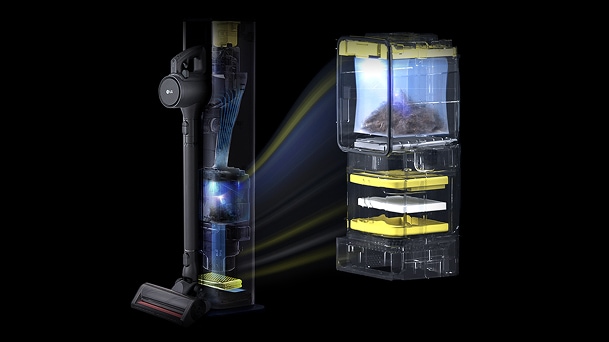
Vacuum TypeCordless StickCordless Stick with dust collection systemRobotic
Designed ForHard floors, carpets, pet hairMulti-surface cleaningHard floors and low-pile carpets
Product specificationsCordless stick vacuum cleaners designed to deliver consistent suction performance under test conditions. These models are intended to support cleaning across hard floors and carpets, with adjustable power settings for different surfaces.A cordless vacuum solution combined with an integrated dust management system, designed to support convenient maintenance and multi-surface cleaning during regular household use.Robotic vacuum cleaners designed to support automated cleaning on hard floors and low-pile carpets, helping maintain everyday cleanliness with minimal manual operation.

* Product availability may vary by country and region.

How to Support Consistent Suction Performance

Empty the Dust Container Regularly


Keeping the dust container from overfilling helps maintain airflow and suction efficiency. 

Maintain Filters and Airflow Paths


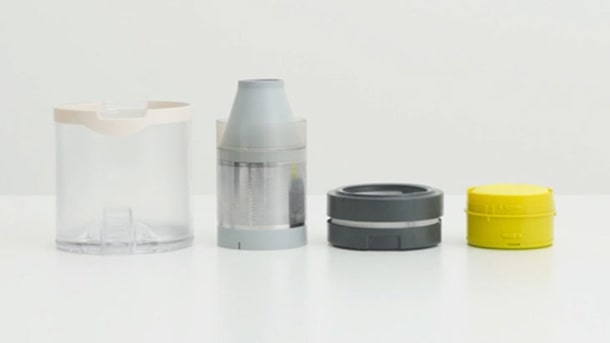
LG CordZero dust bin parts include a dust container, mesh filter, HEPA filter, and fine dust filter.

Routine Inspection


Checking brushes and airflow paths can help prevent blockages and support consistent cleaning performance. 

FAQ

Q.

Which LG vacuum cleaners are designed to deliver strong suction performance?

A.

LG offers a range of vacuum cleaners designed to deliver strong and consistent suction under test conditions. Actual performance may vary depending on environment and usage settings. 

Q.

Is higher suction power always better?

A.

Higher suction may help with deep cleaning, but adjustable suction settings allow for better balance across different surfaces. 

Q.

Why does suction performance decrease?

A.

Common causes include full dust containers, dirty filters, or airflow blockages. Regular maintenance can help reduce performance loss. 

Q.

How is suction power measured?

A.

Suction power is measured under controlled test conditions using reference metrics such as Air Watts. Real-world results may differ. 

Q.

What suction power should I choose for my home?

A.

The appropriate suction level depends on floor types, pets, and cleaning needs. Models with adjustable power settings offer flexibility. 

Explore LG’s vacuum cleaner range designed to support everyday cleaning needs across different living spaces. 

1) Suction Power

- Maximum suction power was measured under LG internal testing conditions.​

- Test procedure:

* Measurement conducted with the pipe fully extended and no nozzle attached. 

* The cleaner was connected to a test chamber. 

*Controlled airflow restriction was applied using multiple orifice diameters. 

* Orifice diameters used for measurement: 50, 40, 30, 23, 19, 16, 13, 10, 6.5 and 0 mm. 

* For each measuring point, airflow and vacuum were recorded 15 seconds after throttling. 

* The cleaner was then operated in an unthrottled condition for 15 seconds before proceeding to the next measuring point. 

Related Articles