We use cookies, including cookies from third parties, to enhance your user experience and the effectiveness of our marketing activities. These cookies are performance, analytics and advertising cookies, please see our Privacy and Cookie policy for further information. If you agree to all of our cookies select “Accept all” or select “Cookie Settings” to see which cookies we use and choose which ones you would like to accept.
Less Managing, More Watching: How LG AI TV Reads the Room During Football Matches
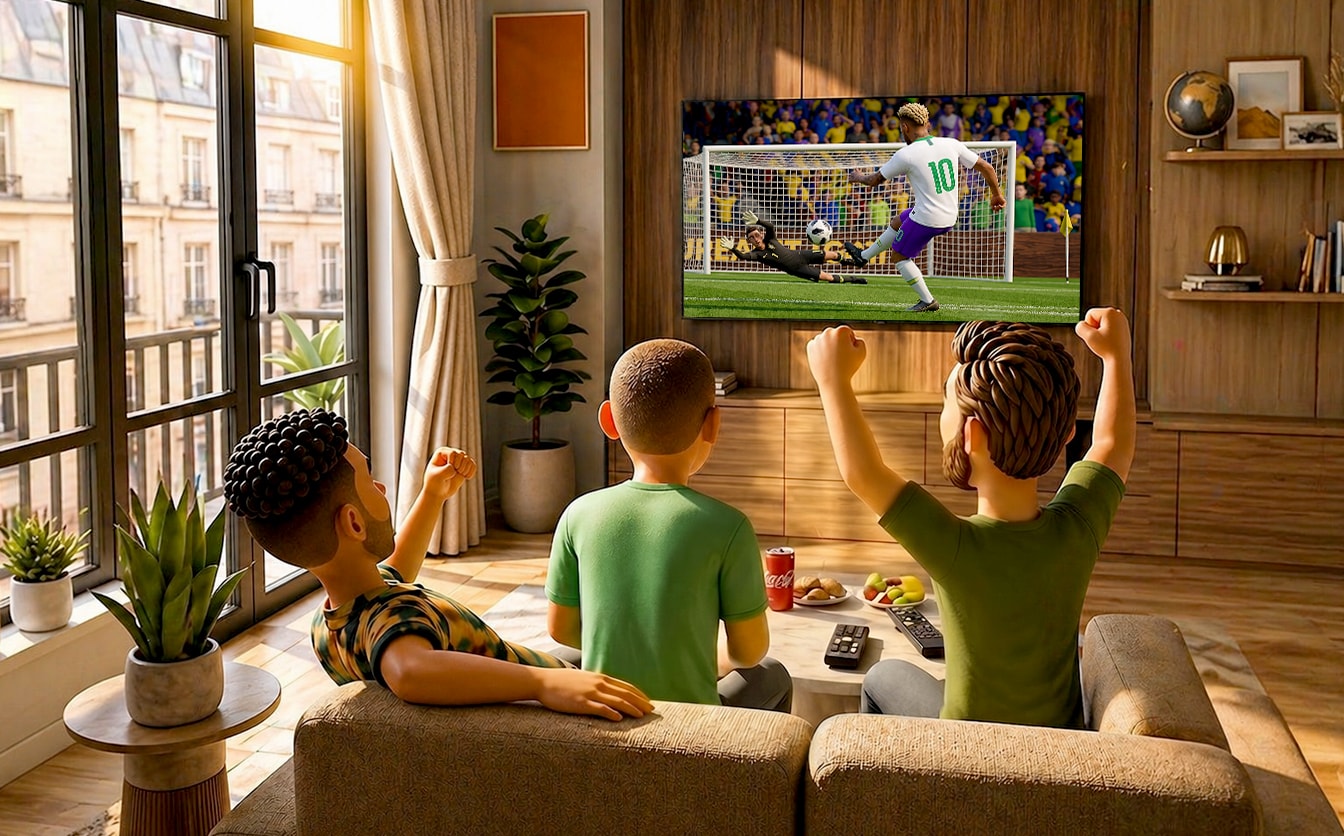
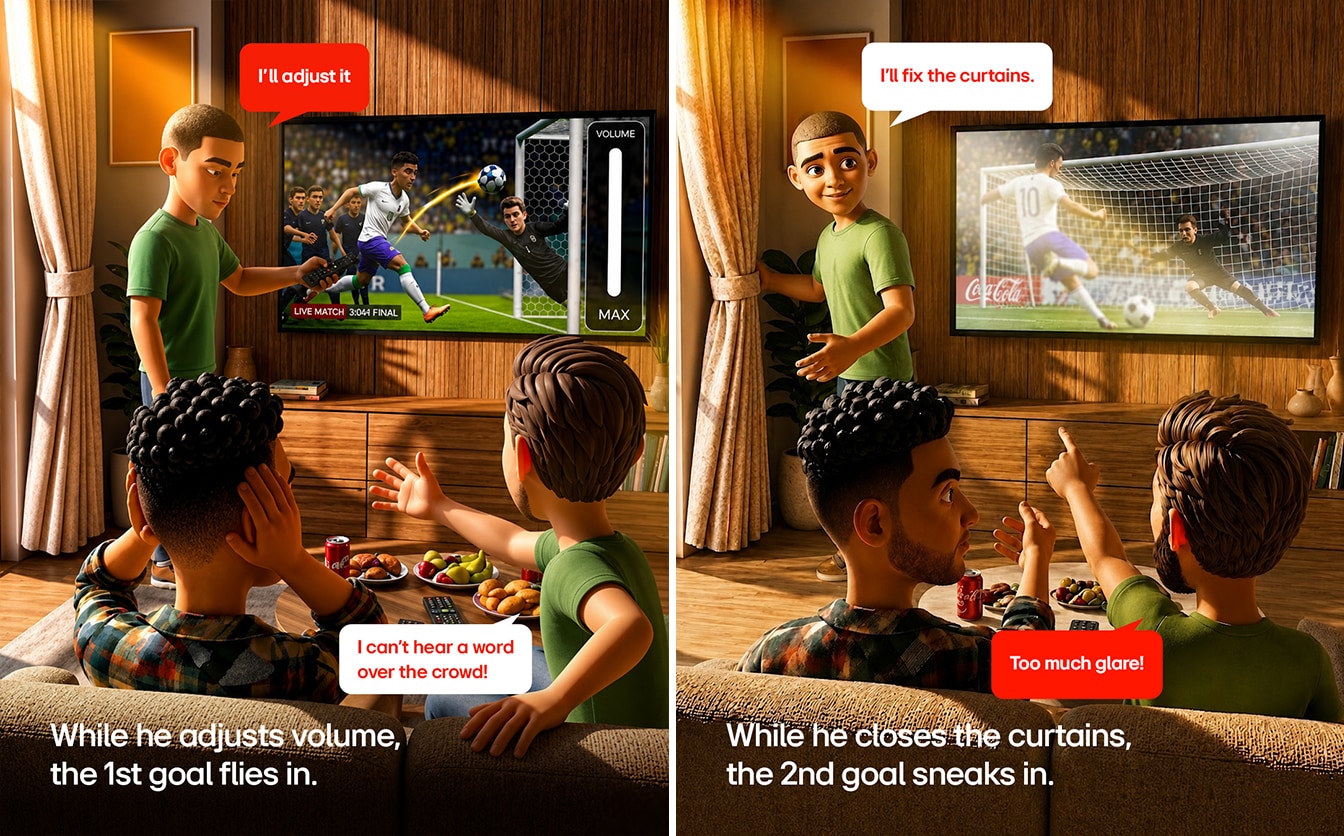
You know the moment. The ball crosses midfield. The striker makes the run. The whole room leans forward. And then it all hits at once: the sun catches the window at exactly the wrong angle and the screen turns into a mirror, and the crowd erupts so loud the commentary disappears entirely. The host jumps up to fix the curtain. Then grabs the remote to chase the volume. Then squints at the screen and adjusts the brightness. By the time they finally sit back down, the goals have already happened. They saw them in the replay. But missed them live.
LG Electronics (LG) designed the LG AI TV with webOS* to handle exactly this kind of moment. The LG AI TV is a smart television with an AI-powered picture and audio engine that reads room conditions and adapts its output in real time, helping viewers stay with the match instead of managing the screen or the sound.
Q: Why Does One Person Always Miss the Match?
Every group watching a match at home has one. The person who spends the whole match managing the room and never quite gets to enjoy it the way everyone else does. They are watching, just not the match. They are watching the curtains, the brightness level, the volume bar.
For anyone who has hosted a 3 PM kickoff in a south-facing room, the pattern is familiar. The screen washes out, so up to fix the curtains. The crowd roars and buries the commentary, so grab the remote and turn the volume down. A quiet spell, volume back up. The light shifts again, back to the curtains. Brightness looks off, adjust that too. It never fully stops. And the moment you reach for anything is almost always the moment something happens on the pitch.
Q: What Makes Daytime Football So Hard to Watch at Home?
Night matches are easy on a screen. The room is dark. The picture does what it is supposed to do. But a daytime match on a sunny day is a different problem entirely. Direct sunlight creates reflections that sit on top of the picture. Ambient brightness washes out contrast, so dark jerseys blur into the pitch and the ball gets harder to track.
Sound has the same issue. A football match is loud by nature. Stadium crowd noise, commentary and the reactions of people in the room all fill the same audio space. Every time the crowd surges, the commentary slips. You reach for the volume. The next roar comes through too loud. You reach for it again. The remote never leaves your hand.
Q: How Does the LG AI TV Handle Both Problems Automatically?
The LG AI TV with webOS approaches these challenges from two directions: picture and sound.
AI Brightness Control first recognises the genre of content being watched automatically, then uses a built-in ambient light sensor to continuously measure room brightness. As sunlight levels shift throughout the day, the display’s luminance and tonal balance adjust accordingly. The picture is designed to stay clear and well-defined as room light changes, without the viewer touching a single control.
On select OLED evo models, Reflection Free Premium reduces the effect of ambient light on the screen surface itself. This matters most during high-attention moments like close-up replays, multi-angle reviews and disputed calls, where surface glare can obscure the precise detail that defines those sequences.
AI Picture Pro, powered by a Dual AI Engine, applies scene-by-scene HDR tone mapping and contrast processing across the full broadcast. During a live match, the range of shot types is extreme: wide pitch shots, player close-ups, slow-motion replays and stadium overhead angles each present different brightness and contrast profiles. AI Picture Pro processes each frame independently, maintaining image depth and color accuracy through rapid shot transitions.
On the audio side, AI Sound Pro continuously balances output across multiple sound layers. Virtual multi-channel up-mix creates a more spatially defined broadcast experience. AI Acoustic Tuning uses the Magic Remote's built-in microphone to recognise the viewing environment and content genre, delivering both the live atmosphere of a stadium and clear, sharp commentary at the same time, with audio optimised to match. The result is that you stop needing to adjust the volume every time the crowd rises.

Q: What Does the Viewing Experience Feel Like When the TV Handles the Room?
The best screen technology is the kind that disappears. You stop noticing the brightness because the picture is designed to hold. You stop reaching for the curtain because reflections are significantly reduced. You stop adjusting the volume because the commentary is designed to stay clear on its own.
And the person who was always the host, the one managing the room while everyone else watched? They finally get to be just another fan on the couch. Watching the same match, at the same moment, without managing nearly as much. That is what a good football match should feel like.
Q: What is LG webOS, and how is it different from other smart TV platforms?
The LG webOS is LG’s proprietary smart TV operating system, designed to bring all streaming services, live channels and connected devices together in one place. Unlike platforms that require navigating multiple separate apps, webOS surfaces content recommendations from across services in a unified home screen, learning individual viewing habits over time to reduce the time spent searching. It also supports a wide range of third-party apps and integrations and receives regular software updates that expand features and compatibility over the life of the TV.
Q: Are the AI features useful beyond sports, for movies and gaming as well?
Yes. The AI features on the LG AI TV with webOS are not limited to sports content. AI Picture Pro applies scene-by-scene HDR tone mapping and contrast processing to any content, including films, series and games, adjusting each frame independently regardless of the source. AI Sound Pro and AI Acoustic Tuning balance audio output and enhance dialogue clarity across all content types, which is particularly useful for dialogue-heavy drama or action films with wide dynamic range. For gaming, the TV’s AI processing works alongside low-latency display modes, so picture enhancement and reduced input lag can be used together on supported models.
Q: Does the LG AI TV eliminate the need to manually adjust anything during a match?
The LG AI TV with webOS is designed to significantly reduce the need for manual intervention during a match. AI Brightness Control adapts the picture as room light shifts, while AI Sound Pro and AI Acoustic Tuning manage the audio balance automatically as crowd energy rises and falls. In most typical home viewing conditions, this means fewer moments where the viewer needs to reach for a remote, adjust curtains or change any settings. That said, the degree of improvement depends on the specific model and the viewing environment. The goal is to minimize the interruptions, not to promise a perfect experience in every condition.
# # #
* Features and specifications may vary by model, size and market. AI Brightness Control, AI Picture Pro, AI Sound Pro and AI Acoustic Tuning are available on select models. Reflection Free Premium is available on select OLED evo models only; Reflection Free Premium is a display panel characteristic, not an AI feature. Internet connection required for certain webOS features.