Share This Content.

You Can Share The Items You Like With Your Friends


Dishwasher

How to Choose the Right Type of Dishwasher for Your Kitchen


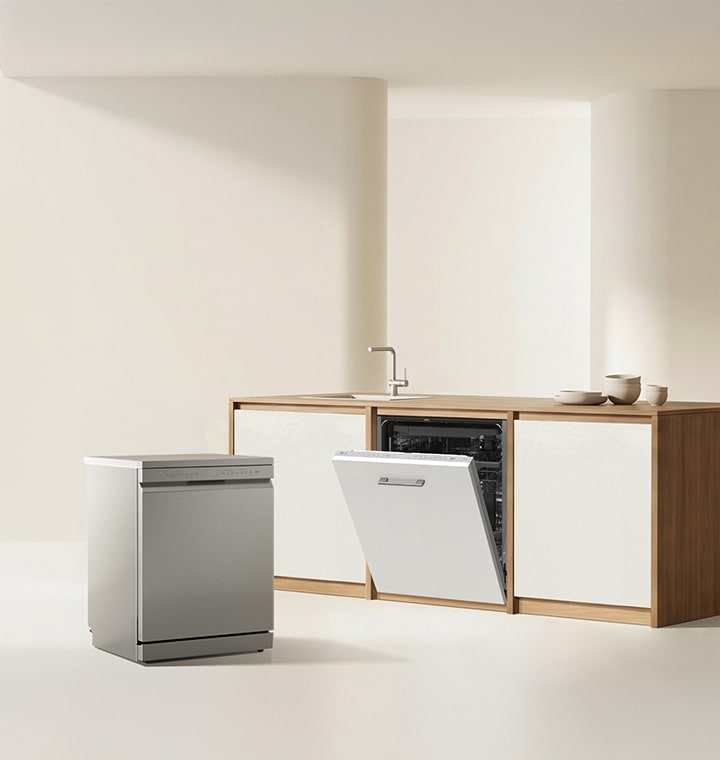
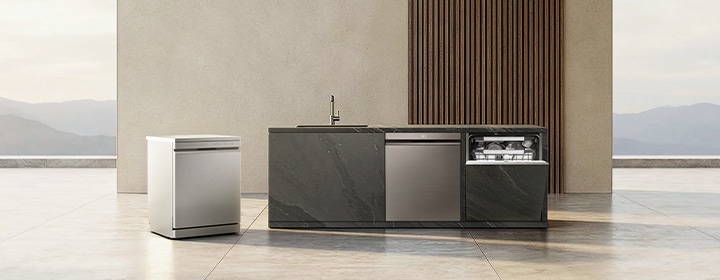
LG dishwasher integrated into an outdoor kitchen island with a modern design and clean minimal surroundings.

Choosing the right type of dishwasher depends on how your kitchen is designed, how much space you have, and how you plan to use it day to day. While all dishwashers follow a similar cleaning process, installation type and fit can significantly affect convenience, capacity, and overall performance.


This page compares the main types of dishwashers—freestanding, built-in, and built-under—and explains when each option makes sense. It also highlights key factors to consider, such as space requirements, flexibility, and installation needs, before guiding you to explore dishwasher options that best match your kitchen layout and household habits.

FAQ

What types of dishwashers are available?

Most household dishwashers fall into three main types: freestanding, built-in, and built-under. Each type mainly differs in how it is installed and how it fits into your kitchen cabinetry and layout.

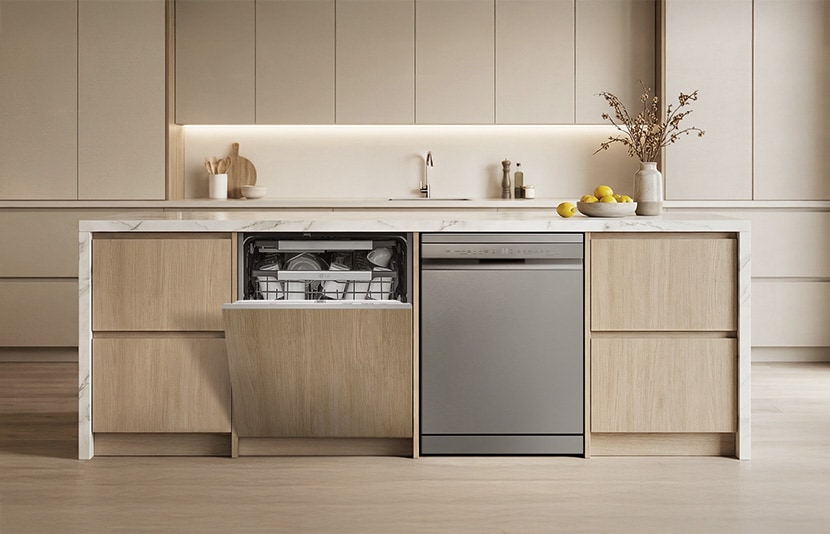
Freestanding dishwashers are designed to stand alone and can be installed in a variety of locations. They typically have finished side panels and a visible top, which allows more flexible placement and easier replacement.

Built-in dishwashers are installed within kitchen cabinetry for a more integrated, seamless look. They are usually concealed behind a cabinet panel or feature a built-in front, allowing the appliance to align cleanly with surrounding kitchen units.

Built-under dishwashers are designed to fit under a countertop with visible front control panel and exterior of the product. They sit beneath the worktop but are not fully concealed, which distinguishes them from fully built-in models.

While all three types use a similar cleaning process, differences in installation and integration can influence kitchen layout, accessibility, and overall usability.

What is the difference between freestanding, built-in, and built-under dishwashers?

Freestanding, built-in, and built-under dishwashers differ mainly in how they are installed and how they integrate with kitchen cabinetry.


Freestanding dishwashers are self-contained units that can be placed independently, offering greater flexibility in placement and future replacement.

Built-in dishwashers are installed within kitchen cabinetry for a seamless, integrated appearance that aligns with surrounding units.

Built-under dishwashers are designed to sit beneath a countertop while keeping the front control panel and exterior of the product visible, combining under-counter installation with easier access to controls.


While all three types use a similar cleaning process, the differences in installation and integration can affect kitchen layout, accessibility, and overall user experience.

Which type of dishwasher is best for small kitchens?

For smaller kitchens, built-under or built-in dishwashers are often preferred because they make efficient use of limited space.


In compact kitchens, some households may also consider slimmer or compact dishwasher formats, where available, to better fit narrow cabinetry or tighter layouts.

Which dishwasher type offers the most flexibility?

Freestanding dishwashers generally offer the most flexibility, as they can be installed in a wider range of locations and may be easier to replace or relocate.

How much water does a dishwasher usually use?

Hand washing dishes can use up to 140 liters of water per wash, depending on individual washing habits.

In a research study, hand washing required ten times more water than using a modern dishwasher, clearly showing that hand washing is significantly less water‑efficient.


*Based on a dishwashing behavior study conducted by Pusan National University Sensory Science Laboratory (April 2019).

The hand‑washing test involved 15 individuals washing dishes for 12 people under practical-use conditions.

Water usage for hand washing may vary depending on individual behavior, water flow, and washing methods.

Do different dishwasher types clean dishes differently?

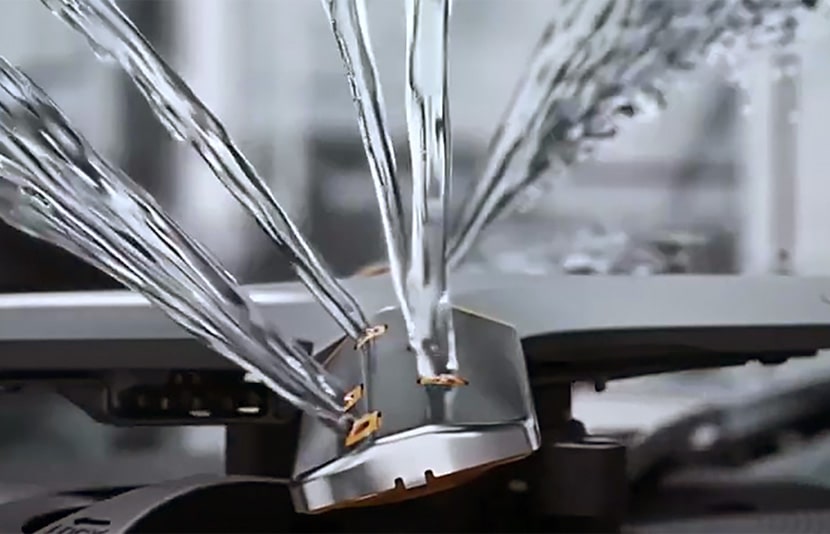
All dishwasher types use a similar cleaning process, but performance can vary depending on design, spray systems, and programme options rather than installation type alone.

How can you tell if a dishwasher is reliable?

A dishwasher's reliability is typically determined by factors such as build quality, internal components, testing standards, and, just as importantly, how the appliance is used and maintained over time. Regular maintenance and proper loading can also influence long-term performance.

How do I clean and maintain my dishwasher?

To keep your dishwasher performing well over time, regular maintenance is recommended.

This includes cleaning the filter to remove food residue, wiping spray arms if needed, removing limescale deposits, and using a dedicated dishwasher cleaner periodically.

Proper care helps maintain cleaning performance and can support the long-term reliability of your appliance.

How often should I clean a dishwasher?

As a good rule of thumb, it is recommended to clean your dishwasher about once a month using a dishwasher cleaner. Regular cleaning helps prevent limescale build-up, residue deposits, and unpleasant odours, particularly in areas with hard water or where the dishwasher is used frequently.

Do I need to pre-wash dishes before dishwasher?

No, you generally do not need to pre-wash dishes before using a dishwasher.


Modern dishwashers are designed to effectively remove food residue, so pre-rinsing is usually unnecessary. Instead, simply scrape off large food scraps (such as bones or seeds) before loading. This helps prevent clogs while maintaining optimal cleaning performance.

In fact, pre-rinsing can be inefficient. Dishwasher detergents and sensors* are designed to work with food particles, so rinsing dishes beforehand may reduce cleaning effectiveness and waste water, time, and energy.


*Sensor availability and operation may vary by model. Actual performance may differ depending on usage conditions.

Which dishwasher type should you consider next?

After comparing dishwasher types, you may want to explore freestanding , built-in , or built-under dishwasher options based on your kitchen layout, available space, and everyday usage needs.

LG dishwasher lineup including freestanding and built-in models displayed in a minimal kitchen setting.

LG dishwasher lineup including freestanding and built-in models displayed in a minimal kitchen setting.

You may also interested in