Helpful Hints

    Understanding Air Conditioner Energy Efficiency


    During hot summer weather, it's common to run the air conditioner all day. But the longer you keep things cool, the more you may worry about your electricity bill rising alongside your comfort. That's why many people look for ways to stay comfortably cool while using less energy. True energy efficiency means more than simply using less power. Cooling the same space more effectively, reducing unnecessary energy waste, and maintaining comfort over time are all important factors as well. In this article, we'll look at the key factors that determine energy efficiency, cooling habits that help save energy, and how the smart features of LG air conditioners support both.

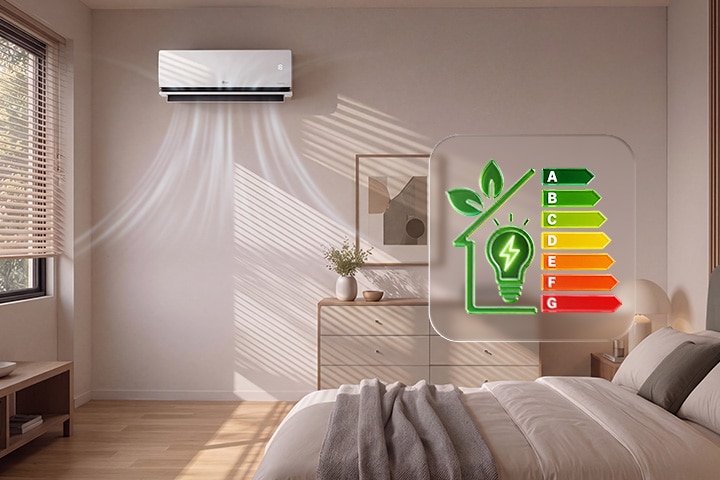
    LG DUALCOOL AI Air conditioner cooling a bedroom alongside an energy efficiency rating graphic

    *This image is AI-generated.

    *Image is for illustrative purposes only. Energy rating systems may differ based on local regulations.

    What Makes an Air Conditioner Energy Efficient?


    It's easy to assume that an air conditioner with a higher energy efficiency rating, such as SEER (Seasonal Energy Efficiency Ratio), will always lead to lower electricity bills, but one of the biggest factors behind that efficiency is how the compressor operates. Even with the same cooling capacity, the way the compressor is controlled can make a noticeable difference in real-world energy consumption.

    Inverter Technology: A Key Factor in Energy Efficiency


    An air conditioner cools a room by removing indoor heat and releasing it outside. At the center of this process is the compressor. Think of it as the engine of an air conditioner. Just as a car's engine provides the power to move the vehicle, the compressor circulates refrigerant so the air conditioner can cool the room.


    This is where inverter technology makes a difference. Conventional air conditioners repeatedly switch between full power and completely off. On the other hand, an inverter air conditioner adjusts its output based on the indoor temperature. It cools quickly at first, then continues running only as much as needed to maintain the desired temperature. By avoiding unnecessary operation, inverter technology can help create a more stable and efficient cooling experience.

    When Inverter Technology Is Useful


    Inverter technology can be especially useful when you use your air conditioner for longer periods or want to keep a consistent indoor temperature. By adjusting output based on the indoor temperature, the air conditioner can operate at the right level, making inverter technology useful in a range of everyday situations where you may want extended cooling.¹⁾


    ✓ Working from home all day

    ✓ Spending time together in the living room

    ✓ Cooling the bedroom overnight

    ✓ Cooling and heating throughout the seasons

    Is Inverter Technology Alone Enough for Better Energy Efficiency?


    If you've chosen an energy-efficient inverter air conditioner but haven't seen the reduction in electricity costs you expected, the product itself may not be the only reason. In practice, your home environment and everyday habits also affect energy efficiency. Even the same air conditioner can use different amounts of electricity depending on how and where it's used. To get the most from your energy-efficient air conditioner, consider the following:


    • Choosing the right cooling capacity

    An undersized air conditioner may need to run longer to reach the desired temperature.

    • Keeping heat out of your home

    Heat entering through windows, doors, or poor insulation can make it harder to maintain a cool indoor environment.

    • Everyday usage habits

    Setting the temperature unnecessarily low or leaving windows open during operation can increase energy use.

    • Regular filter maintenance

    Dust buildup can restrict airflow, so cleaning the filter regularly helps maintain performance.

    How LG Air Conditioners Support Energy Efficiency


    Understanding the importance of good technology and everyday habits is one thing. Making those habits easier is another. LG DUALCOOL® AI combines the foundation of the Dual Inverter with smart features that help reduce unnecessary energy use and simplify everyday cooling management.

    AI Air for Comfort with More Efficient Cooling


    The cooling you need when you first turn on your air conditioner isn't necessarily the same once the room has reached a comfortable temperature. At first, stronger airflow can help cool the space quickly. As the room becomes more comfortable, continuing to cool at the same level may use more energy than needed. 

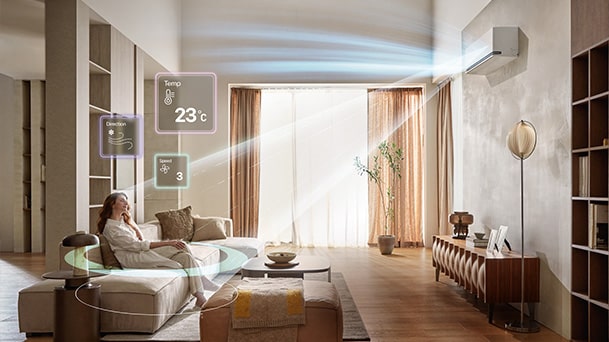
    AI Air²⁾ automatically adjusts cooling and airflow direction based on indoor conditions and how the air conditioner is operating. It starts by cooling the room quickly, then gradually adjusts the airflow and operation as the room approaches a comfortable level, such as reducing strong direct airflow. By providing cooling when it's needed and adjusting operation as conditions change, AI Air helps maintain comfort while supporting more efficient energy use.

    Indoor ConditionsHow AI Air Cools
    When you want to cool down quicklyFast Cooling delivers strong airflow to cool the room quickly
    When the air is cool enoughComfortable Cooling uses gentler, indirect airflow to help maintain comfort

    Track and Manage Your Energy Use


    Rather than wondering about your electricity bill without knowing how much energy you've used, Energy Monitoring in the LG ThinQ® app lets you check your air conditioner's energy consumption and usage trends. Seeing how much energy you use and when can help you better understand your everyday cooling habits.


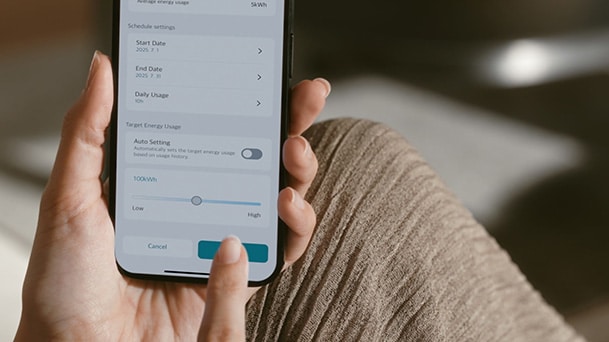
    If you want to go beyond monitoring and manage energy use around a set target, kW Manager³⁾ can help. Set a target for how much energy you plan to use or how much you want to spend on electricity, and kW Manager continuously tracks your accumulated usage and controls operation to help keep energy consumption within your goal. It automatically adjusts the energy-saving level based on your usage, helping you stay on track without having to constantly check or change settings yourself.

    Energy Saving That Adapts to the Moment


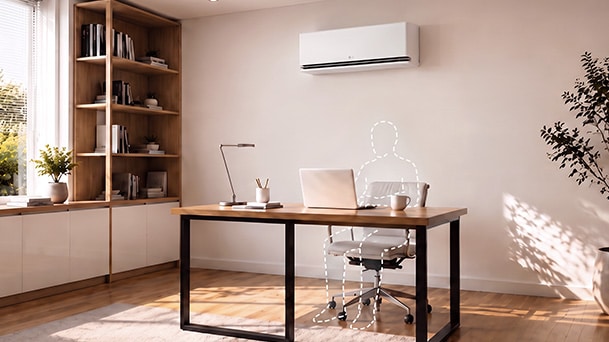
    As you use your air conditioner, there are times when you may need to turn it off or adjust the settings. Features that respond to changing conditions can help you manage energy use without making those adjustments yourself. Window Open Detection switches to an energy-saving mode when it senses a rapid change in indoor temperature while cooling, such as when a window is opened. This helps reduce unnecessary energy use without requiring you to stop and restart the air conditioner.

    *This image is AI-generated.

    Everyday Habits That Can Help Improve Cooling Efficiency


    Even an energy-efficient air conditioner performs differently depending on how it's used. Small everyday habits can help improve cooling efficiency.

    Everyday HabitHow It Helps
    Set a comfortable temperature (ASHRAE recommends 24℃ or above)4)Helps manage cooling without using more than needed
    Use curtains or blindsHelps reduce heat entering through sunlight
    Use a fan alongside your air conditionerHelps circulate cool air throughout the room
    Keep windows and doors closedHelps keep cool air from escaping

    Stay Comfortable While Reducing Energy Waste


    Energy efficiency depends not only on the technology inside your air conditioner, but also on how you use it. Choosing the right cooling capacity, maintaining a comfortable temperature, and cleaning the filter regularly are all simple habits that can make a difference. Smart features such as AI air and kW manager can also make it easier to manage energy use without constantly adjusting the settings yourself. Ultimately, saving energy isn't about using your air conditioner less. It's about avoiding unnecessary use in ways that keep you comfortable.

    FAQ

    Q.

    Does an inverter air conditioner always lower electricity bills?

    A.

    Inverter technology can help reduce energy use, but actual electricity costs also depend on operating time, temperature settings, and indoor conditions. The benefits are often more noticeable when the air conditioner runs for longer periods or maintains a consistent temperature.

    Q.

    If my air conditioner has the highest energy efficiency rating, do I still need to consider anything else?

    A.

    Yes. The energy efficiency rating reflects the product's performance, including compressor operation. However, actual electricity use is also influenced by cooling capacity, insulation, usage habits, and filter maintenance.

    Q.

    How do I use kW Manager?

    A.

    In the LG ThinQ® app, set your preferred period and target for energy use or cost. kW Manager continuously tracks your accumulated usage and automatically adjusts the energy-saving level and power consumption to help keep energy use within your target over the remaining period. This makes it easier to manage energy use according to plan without having to adjust the settings yourself each time.

    Q.

    Doesn't AI Air use more electricity?

    A.

    Not necessarily. AI Air cools the room quickly at first, then automatically adjusts airflow strength and direction to provide only the cooling that's needed, helping avoid unnecessary operation.

    Q.

    What habits can help reduce electricity use when using an air conditioner?

    A.

    Choosing the right cooling capacity, avoiding excessively low temperature settings, and cleaning the filter regularly are good starting points. Smart features such as energy monitoring and remote control can also make it easier to manage energy use more efficiently.

    1) Actual energy use and the effects of inverter technology may vary depending on usage time, set temperature, indoor and outdoor conditions, and the product.

    2) AI Air

    * During heating, operation may adjust between Fast Heating, Buffer Mode, and Comfort Heating depending on indoor conditions.

    * Radar sensor availability may vary by country and product. Please check the product specifications before purchase for details.

    3) Applied to Single Split only.

    4) Source: ASHRAE, “Summer Consumer Tips.” Accessed August 2, 2026.