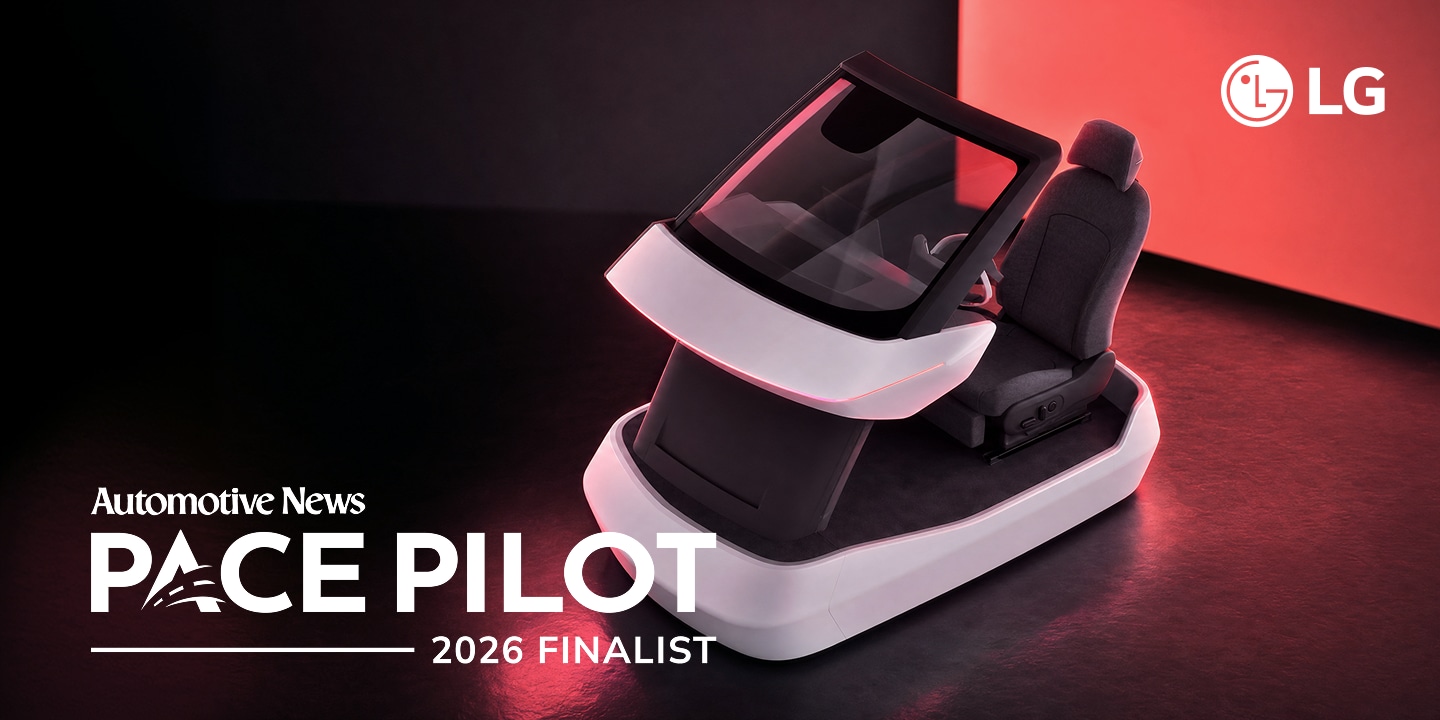
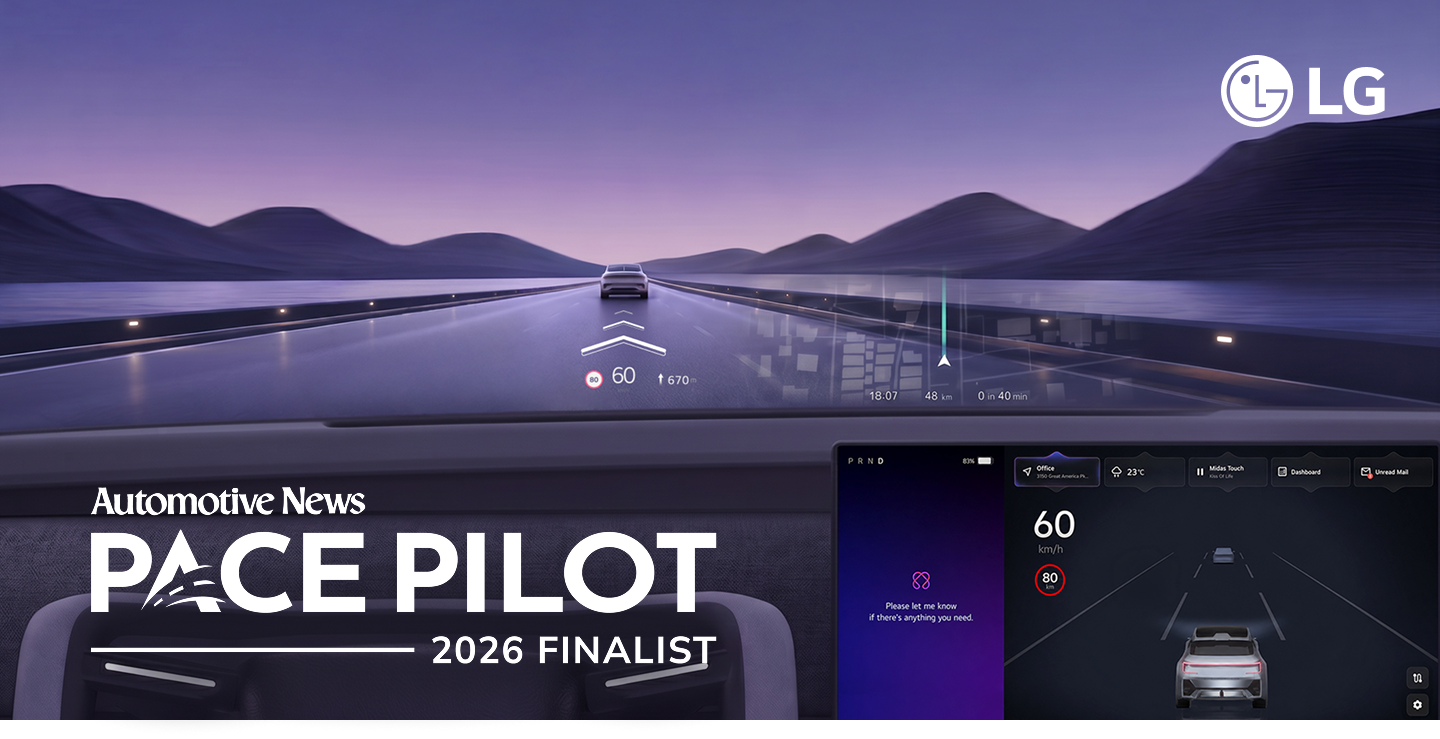
UltraView Windshield Display combines two complementary LG display technologies with distinct roles:
- Compact Focus-Free Augmented Reality Head-Up Display (AR-HUD): Projects driving-critical information, including vehicle speed, advanced driver assistance system (ADAS) alerts and navigation cues, at a far virtual distance aligned with the road.
- LG’s Proprietary Hover Screen: Presents navigation, vehicle status, HVAC and multimedia content on a large virtual screen at a perceived distance of 1.2 meters.
By presenting different types of information at intended virtual distances and positions, the system is designed to reduce unnecessary eye movement and support forward-looking driver attention, depending on vehicle configuration and driving conditions. Much more than simply a larger HUD, UltraView Windshield Display introduces a new architecture built around information hierarchy, timing and context.
Engineering UltraView for Real-World Vehicle Integration
Our solution is designed to overcome the engineering trade-offs seen in conventional windshield displays. UltraView Windshield Display delivers a combined field of view of 25 degrees by 7 degrees within a compact package of approximately 15 liters, balancing wide display coverage with practical vehicle integration. When inactive, there is no black masking on the windshield, preserving both outward visibility and a clean, seamless cockpit interior.
With real-time adjustment of screen size and information density, the UltraView solution is designed to help manage visual load and support a more intuitive driving experience.
How UltraView Windshield Display Adapts Throughout the Driving Journey
The true value of our next-generation windshield display architecture is its ability to adapt according to driving conditions and situational context, presenting information that matches the driver’s immediate needs. To see how this works in practice, let’s follow a typical journey from departure to arrival.
- At a Busy Intersection: Imagine approaching a busy city intersection. While waiting at a traffic light, you naturally focus on the road ahead while monitoring surrounding vehicles and pedestrians. Using information from the vehicle’s cameras and sensing systems, UltraView Windshield Display can present visual pedestrian alerts directly within your forward view. As the light changes, the system gently notifies you that the vehicle ahead has pulled away, letting you know it’s time to resume your journey.
- Seeing Clearly in Poor Visibility: Driving conditions can change quickly, particularly if there’s a sudden, heavy downpour. When visibility becomes severely limited, UltraView Windshield Display can overlay the outlines of nearby vehicles on the AR-HUD using data generated by your car’s cameras and sensor-fusion systems, helping you make more confident decisions while maintaining attention on the road.
- Making Complex Navigation More Intuitive: When approaching a toll plaza or encountering unexpected congestion, you must quickly identify which lane you need to be in while simultaneously monitoring surrounding traffic. UltraView Windshield Display can present lane guidance on the windshield, supported by the vehicle’s navigation and sensing systems, to help make complex navigation information easier to access within the driver’s forward view. When the vehicle’s navigation system identifies congestion and calculates an alternative route, the display can show the updated guidance within your line of sight, meaning your attention is on the street and not on a screen.
- Turning Downtime into Entertainment: The journey does not end when the vehicle stops. Let’s say you’ve arrived early for an appointment with twenty minutes to spare. Via the Center Information Display (CID) and Hover Screen, UltraView Windshield Display recommends personalized content, taking into account the time you have available. Once you’ve selected what to watch or play, the Hover Screen can provide a large virtual entertainment viewing experience while the vehicle is stationary.
These scenarios illustrate how UltraView Windshield Display is designed to adapt to diverse and fluid driving situations to support driver awareness, convenience and enjoyment. More broadly, they show how intelligent windshield displays can reshape the way drivers interact with in-vehicle information, streamlining everything from navigation to content discovery to support a more informed and convenient driving experience.
Creating Value for Drivers and Automakers
UltraView Windshield Display is designed to reduce unnecessary gaze shifts, make driving-critical information easier to recognize, and provide a more intuitive understanding of complex road situations. It supports drivers in keeping their eyes on the road by strategically positioning relevant information within their central field of view.
For automakers, the display offers a new way to deliver a premium digital cockpit experience with greater flexibility to optimize display configurations. Its compact optical architecture helps address dashboard packaging constraints, while the absence of black masking when the display is off facilitates a cleaner, more minimal interior aesthetic.
Our Vision: Smarter Windshield Utilization
The windshield is evolving from a simple pane of glass into an intelligent information surface. Leading this shift, UltraView Windshield Display reflects LG’s unique vision for the smarter utilization of this fundamental vehicle component. Presenting the right information in the right place at the right moment, our futuristic cockpit innovation points toward a more intuitive, streamlined in-cabin experience. To see LG’s UltraView Windshield Display in action, watch this video.
# # #