We use cookies, including cookies from third parties, to enhance your user experience and the effectiveness of our marketing activities. These cookies are performance, analytics and advertising cookies, please see our Privacy and Cookie policy for further information. If you agree to all of our cookies select “Accept all” or select “Cookie Settings” to see which cookies we use and choose which ones you would like to accept.
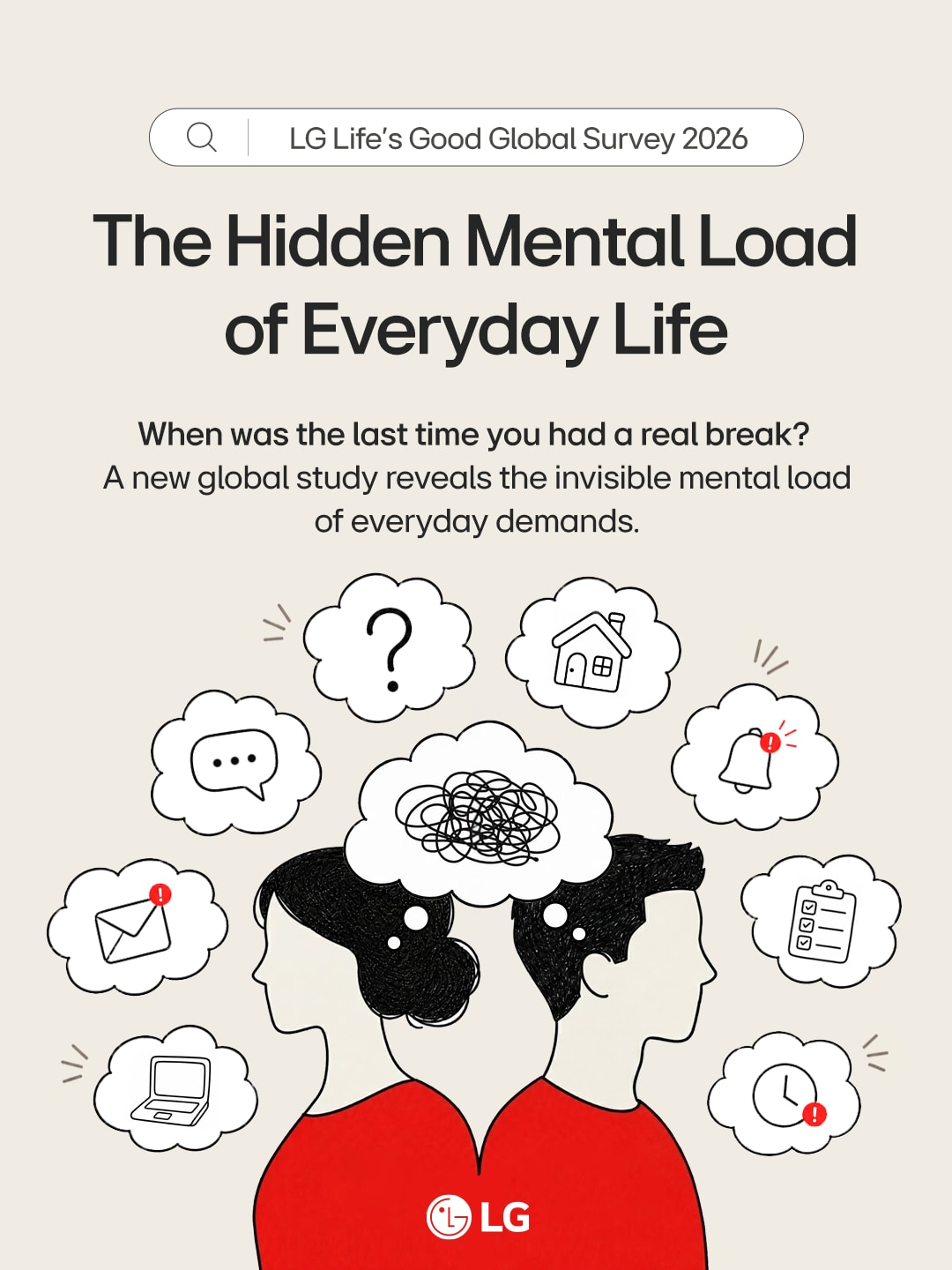
The Hidden Mental Load of Everyday Life: What LG’s Global Survey Reveals
When was the last time you had a real break? A moment when there was nothing to check, decide or take care of.
For many people, everyday life comes with an endless flow of demands. From keeping the home running to making tiny decisions at every step, managing daily life continues in our minds, even when we are supposed to be resting and recharging.
To uncover this invisible weight, LG Electronics conducted a global survey across the US, UK, and Australia as part of its 2026 Life’s Good Campaign. The study offers a detailed look at the full picture of mental load, from how much time this burden consumes to what people lose along the way and how technology can help free up their minds.
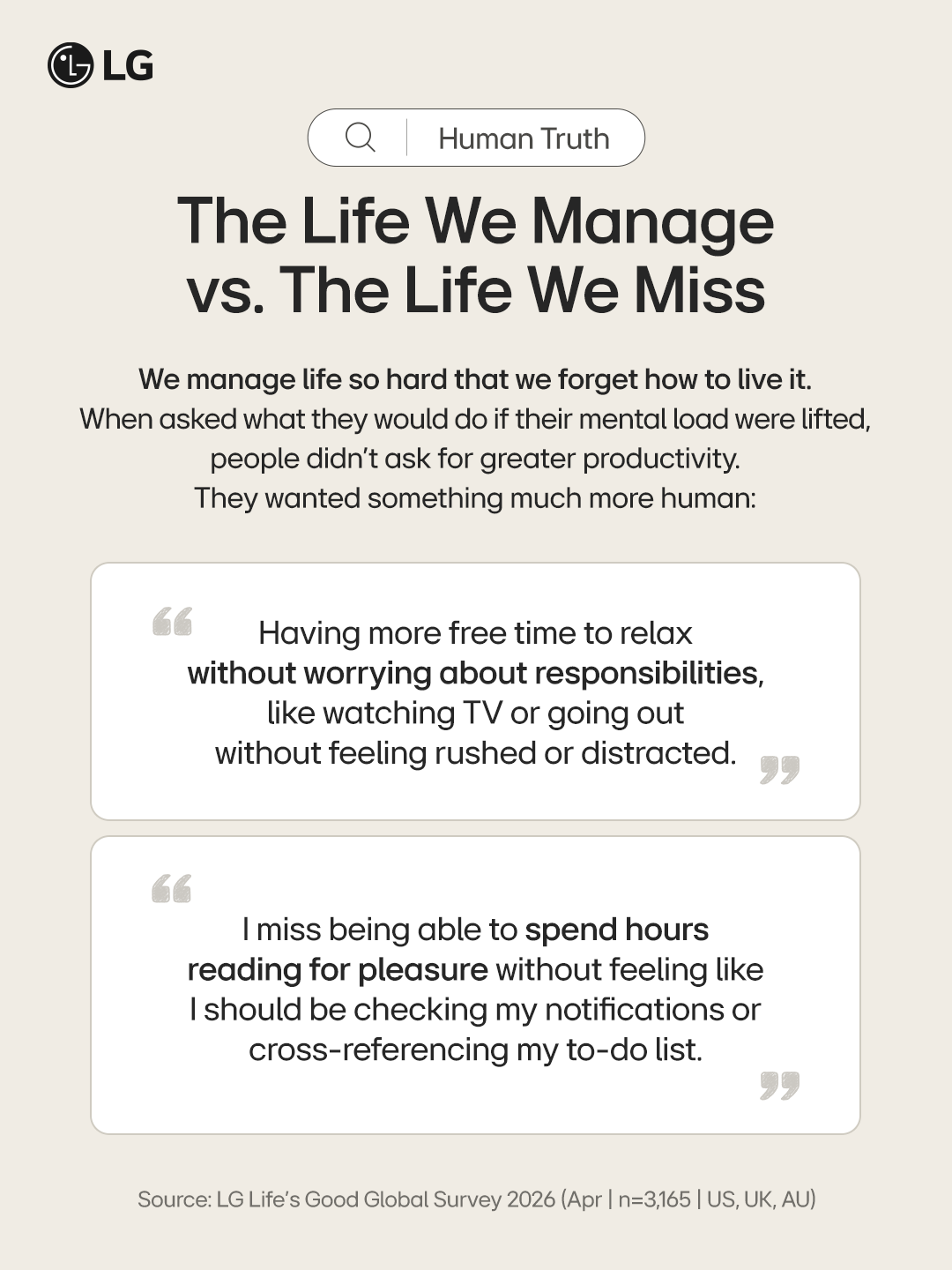
When our minds are constantly occupied with managing life, what are we really missing along the way?
The findings reveal a simple human truth: people work hard to keep life organized, yet what they miss most is the freedom to be spontaneous. People miss simple, restorative moments they used to enjoy, such as reading, creative hobbies, walks in nature, sports, and unplanned time with friends and family.
What people lose is not just time, but the emotional space to simply be present. To understand the true scale of this hidden burden, the study analyzed how much time and attention it takes up in our daily lives.
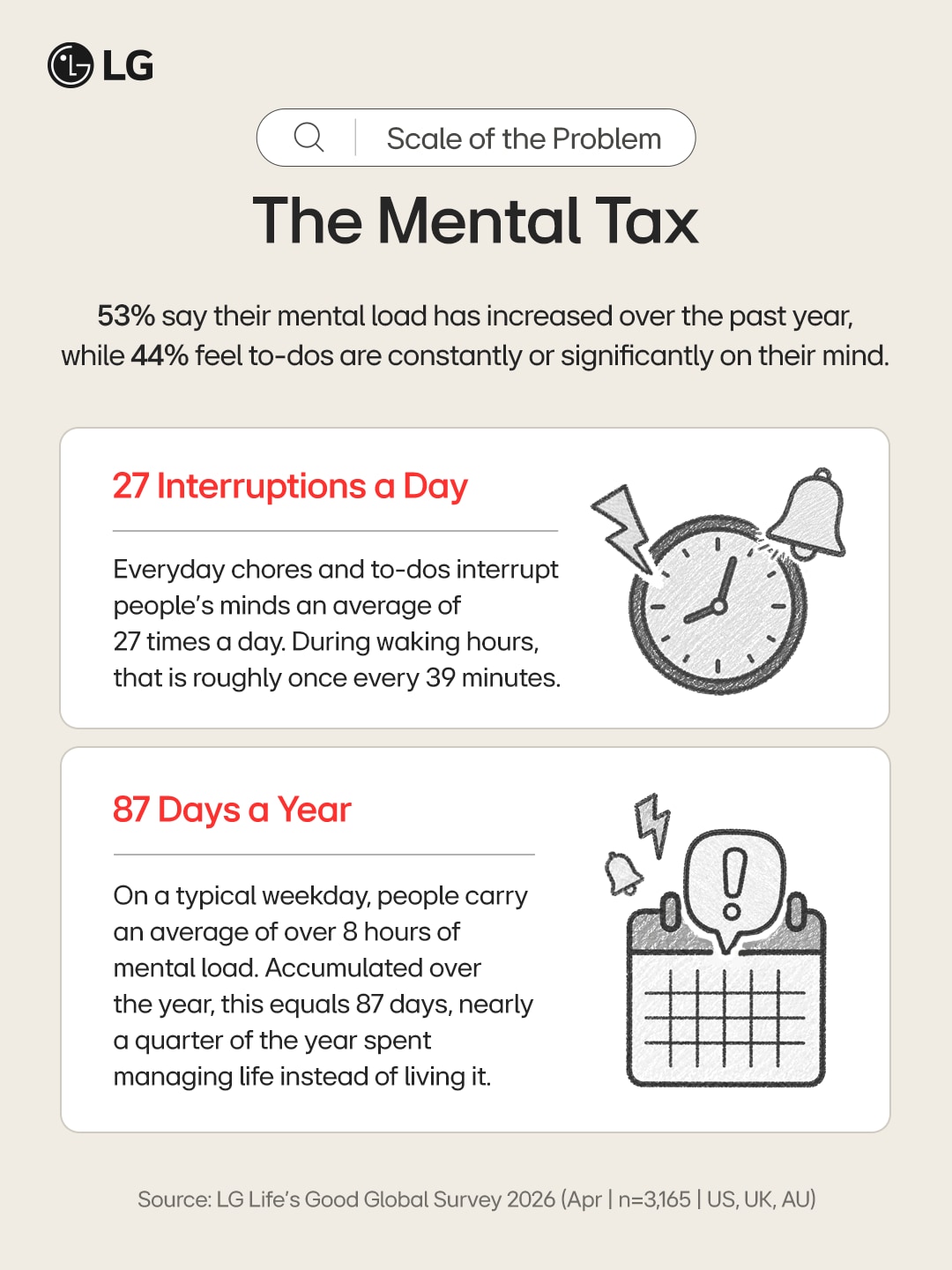
Everyday demands place a continuous “mental tax” on our daily lives. Survey findings show that people experience an average of 27 mental load interruptions during waking hours, roughly once every 39 minutes.
On a typical weekday, carrying this mental load amounts to over eight hours. Accumulated over a year, that equals 87 days, nearly a quarter of the year.
This invisible weight takes up time and attention that could otherwise be spent being present. And often, this burden is heaviest not at work, but right at home.
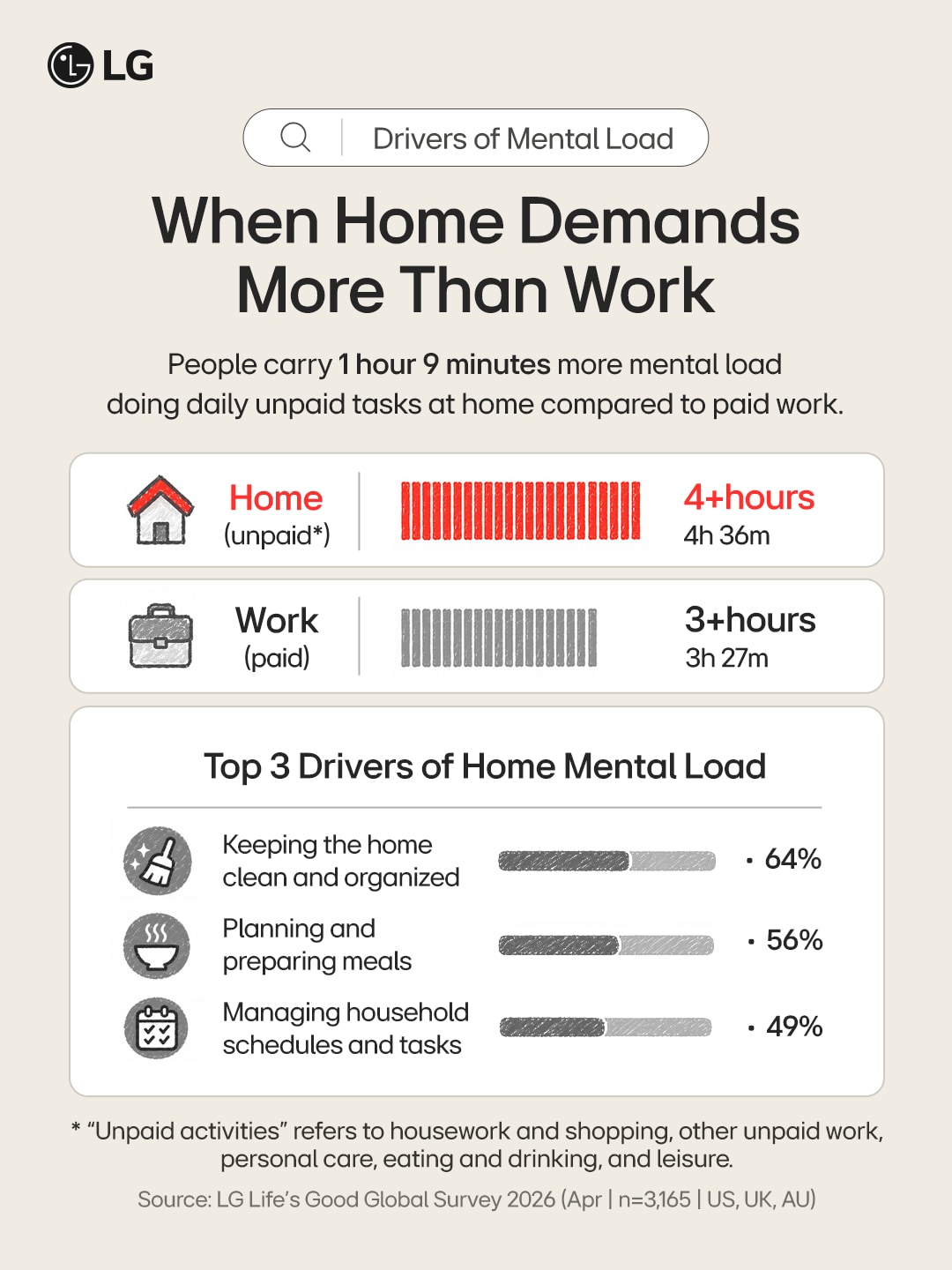
While paid work may seem like an obvious source of mental load, the findings show that daily unpaid activities at home can place an even heavier burden on people’s minds.
On average, people carry 1 hour 9 minutes more mental load from unpaid activities at home than from paid work.
When home demands constant mental effort, that is where household technology can step in to ease the burden and help turn the home back into a true sanctuary.
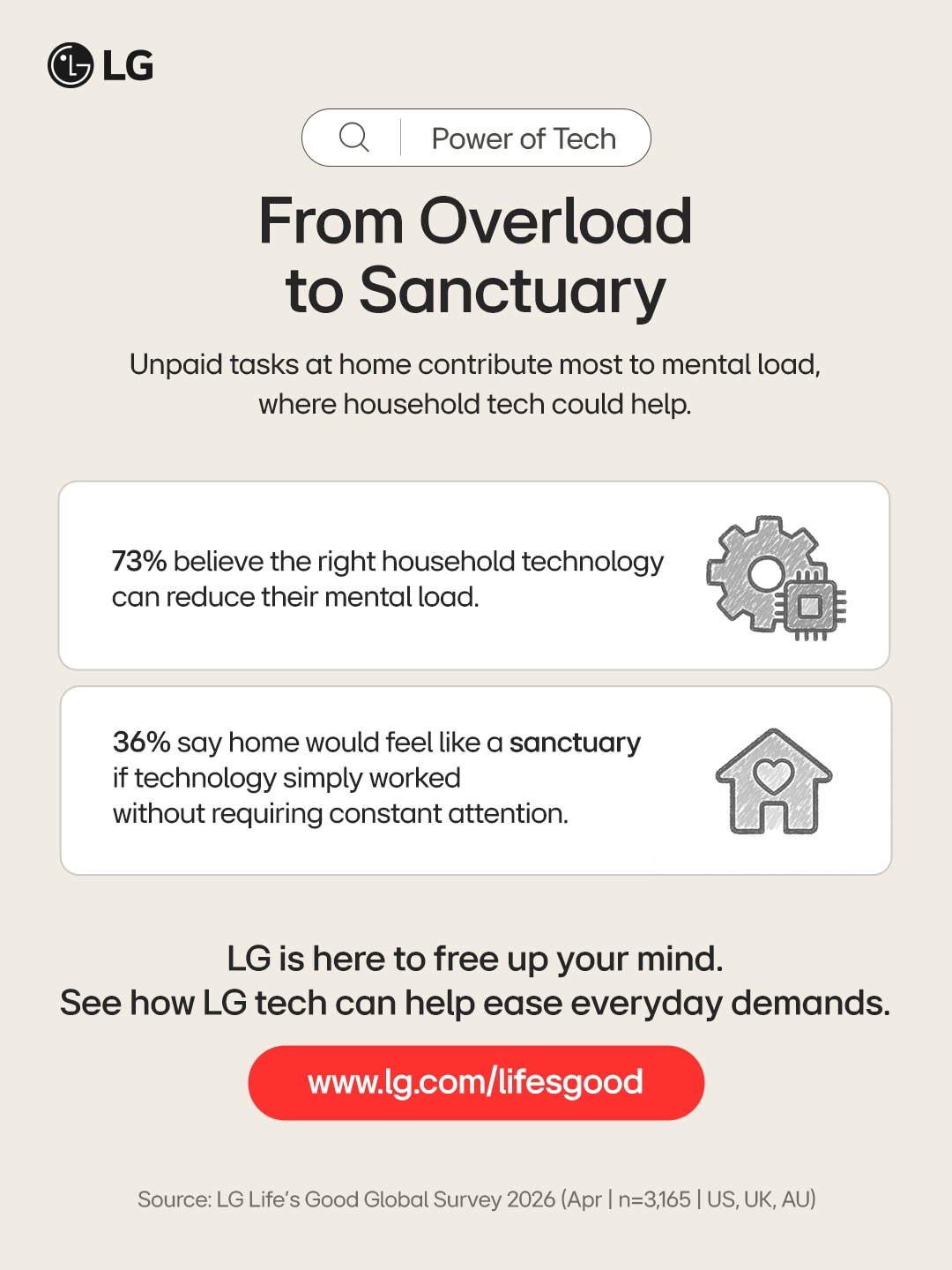
Survey findings show that 73 percent believe the right household technology can reduce their mental load. And 36 percent say home would feel like a sanctuary if technology simply worked without requiring constant attention.
The findings suggest a clear direction for technology: not simply to help people do more, but to quietly take care of everyday demands so people can reclaim their time and energy.
This insight aligns with LG’s 2026 Life’s Good campaign and its core message, “Free up your mind.” The campaign explores how LG AI can help reduce the mental load of everyday life by quietly taking care of routine demands, creating more room for people to focus on what truly matters.
To explore how LG helps reduce mental load and make life good, visit www.lg.com/lifesgood.
# # #
* Survey Methodology
Research Partner: Focaldata
Fieldwork Conducted: April 24–28, 2026
Markets: US, UK and Australia
Audience: Nationally representative sample of adults aged 18–64
Sample Size: 3,165 respondents (a minimum of 1,000 per market), nationally representative by age, gender and region
Note: Survey results reflect respondents’ perceptions and do not constitute clinical or scientific evidence of health benefits.