News Summary
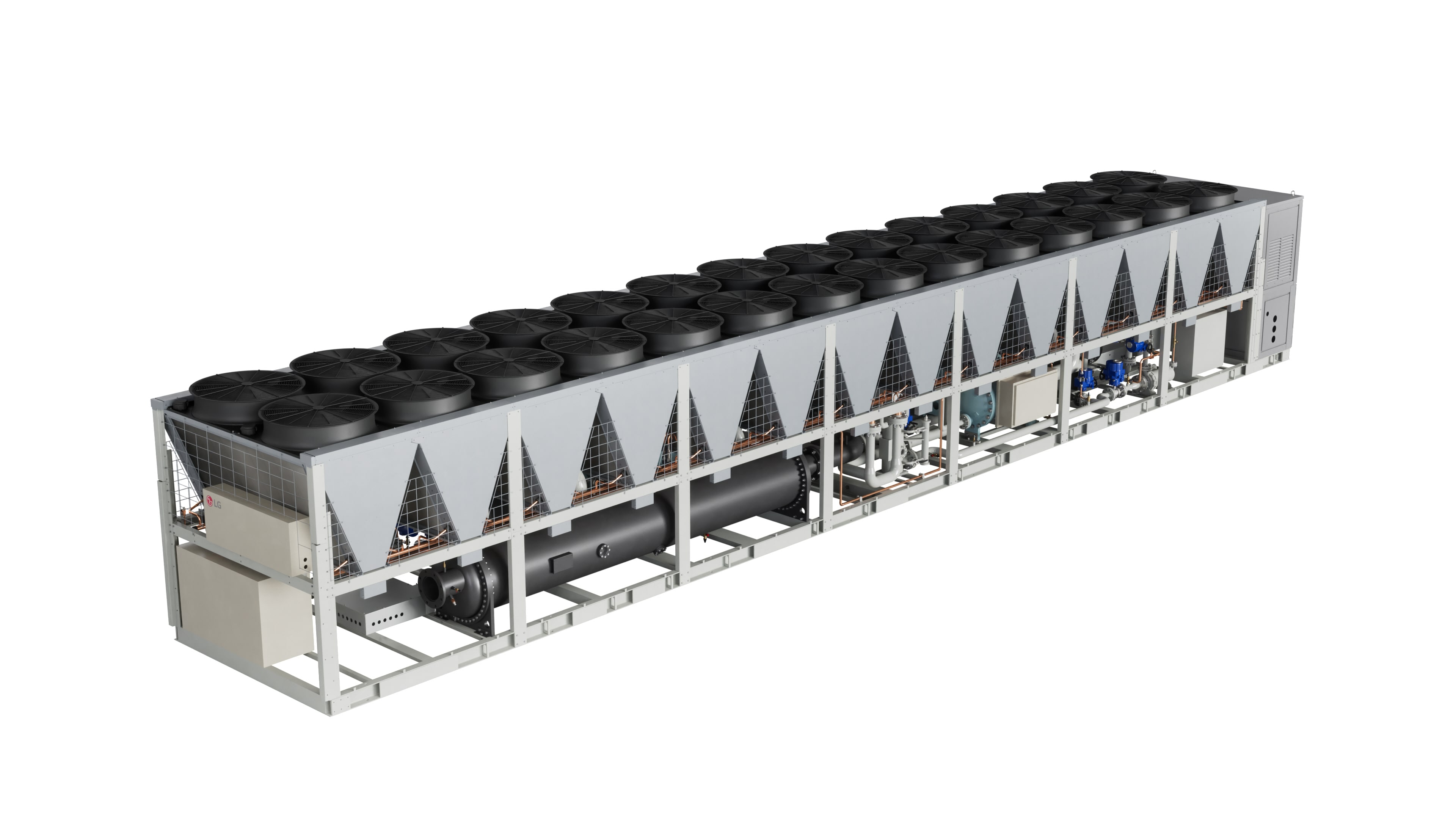
- LG Electronics launches its high-efficiency, highly reliable Air-Cooled Centrifugal Chiller, designed to meet the increasing cooling demands of AI data centers.
- The chiller features proprietary Core Tech, including an oil-free magnetic bearing compressor and innovative refrigerant free-cooling technology.
- In the event of a power interruption, the chiller can restore full cooling capacity within 3 minutes upon power restoration to protect uptime.
- LG’s modular hydronic cooling solution simplifies on-site installation through factory prefabrication and assembly, while the modular chiller design provides flexibility for rapid and scalable AIDC capacity expansion.
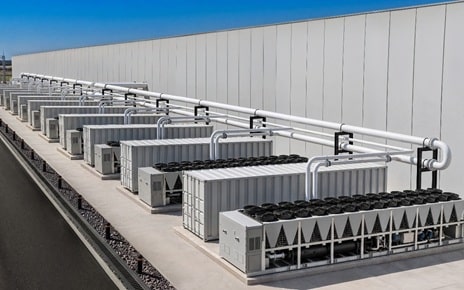
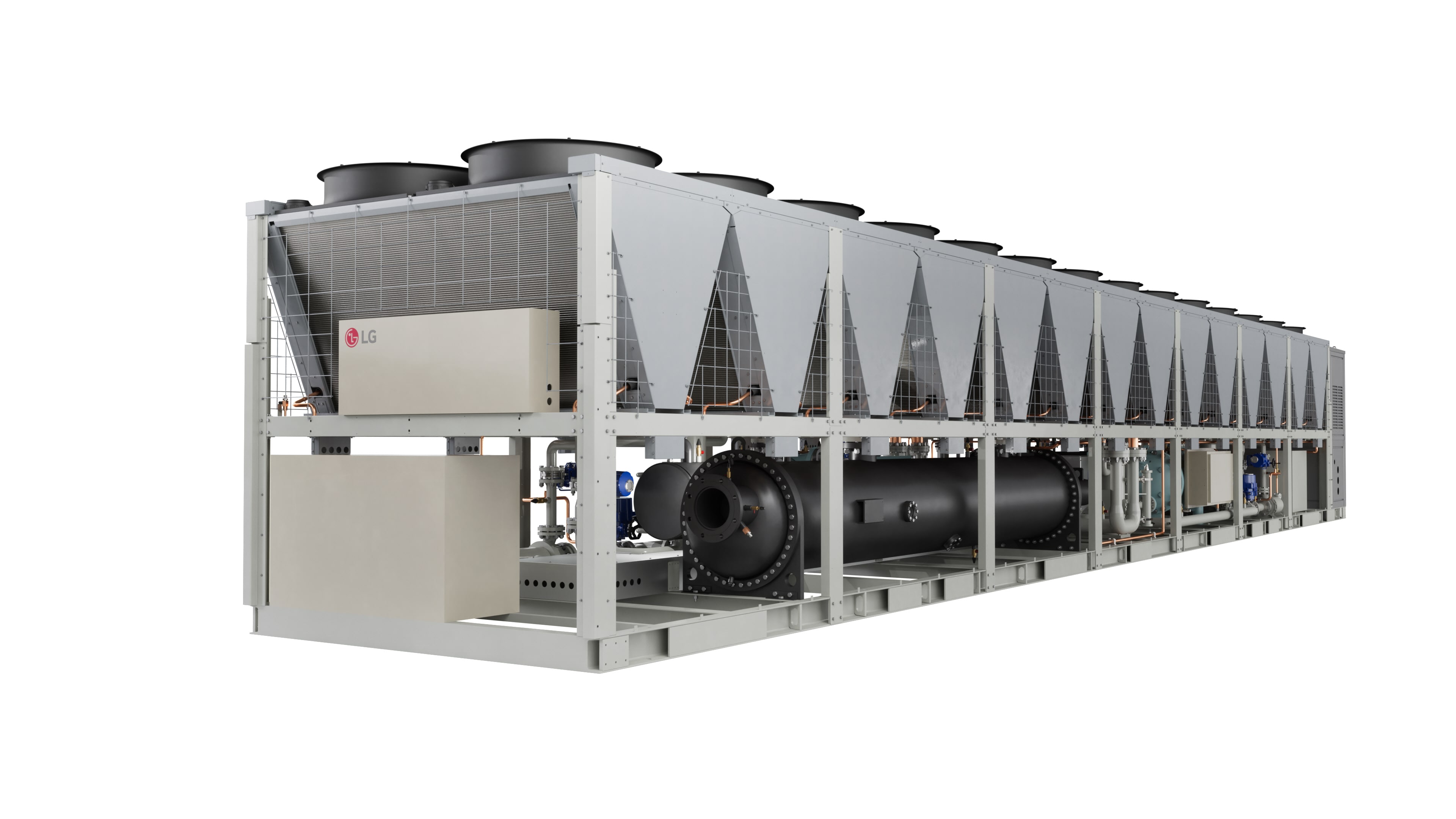
SEOUL, Sep. 21, 2026 — LG Electronics (LG) launches its high-efficiency, highly reliable Air-Cooled Centrifugal Chiller (ACC) to meet the increasing cooling demands of AI data centers (AIDCs). The solution is designed to improve energy performance and maintain cooling continuity, further strengthening the company’s data center cooling portfolio. Available from 480 to 600 refrigeration tons per unit, the chiller can be configured for AIDCs with varying cooling requirements.1
High-Efficiency Cooling With Advanced Technologies
At the core of the new LG Air-Cooled Centrifugal Chiller is an oil-free magnetic bearing centrifugal compressor. By using magnetic force to suspend the rotating shaft without physical contact, the design eliminates the need for lubricating oil, reducing mechanical friction losses and improving compression performance.
The chiller also incorporates refrigerant free-cooling technology, using cool outdoor air to lower the compressor cooling load. Unlike conventional free-cooling systems, it circulates refrigerant directly without an intermediate heat exchanger and does not require glycol, minimizing heat and pressure losses and simplifying maintenance. Based on LG’s internal simulation, refrigerant free-cooling can consume approximately 30 percent less energy annually than waterside free-cooling.2 Moreover, LG’s series counter flow (SCF) technology helps maintain balanced operation by distributing the cooling load among the compressors.
Reliable Operation and Flexible Management
In addition to improving energy efficiency, the chiller is designed for consistent cooling and reliable AIDC operations. Its gap sensor, integrated into the magnetic bearing system, precisely detects the rotation axis to enable accurate control. Machine learning capabilities allow the chiller to adapt to operating patterns, helping reduce surges. During a power outage, an integrated uninterruptible power supply (UPS) provides emergency power, allowing the shaft to stop safely and lowering the potential for bearing damage. It also provides the fast recovery feature which restores cooling capacity within 3 minutes upon power restoration.3
LG is also strengthening its control and operation capabilities through Data Center Cooling Management (DCCM). The software enables integrated monitoring and data-driven control across complex cooling infrastructure, including CDU, Computer Room Air Handler (CRAH) and Air-cooled Centrifugal Chiller. DCCM supports continuous operation through early anomaly detection and virtual sensor-based diagnostics. It contributes to stronger risk management with predictive maintenance, while real-time optimization based on IT workloads can improve operational efficiency.
Proprietary Core Tech and Globally Validated Performance
LG’s proprietary Core Tech is central to the new chiller, encompassing key components such as compressors, motors, inverters and magnetic bearings. LG develops and manufactures these components in-house, then integrates them into complete systems to optimize overall performance, improve parts availability and shorten maintenance response times.
Moreover, the performance and reliability of LG chillers are validated through global certifications. LG chillers and testing facilities are certified in accordance with standards established by the Air-Conditioning, Heating, and Refrigeration Institute (AHRI), and LG’s air-cooled chillers have also received the AHRI Performance Award for nine consecutive years.
LG chillers also enhance safety and reliability by meeting major global standards and certification requirements, including American Society of Mechanical Engineers (ASME) requirements for pressure vessels, Electrical Testing Laboratories (ETL) requirements for electrical safety in North America and Conformité Européenne (CE) requirements covering safety, health and environmental standards in Europe.
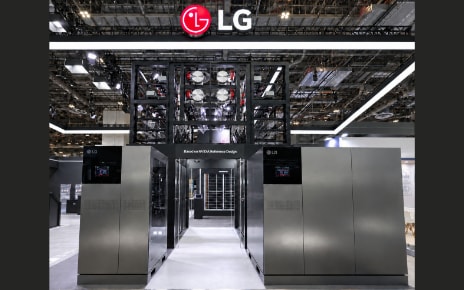
Further expanding its data center cooling solutions portfolio, LG will showcase its modular hydronic cooling solution at Data Centre World Asia 2026 (DCWA 2026), held September 29–30 at Marina Bay Sands in Singapore. The solution integrates key components, including chilled-water pumps and a Thermal Energy Storage (TES) buffer tank, into a standardized module. It also enables factory prefabrication and assembly to simplify on-site installation, while LG's prefabricated modular chiller design provides flexibility for fast and scalable deployment as AIDCs expand their capacity.
“As AI data centers become increasingly dense and heat-intensive, energy-efficient, reliable cooling is more critical than ever,” said James Lee, president of the LG ES Company. “With our Core Tech and data center cooling expertise, we will continue to expand our portfolio of solutions to meet these evolving requirements.”
# # #
1 Cooling capacity figures are based on data center operating conditions, with chilled water inlet/outlet temperatures of 28/20 degrees Celsius and an ambient temperature of 40 degrees Celsius. Actual cooling capacity may vary depending on installation and operating conditions.
2 Based on LG’s internal simulation of a single 1,750 kilowatts unit operating at 100 percent cooling capacity under climate conditions in the Seoul metropolitan area. Annual energy consumption was calculated at 1,479,655 kilowatts per hour for hydronic free-cooling and 1,044,824 kilowatts per hour for refrigerant free-cooling. Actual energy consumption may vary depending on installation and operating conditions.
3 Result may vary depending on test conditions.