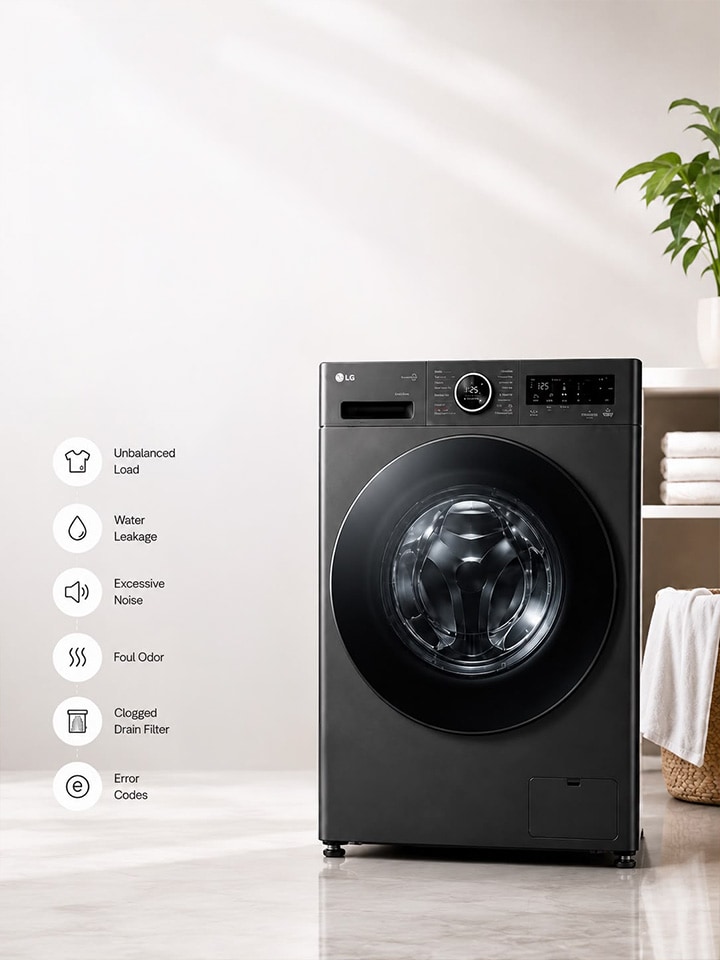
What Are the Common Washing Machine Problems?
1. The Machine Won't Start (or Shows a Door Open Error)
In a front load washing machine, the door lock is a safety mechanism — the machine simply will not run if it senses the door isn't fully latched. Check whether the door is firmly closed, whether anything is caught in the seal (a stray sock is a classic offender), and whether the power connection is secure.
In top load washing machines, the lid switch serves the same purpose. A faulty lid switch is one of the more common reasons a fully automatic top load washing machine refuses to start. If the switch has worn out, it will need to be replaced.
2. How To Know if My Washing Machine is Overloaded?
Overloading is probably the single most common cause of washing machine problems that people create for themselves. When you stuff too many clothes into the drum, several things go wrong at once: the machine vibrates excessively, the spin cycle becomes ineffective, clothes don't wash evenly, and over time, the motor and bearings take on more stress than they're built for.
LG's front load washing machines, for instance, are built with a Bigger Drum design specifically to handle larger Indian family loads without compromising wash quality.
3. What to do if my washing machine is making excessive noise?
A washing machine that sounds like it's trying to escape the bathroom is almost always an unbalanced load or an unlevel machine. When heavy items like jeans and towels clump together on one side of the drum, the spin cycle turns into a minor earthquake.
Redistribute the load evenly before starting a spin. If the vibration keeps going, check whether the machine is sitting level — all four feet should be firmly on the ground. LG's Inverter Direct Drive motor helps here significantly: since the drum connects directly to the motor without a belt or pulley system, there are less moving parts creating friction, which means less noise and vibration by design.
4. What Do I Do If There Is a Water Leak from the Washing Machine?
Water on the floor around your washing machine is a problem you should investigate immediately. The problem could be due to a damaged inlet or drain hose, a loose connection, an overfilled detergent dispenser, or (again) too much detergent creating excessive foam that overflows.
Check the hoses at the back of the machine — they should be tight and free of cracks. If you're using a liquid detergent, make sure you're using the right amount for your water type. In areas with hard water, detergent doesn't dissolve as easily, and excess suds are a common result.
5. What if The Clothes Are Coming Out Wet from the Washing Machine?
If your laundry is dripping when it comes out of the machine, the spin cycle isn't doing its job. This is often caused by an unbalanced load (the machine may have stopped the spin to protect itself), a blocked drain filter, or a kinked drain hose. You can follow the steps below:
- Step 1. Clean the drain filter regularly (it's usually located at the front bottom of front load machines)
- Step 2. Check that the drain hose isn't bent or blocked
6. How to get rid of the Foul Odor from the Washing Machine Drum?
This one is particularly common with front load machines. When residual water sits in the rubber door seal, combined with detergent buildup, bacteria and mold can develop.
The fix is regular maintenance:
Run a Tub Clean cycle once a month, wipe down the door seal after every few washes, and leave the door slightly ajar when the machine isn't in use to let the drum dry out.