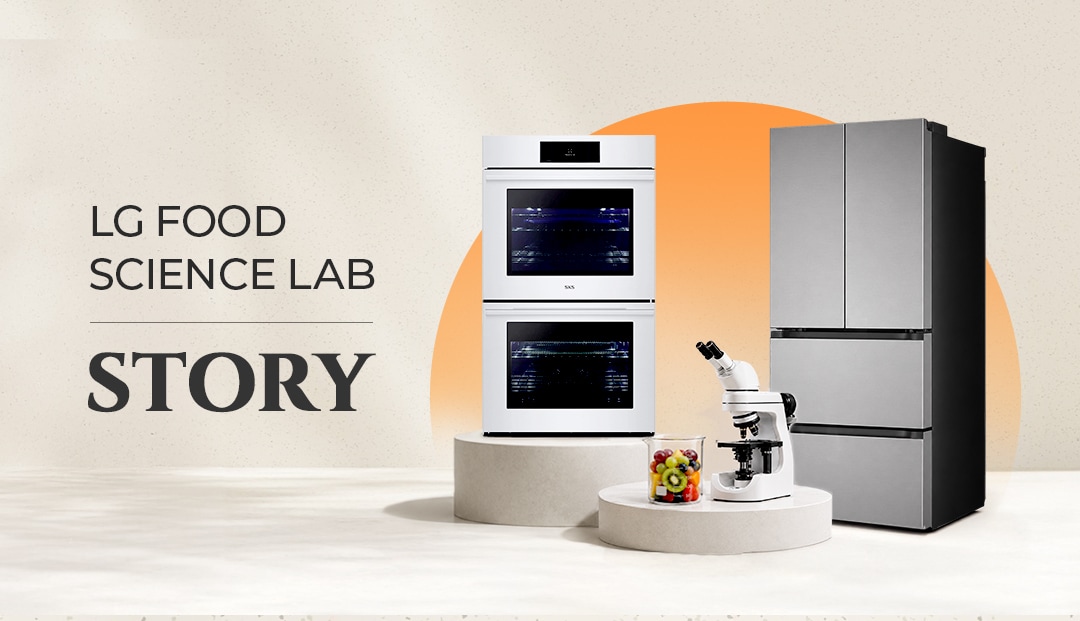
LG Food Science Lab story visual featuring a refrigerator, built-in ovens, a microscope and fresh fruit.

Rethinking the Box : LG’s packaging designed with the environment in mind

07/27/2026

By LG IN

LG Food Science Lab story visual featuring a refrigerator, built-in ovens, a microscope and fresh fruit.

LG Food Science Lab story visual featuring a refrigerator, built-in ovens, a microscope and fresh fruit.

There's a lot that goes into a single “delicious.” The speed at which ingredients cook, the subtle shift in temperature, the way food is stored — each of these factors quietly shapes the taste and quality of a meal.


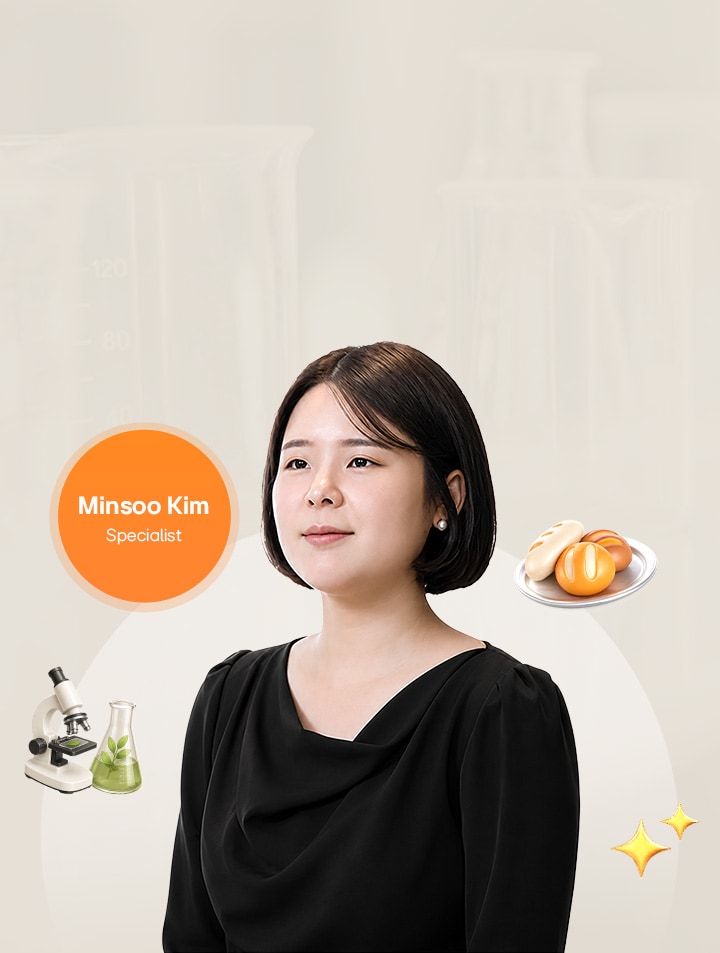
LG Food Science Lab exists to study exactly these kinds of details. Grounded in microbiology research, the team explores the right storage conditions for different ingredients, investigates food freshness retention and odor elimination, and works to turn those findings into real, tangible improvements for everyday cooking. We sat down with Minsoo Kim, Specialist at LG Food Science Lab, to hear how LG defines the standard for a better food experience — and what it takes to get there.

LG Food Science Lab specialist featured with a microscope, laboratory flask and food research graphics.

LG Food Science Lab specialist featured with a microscope, laboratory flask and food research graphics.

Meet the Experts : Inside the LG Food Science Lab

Transparent laboratory glassware arranged with green leaves on a white background.

Transparent laboratory glassware arranged with green leaves on a white background.

What Is LG Food Science Lab?

LG Food Science Lab brings together specialists across food science, nutrition, engineering, and microbiology. The team studies how food changes during storage and cooking, then finds ways to turn those findings directly into kitchen appliance technology.

Food researcher holding a bowl filled with fresh fruit and vegetables.

Food researcher holding a bowl filled with fresh fruit and vegetables.

What Kind of Research Does the Lab Focus On?

The research centers on two things: keeping ingredients fresh as long as possible, and improving the cooking experience.

Take potstickers (gyoza) as an example. Getting the texture right means the filling stays moist while the skin crisps up evenly.

To achieve that, we study cooking temperature, timing, and how heat transfers through the food. We apply that same thinking to every dish we work on. Twenty years of data and hands-on research now shape the algorithms built into LG kitchen appliances.

Food scientist examining a sample through a microscope while holding a laboratory tube.

Food scientist examining a sample through a microscope while holding a laboratory tube.

Why Does LG Research Food at All?

Kitchen appliances are all about taste, freshness, and health.

We believe that building truly good appliances requires a genuine understanding of food itself.

Each product works differently, and those differences shape how food cooks and stores. By studying those interactions, we develop cooking modes and storage algorithms optimized for each food type, not just built to function.

How Is This Research Applied to LG Appliances?

White double wall oven displayed against a modern neutral kitchen backdrop.

White double wall oven displayed against a modern neutral kitchen backdrop.

Food Science Detail in Smart Oven 

The latest smart oven uses camera recognition technology to identify food automatically and suggest the right recipe for what's inside. Built on LG's proprietary algorithms, it guides the entire cooking process automatically. The oven's Scan To Cook feature takes this further: scan a barcode on a ready-made meal with the ThinQ app, and the appliance sets the recommended cooking conditions on its own.

Multi-door refrigerator displayed against a modern neutral kitchen backdrop.

Multi-door refrigerator displayed against a modern neutral kitchen backdrop.

Food ScienceDetail in Refrigerator

In the refrigerator, the Fresh Converter™ keeps food in good condition by controlling temperature and humidity for each ingredient. UV clean deodorization and the Pure N Fresh filter work together to control microbial activity, managing both bacteria and odor at the source.

In LG kimchi refrigerators, the Lactic Acid Bacteria (LAB) Kimchi+ fermentation technology promotes up to 57 times more growth of Leuconostoc (a lactic acid bacterium responsible for kimchi's signature flavor), allowing kimchi to ferment and age as intended.

*Based on tests conducted at Chosun University comparing the amount of Leuconostoc present in kimchi stored at 25 degrees Celsius (77 degrees Fahrenheit) for a period of 14 days on Kimchi+ and Kimchi modes. Further tests conducted at Chosun University comparing the amount of Leuconostoc present in kimchi stored at 25 degrees Celsius (77 degrees Fahrenheit) for a period of 14 days on Kimchi+ and Kimchi modes. Results may vary in actual usage.

Profile graphic introducing a specialist from the LG Food Science Lab.

Profile graphic introducing a specialist from the LG Food Science Lab.

What Is the Lab's Goal?

LG Food Science Lab is a team that keeps digging — all the way down to


what the eye can't see. Our goal is simple: for someone to cook with LG


and say, "Wow, this is really good."

The movement of lactic acid bacteria, the speed at

which a carrot softens — capturing details like these makes food truly


taste good.


"LG kitchen appliances are not just machines.

They are technology that changes the way people live.

We will be a brand that never loses sight of what truly matters."

Life’s Good visual featuring laboratory flasks with food ingredients and an orange liquid extract.

Life’s Good visual featuring laboratory flasks with food ingredients and an orange liquid extract.

Beyond appliances, care for every detail

Good appliances don't start on a production line. They start with understanding food — and the people who cook it.

Watch the video and see the research behind what you can't see.