We use cookies, including cookies from third parties, to enhance your user experience and the effectiveness of our marketing activities. These cookies are performance, analytics and advertising cookies, please see our Privacy and Cookie policy for further information. If you agree to all of our cookies select “Accept all” or select “Cookie Settings” to see which cookies we use and choose which ones you would like to accept.
Laundry
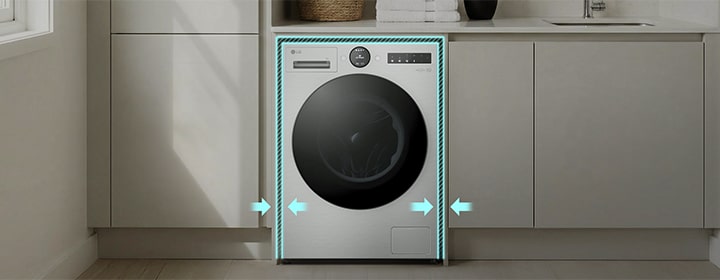
How to Measure Your Space for a Washing Machine
Choosing the right washing machine starts with understanding your laundry space.
Before selecting a model, it’s important to check dimensions, clearance, power points and access routes to make sure the appliance fits your home layout and can be installed smoothly.
This guide explains how to measure your space for a washing machine, what to consider for different laundry setups, and when to refer to detailed installation guidance.
FAQ
What does it mean to measure your space for a washing machine?
Measuring your space means checking the available width, height, depth and available power points where the washing machine will be installed, while also making sure there is enough room for operation, ventilation, and door opening once the appliance is installed.
In addition, you should confirm that the washing machine can be safely delivered through any doorways, hallways, stairways, or other access points leading to the installation location.
What should I measure before choosing a washing machine?
Measure the width, height and depth of the space where your washing machine will be installed. Make sure there are available power outlets and sufficient clearance for operation, ventilation, and door opening.
Before delivery, also check that there is adequate clearance for the washing machine to pass through any doorways, hallways, stairwells or other access points on the way to its final installation location.
How does laundry layout affect washing machine fit?
Laundry layout can influence both how a washing machine fits into the home and how convenient it is to use day to day.
In compact spaces, such as small utility rooms or kitchens, stackable or integrated layouts may help save space. In larger laundry areas, side-by-side or freestanding setups may offer easier access and flexibility.
Considering layout early can help you choose a washing machine that suits both the available space and the way you do laundry.
Why are clearance and levelling important for a washing machine?
Adequate clearance helps ensure stable operation and allows the washing machine to perform as intended over time.
Proper levelling supports smooth door operation and can help reduce vibration and noise during use.
Clearance and levelling requirements may vary by model, so it’s important to follow product-specific guidance when planning your setup.
What should you check before choosing where to place a washing machine?
Before choosing where to place a washing machine, it helps to review a few practical conditions in the space.
• Appliance dimensions and surrounding clearance
• Door opening space and user access
• Water supply, drainage, and power availability
• Floor stability and levelling conditions
• Delivery access through hallways, doors, or stairs
Checking these points in advance can help you identify whether a kitchen, utility room, cupboard, or spare room is suitable for installation.
What installation requirements should you check before buying a washing machine?
Before buying a washing machine, it is helpful to check the main installation requirements so you can confirm the model suits your home setup.
• Water inlet and drainage access
• Power supply location
• Appliance dimensions and clearance
• Floor condition and levelling
• Ventilation and access for maintenance
Reviewing these points early can help reduce installation issues and make it easier to choose a suitable model.
Where can I find detailed installation guidance for my washing machine?
Once you’ve checked your space, layout, and basic connection considerations, the next step is to follow the detailed installation guidance for your specific washing machine model.
For step-by-step instructions on installation, levelling, and connection requirements, please refer to the official installation guide below.