We use cookies, including cookies from third parties, to enhance your user experience and the effectiveness of our marketing activities. These cookies are performance, analytics and advertising cookies, please see our Privacy and Cookie policy for further information. If you agree to all of our cookies select “Accept all” or select “Cookie Settings” to see which cookies we use and choose which ones you would like to accept.
Microwaves
Which Microwave Type Is Right for You: Solo, Grill or Convection?
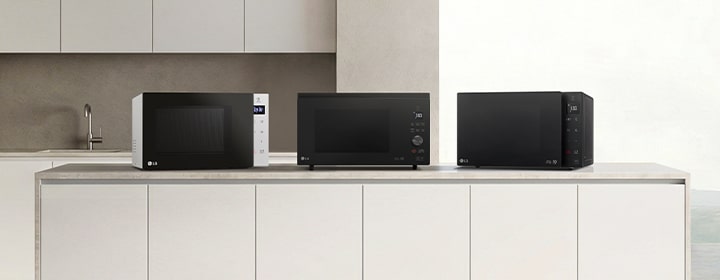
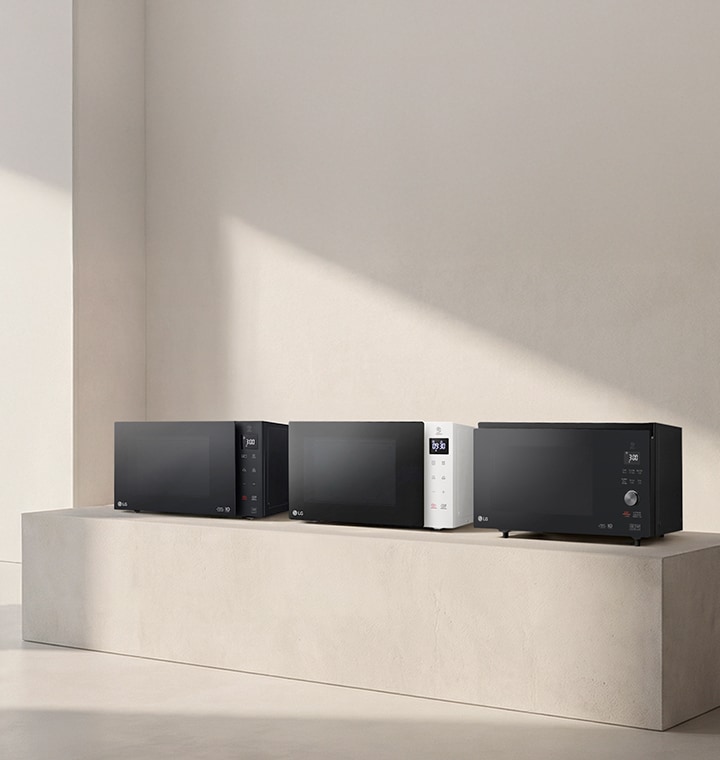
Choosing the right LG microwave type depends on your cooking style and the results you expect. While all microwave models are designed for convenience and speed, Solo, Grill, and Convection microwaves use different heating technologies and produce different texture outcomes.
Solo microwaves use magnetron-generated microwave energy to heat food quickly by vibrating water molecules inside the food. Grill microwaves add a heating coil to brown and lightly crisp the surface. Convection microwaves combine microwave energy with a fan-assisted heating system and heating elements, allowing baking, roasting, and browning similar to an oven.
Understanding these differences can help you choose a microwave that matches your cooking habits, kitchen space, and desired versatility.
FAQ
What is a Solo microwave?
A Solo microwave uses a magnetron to generate microwave energy. These microwaves cause water molecules in food to vibrate, producing heat through dielectric heating. Because heat is generated inside the food rather than from surrounding hot air, cooking is fast and efficient. However, Solo microwaves do not brown or crisp food surfaces. They are best suited for reheating, defrosting, heating vegetables, heating beverages, rice, pasta, and simple everyday meals.
What is a Grill microwave?
A Grill microwave includes an additional heating element (grill coil) inside the cavity. This allows the appliance to brown or lightly crisp the surface of food, which a Solo microwave may not support. Some models combine both microwave and grill functions. Grill microwaves are generally suitable for toasting sandwiches, grilling paneer or vegetables, reheating pizza with better surface texture, and preparing lightly grilled dishes. Most grill models do not offer the same level of temperature control as a convection oven.
What is a Convection microwave?
A Convection microwave combines microwave energy with heating elements and a built-in fan that circulates hot air throughout the cavity. This fan-assisted airflow removes cold air pockets and promotes even cooking. As hot air evaporates surface moisture, it supports browning and crisping through reactions similar to traditional oven cooking.
Convection microwaves typically offer temperature control and multiple modes:
- Microwave mode (fast reheating)
- Convection mode (baking and roasting)
- Combination mode (microwave + convection simultaneously)
They can cook similar to a Solo or Grill microwave can, plus cakes, cookies, bread, roasted meats, brownies, and baked dishes.
What is the main difference between Solo, Grill, and Convection microwaves?
The main difference between Solo, Grill, and Convection microwaves is how they generate heat and whether they can brown or bake food.
A Solo microwave uses microwave energy only. It heats food quickly by vibrating water molecules inside the food. It does not brown or crisp the surface and does not offer temperature control.
A Grill microwave combines microwave heating with an internal heating coil. This allows light browning or toasting on the surface while still heating food internally.
A Convection microwave uses a fan and heating elements to circulate hot air around the cavity. This allows baking, roasting, and browning similar to a conventional oven, and usually includes temperature control.
In simple terms:
Solo focuses on speed
Grill adds surface browning
Convection supports oven-style cooking
Which microwave type is best for everyday use?
The best microwave type depends on what you cook most often and how much versatility you need from the appliance. If you mainly reheat leftovers, defrost frozen food, or prepare simple meals, a Solo microwave is usually sufficient. If you want to toast sandwiches or lightly brown food while still using microwave heating, a Grill microwave may be more suitable. If you enjoy baking, roasting, or want greater cooking versatility in a single appliance, a Convection microwave offers the widest range of functions. Budget, available space, and cooking frequency should also be considered before choosing.
Can a convection microwave replace a traditional oven?
Selected convection microwaves can perform many oven-style tasks, including baking cakes, roasting small portions of meat, and cooking pizza. Because it circulates hot air using a fan, it can create browning and crisp textures.
However, a convection microwave does not fully replace a full-size oven in all cases. Capacity is typically smaller, and it may not be ideal for large-batch cooking or oversized dishes.
Performance depends on the model, cavity size, and selected cooking mode.
How should you choose between Solo, Grill, and Convection microwaves?
The right microwave type depends mainly on how you plan to use it in everyday cooking.
Before deciding, it helps to consider the following cooking needs:
• Solo microwave is mostly suitable if you mainly reheat food, defrost frozen items, or prepare simple meals quickly. This option is typically the most straightforward and cost-efficient for basic microwave cooking.
• Grill microwave can address your needs if you want the ability to brown or lightly crisp the surface of foods such as sandwiches, vegetables, or kebabs while still using microwave heating.
• Convection microwave would be suitable if you want to bake, roast, or achieve oven-style cooking results in one appliance. Convection models offer temperature control and greater versatility, which can be useful for users who cook more frequently or enjoy baking.