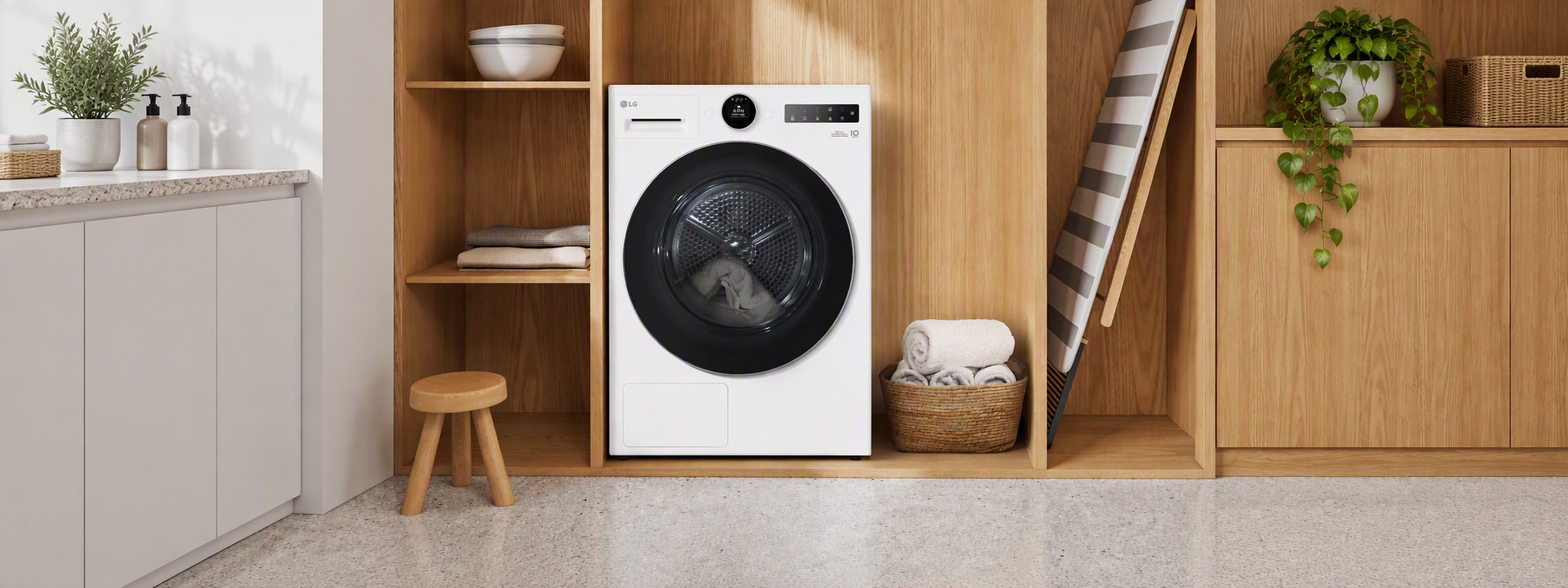
There are a lot of assumptions about clothes dryers, and many of them are well past their use-by date. From worries about sky-high power bills to concerns that tumble drying will ruin your favourite fabrics, outdated ideas can stop you from getting the most out of a modern appliance. Dryer technology has come a long way, and the facts behind today’s models are worth knowing. This guide tackles the most common dryer myths head-on, covering everything from dryer electricity consumption to the differences in types of dryers.
Myth 1 – Do Dryers Use a Lot of Electricity?
Not necessarily, and it largely depends on the type of dryer you use and how you use it. Concerns about clothes dryer electricity usage are understandable, particularly if you think back to older, vented models that ran hot and long. However, modern dryer technology has evolved considerably.
Traditional vented dryers draw in fresh air, heat it up and pass it through the drum. They then exhaust that hot, moist air outside the home. This process requires continuous energy to generate fresh heat throughout the cycle. Condenser dryers take a step forward by capturing that moisture internally but still generating new heat each time.
Heat pump dryers recycle warm air within a closed-loop system, reusing heat rather than producing it repeatedly. This approach can help reduce dryer electricity consumption per cycle compared to traditional vented and condenser models. If you are looking to keep running costs in check, explore LG’s range of heat pump dryers which are thoughtfully designed.
Myth 2 – Do Heat Pump Dryers Use the Same Amount of Electricity as Other Dryers?
No, heat pump dryers do not use the same amount of electricity as other types of dryers. They are generally more energy efficient, which can help reduce electricity consumption over time. .
The main difference is in how each technology generates and manages heat. A condenser dryer generates heats at the start of every cycle and continues drawing power to maintain temperature. A heat pump dryer, uses a refrigerant system to capture and recirculate warm air, meaning it doesn’t need to work as hard to reach the same drying capacity.
Are heat pump dryers more energy efficient than other dryer types? Yes. Because the heat is recycled rather than regenerated, the overall dryer electricity consumption is lower for comparable load sizes and drying times. This makes heat pump models a practical choice for households that accumulate frequent laundry loads and want to reduce their energy use without compromising on results.
Myth 3 – Do Heat Pump Dryers Make the Room Hot and Humid?
Typically, no. This myth is rooted in the vented dryer’s era, which released warm, moist air directly into the room or through a wall duct. It was a fair concern at the time, but heat pump dryers operate very differently.
A heat pump dryer uses a closed-loop system. Moisture extracted from your clothes is collected in an internal condensate tank or drained away, rather than being vented into your laundry room. The warm air stays within the machine and is recycled through the system, so very little heat escapes into your surrounding space.
This makes heat pump dryers well-suited for indoor laundry setups, including apartments and smaller rooms without external ventilation. LG heat pump dryers incorporate this closed-loop system as a core design feature, making them suitable for a variety of home and laundry spaces.
Myth 4 – Does a Dryer Damage Clothes?
The idea that tumble drying damages clothes usually stems from experiences with older dryers running at excessive temperatures or from using the wrong settings for delicate fabrics.
Modern dryers include a range of fabric care settings designed to match the drying requirements of different garment types. Gentle cycles use lower heat and slower tumble speeds to protect delicate items, while more robust settings handle heavier fabrics like towels and denim. The issue is rarely the dryer, but rather the setting selected for the load.
Heat pump dryers add another layer of fabric protection by operating at lower maximum temperatures over more conventional models. Because the air is recycled and controlled rather than blasted through the drum at high heat, fibres are exposed to gentler drying conditions throughout the cycle. LG dryers include dedicated fabric care programmes to help protect your garments wash after wash.
Myth 5 – Are Heat Pump and Condenser Dryers the Same?
No, heat pump and condenser dryers are not the same, despite both being vent-free options that collect moisture internally.
Condenser dryers draw in air, heat it using an electric element, pass it through the drum, and then cool it down to condense the moisture into a collection tank. New heat is generated at the start of each cycle. They are a step up from vented dryers in terms of placement flexibility, since no external duct is required.
Heat pump dryers take a fundamentally different approach. Instead of generating new heat, they use a refrigerant circuit to capture and recirculate warm air throughout the cycle. They are also suited to most indoor laundry locations, including apartments and spaces without external ventilation, making them a flexible and efficient choice.
Modern Dryer Myths Debunked: What It Means for Your Laundry Setup
Most common concerns about dryers are based on how the technology operates rather than how it performs. Key considerations to think of when buying a dryer are:
- Dryer electricity consumption is lower than it once was, especially with heat pump technology.
- Heat pump dryers do not make rooms hot or humid thanks to their closed-loop design.
- Fabric care has improved significantly, with controlled temperatures and dedicated garment programmes reducing the risk of damage.
- Heat pump and condenser dryers are distinct technologies, with heat pump models offering a clear efficiency advantage.
Understanding the reality behind these dryer myths helps you choose an appliance that genuinely suits your home, your habits, and your energy goals.
LG’s range of heat pump dryers is designed with these considerations in mind, combining 8 and 9 Star energy efficiency with fabric protection, and flexibility for everyday Australian laundry needs.