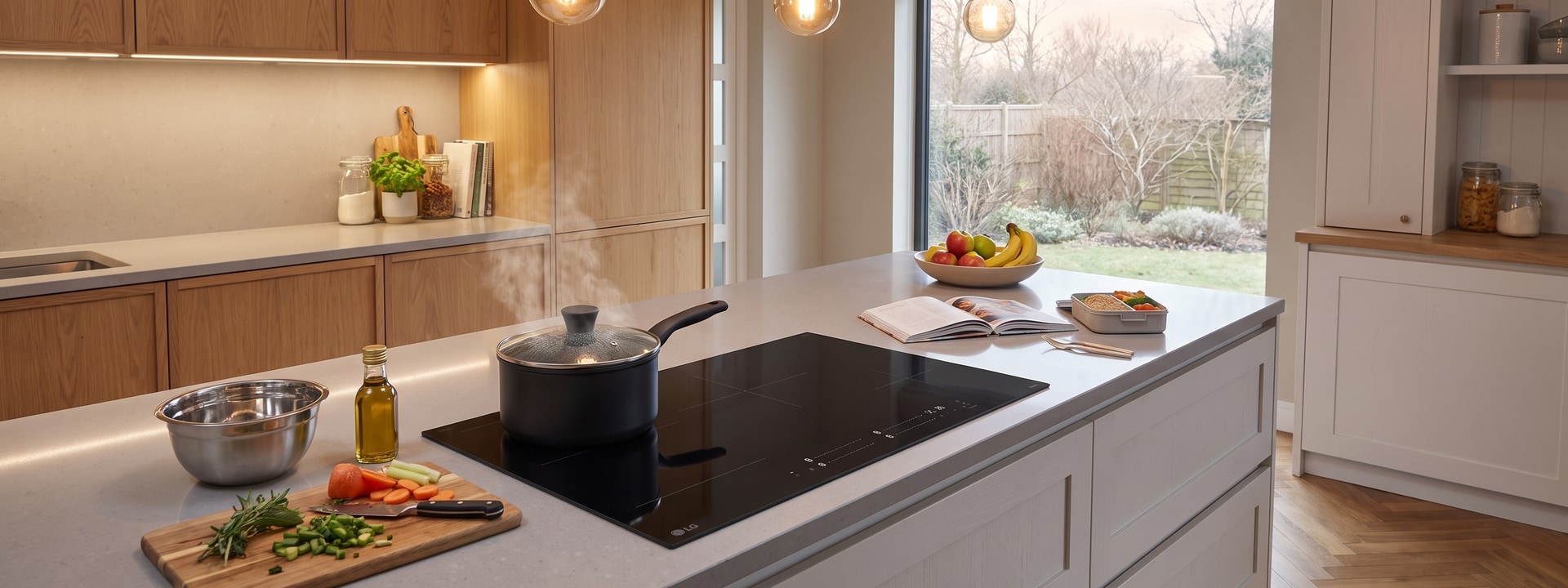
Selecting the right cooktop is an important decision, whether you're renovating your kitchen, replacing an old appliance, or equipping a new home. Many people compare induction cooktops vs. gas cooktops and induction cooktops vs. Electric cooktops, trying to understand which option most suitable for their household.
What Is an Induction Cooktop and How Does It Work?
An induction cooktop operates quite differently from gas and traditional electric models. Rather than using an open flame or a heated coil, with how does induction cooking work by using electromagnetic energy to heat your cookware directly. The cooktop surface itself stays relatively cool, while the pan becomes the heat source, a fundamental difference that sets induction apart.
How Does Induction Cooking Work?
Think of an induction cooktop as creating a magnetic field between the cooking surface and your pan. When you place compatible cookware on the cooktop, the electromagnetic field heats the pan's base almost instantly. The cooktop itself heats up only as a side effect of the hot pan sitting on it, not from direct heat generation. This direct heating method is why "how does induction cooking work" is such a popular search question: its efficiency and speed often surprise first-time users.
What Cookware Works with Induction Cooktops?
Induction cooktops require ferromagnetic cookware, materials that respond to magnetic fields. Cast iron and magnetic stainless-steel can work well, while copper and aluminium alone won't work unless they have a magnetic base. A simple test: if a magnet sticks to the bottom of your pan, it's compatible with induction. Most households already own suitable pots and pans, though you may want to check your existing cookware before investing in a new cooktop.
Induction vs Gas vs Electric Cooktops: Key Differences Compared
To help you understand the differences between gas and induction cooktops, and how electric fits into the picture, it's useful to see them side by side. The following sections break down the key areas where these cooktop types diverge.
Induction vs Gas vs Electric Cooktops: At-a-Glance Comparison Table
| Feature |
Induction |
Gas |
Electric |
| Cooking Speed |
Fast boil times (varies by model and use) |
Moderate speed |
Slower heat-up |
| Energy Efficiency |
High energy transfer efficiency (varies by model and use) |
Efficiency varies by model and use |
Efficiency varies by model and use |
| Running Costs |
generally lower depending on tariffs and use |
Moderate to high |
Moderate |
| Safety Features |
No open flame; surface may retain residual heat |
Open flame risk |
Surface can remain hot after use |
| Cleaning |
Simple wipe-down |
Remove grates |
Scrubbing needed |
| Installation |
Electrical requirements vary by model/home |
Requires a gas line |
Electrical requirements vary by model/home |
| Cookware compatibility |
Ferromagnetic only |
Any cookware |
Any cookware |
Cooking Performance: Induction vs Gas vs Electric
Induction cooktops excel in speed and responsiveness. Water can boil considerably faster compared to gas or electric, and temperature adjustments can take effect quickly.
Gas cooktops offer familiar cooking control with visible flames, allowing cooks to adjust heat intuitively. Electric cooktops provide steady, even heating, though they heat more slowly and cool down gradually.
For daily cooking, this means induction can reduce heat-up time, whilst gas appeals to those who prefer traditional heat visibility.
Do Induction Cooktops Use Less Electricity?
This is a key question when comparing efficiency across cooktop types. Induction cooktops can use energy efficiently because a high proportion of energy is transferred directly to compatible cookware. Gas cooktops, by contrast, waste significant heat into the air because the flame heats the surrounding space as well. Electric cooktops similarly lose heat to their surroundings. If you're considering solar energy compatibility or energy-efficient cooking, induction's reduced heat loss can be a meaningful advantage.
Cost Comparison: Upfront vs Running Costs
Induction cooktops typically carry a higher upfront cost than gas or electric models. However, long-term running costs may favour induction depending on appliance efficiency, energy tariffs and usage. Gas requires an ongoing fuel supply, while electric cooktop running costs will depend on the model, tariff and usage. When you factor in reduced maintenance and the potential for lower energy bills over time, the total cost of ownership becomes more balanced.
Installation Differences: Induction vs Gas vs Electric
Gas cooktops generally require licensed installation and a suitable gas connection, which can be costly in homes without existing infrastructure. Electric and induction cooktops require appropriate electrical circuits and licensed installation, with requirements varying by home and model.
Induction may be a future-focused option for households considering electrification or avoiding new gas infrastructure.
Are Induction Cooktops Better Than Gas or Electric?
Whether induction cooktops are better than gas or electric depends on your priorities. For speed and energy efficiency, induction can perform strongly. For familiarity and visible heat control, gas remains a strong choice for many cooks. For affordability and straightforward maintenance, electric works.
The clearest answer emerges when you consider which cooktop type aligns with your cooking frequency, household safety needs, and long-term energy goals. Induction may offer strong all-around performance across several common purchase factors.
What Are the Benefits of an Induction Cooktop?
Induction cooktops are a popular option for many households. The benefits of induction cooktop technology span performance, efficiency and safety, making it an attractive choice for modern kitchens. With fast heat response, precise temperature control and an easy-to-clean surface, induction cooktops can help make everyday cooking more convenient. Their sleek design and energy-efficient performance also make them a practical addition to many contemporary homes.
Faster Cooking and Precision Control
Induction can offer fast heat response. Boiling water, reducing sauces and preparing meals can happen faster than with some other cooktop types, making them amongst the many benefits of induction cooktop. Temperature adjustments can respond quickly, giving you precise control over cooking outcomes. This responsiveness is valued by home cooks who appreciate the ability to fine-tune heat without lag time.
Energy Efficiency and Lower Heat Loss
The efficiency advantage extends beyond operating costs. By concentrating energy directly into compatible cookware, induction cooktops can reduce wasted heat in your kitchen, which may also reduce heat build-up during warmer months. This efficiency benefit may be especially relevant for households that cook daily.
Safety Benefits: No Flame and Cooler Surface
Induction cooktops do not use an open flame, which may reduce risks associated with flame-based cooking. The cooktop surface may remain cool to touch, making burn injuries less likely, an important consideration in homes with young children. Some induction models include auto shut-off features depending on the model, adding another safety layer.
Better Indoor Air Quality Compared to Gas
Gas cooktops produce combustion emissions during use, releasing nitrogen dioxide and other byproducts into your kitchen. Induction cooktops do not produce combustion emissions, resulting in cleaner indoor air contributing to a healthier cooking environment for your household.
Which Cooktop Is the Easiest to Clean?
Maintenance and cleanliness matter when you're cooking regularly. Let's compare how each cooktop type handles this responsibility and which cooktop may be easiest to clean.
Why Induction Is the Easiest Cooktop to Clean
Induction cooktops have a flat glass or ceramic surface with no crevices, grates or burners, making induction one of the easier cooktop types to clean. Spills are less likely to burn onto the surface because the cooktop tend to stay cool.
A simple wipe-down with a damp cloth is often all you need. For tougher residue, mild soap and a soft sponge handle does the job. This ease of cleaning is one of induction's most practical everyday benefits.
How to Clean an Electric Cooktop?
Electric cooktops come in two types: coil and ceramic. Coil cooktops have removable burners that can be cleaned separately, though spilled food can accumulate beneath them. Ceramic cooktops sit flat like induction but retain heat longer, meaning spills may burn on if not cleaned promptly. Both may require more scrubbing effort than induction.
How to Clean a Gas Cooktop?
Gas cooktops involve removing grates and burner caps for proper cleaning. Food debris falls through to the pan beneath, which may collect residue over time. Soaking and scrubbing these removable parts can take additional effort, and food can harden in crevices. The additional components mean more steps in your cleaning routine.
Easiest Cooktop to Clean: Final Verdict
If minimal cleaning effort is important to you, induction can be a strong option. The lack of components, relatively cooler surface and flat design can reduce the need to manage removable parts or burnt-on spills. Gas and electric cooktops may require more maintenance steps, making induction a practical option for easier cleaning.
Induction vs Gas vs Electric Cooktop: Which Should You Choose?
To summarise: induction cooktops can offer fast cooking speeds, strong energy efficiency, safety-related features and easier cleaning. Gas cooktops appeal to traditional cooks who value visible flame control and don't mind extra maintenance. Electric cooktops may suit budget-conscious households and straightforward cooking scenarios.
When you factor in performance, cost of ownership, safety and convenience, induction may be a strong option for many modern kitchens. Whether you're upgrading an existing kitchen or starting fresh, exploring LG's range of induction cooktops can help you find a model that matches your cooking needs and lifestyle.