1. Building Type and Load Requirements
Every home is different. The right heat pump depends on your property’s size, layout, and insulation quality. A professional load calculation is crucial to determine the correct system capacity. A unit that’s too small will struggle to keep you comfortable, while an oversized unit can lead to wasted energy and reduced comfort. In addition to system capacity, it is also important to decide on the type of heat pump—such as Air to Air, Air to Water, or Water to Water—and whether the unit is a Split or Monobloc design. These choices are typically guided by the preferred heating method and the type of existing system in the building, and should be considered before selecting refrigerants.
2. Government Incentives and Policies
Governments worldwide are actively promoting the switch to heat pumps.
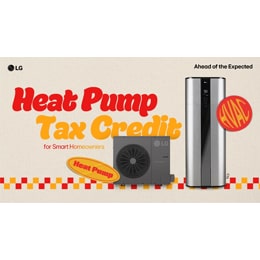
a. United States: Under the Inflation Reduction Act (IRA), homeowners may qualify for the Section 25C tax credit, reducing their upfront installation cost. In addition, many states operate rebate programs that can further lower expenses.
b. Europe: Subsidy programs continue, though some countries have recalibrated their funding levels. In many EU nations, new residential construction is no longer permitted to install fossil-fuel boilers. A wide range of rebates, grants, and even VAT reductions are offered to accelerate decarbonization, reflecting Europe’s strong policy commitment to climate action.
c. Middle East & North Africa (MENA): Nations like Turkey, Israel, Saudi Arabia, and Morocco are embracing electrification and renewable energy targets, opening new opportunities for heat pump adoption.
• Saudi Arabia: The nation's 'Vision 2030' plan aims to generate 50%1) of its electricity from renewables by 2030. As a result, large-scale projects like NEOM are requiring high-efficiency systems like heat pumps from the ground up.
• Turkey: The government has designated energy efficiency and renewable projects as priority investments, offering significant incentives like tax reductions. This is accelerating heat pump adoption in commercial and industrial buildings.
• Morocco: With an ambitious goal to source 52%2) of its electricity from renewables by 2030, the country is strengthening building energy efficiency codes, making heat pumps an attractive alternative to traditional systems.
※ Incentives vary by country and program availability. Always confirm eligibility with official government sources.
1) https://www.sciencedirect.com/science/article/pii/S2949821X24000668
2) https://www.trade.gov/country-commercial-guides/morocco-energy
3. Refrigerant Transition (R-32 / R-454B / R-290)
Environmental regulations are accelerating the shift to low-GWP refrigerants.
• R-32: As the current mainstream choice, this mildly flammable (A2L) refrigerant offers high efficiency with a GWP of 675, serving as a transitional solution to replace older, high-GWP options.
• R-454B: A popular R-410A replacement in North America, this mildly flammable (A2L) blend combines R-32 with an HFO for a lower GWP of 466, making it a more future-ready option than R-32.
• R-290 (Propane): A highly efficient natural refrigerant with a low-GWP of 3, R-290 is becoming the standard in Europe's strict regulatory market for applications like monobloc heat pumps, though its higher flammability (A3) requires specific safety designs.
※ Refrigerant approval and safety standards differ by market. Check compliance with local regulations before purchase.
※ GWP values are based on IPCC AR4 (Fourth Assessment Report) metrics.
4. Maintenance and Service Network
Even the most advanced system requires proper upkeep. Confirm that local technicians are trained for the refrigerant in use and that service and spare parts are accessible. LG HVAC maintains a global service network, while availability may vary by region.
5. Upfront Cost vs Long-Term Energy Savings
While the upfront installation cost can be significant, modern heat pumps are designed to reduce annual heating costs when compared with conventional fossil-fuel systems. When combined with incentives and efficiency gains, the payback period can be shortened considerably.
※ Actual savings depend on climate, home insulation, energy rates, and personal usage.