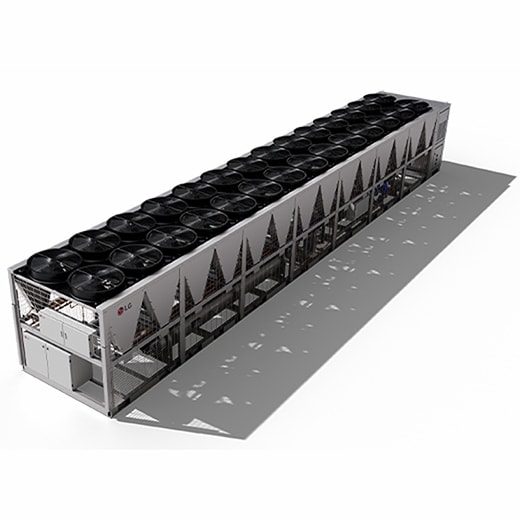
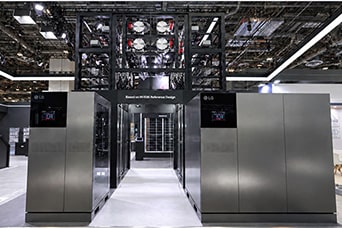
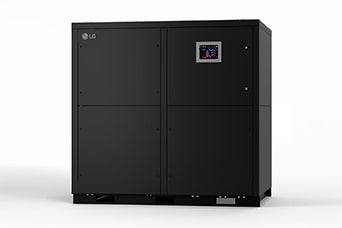
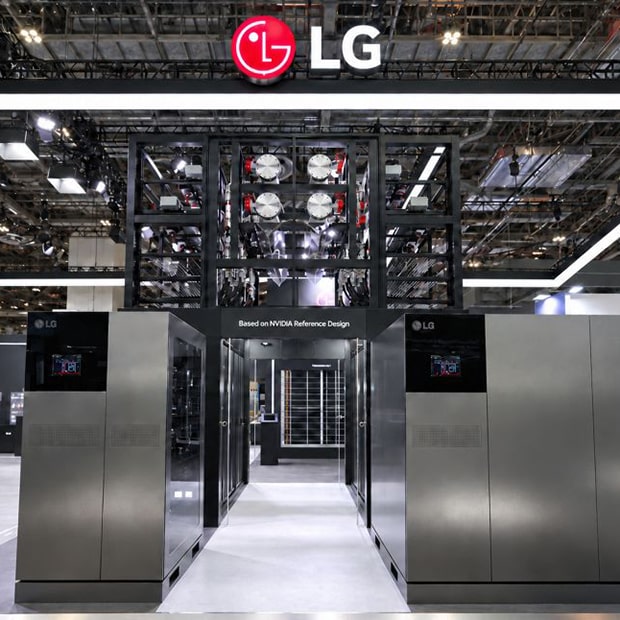
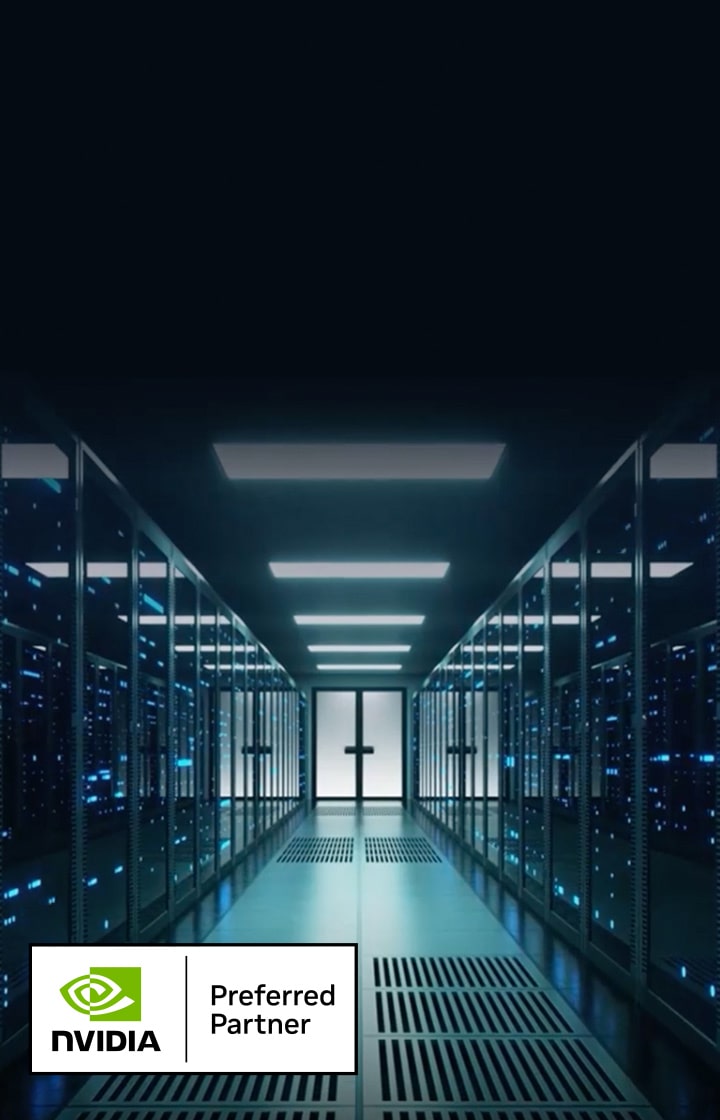
A dark data center web banner featuring LG solutions text, NVIDIA Preferred Partner logo, and server rack corridor.

Data Center Solutions

From Chip to Chiller, together with our customers and AI ecosystem partners, LG continues to shape the future of AI infrastructure.

A Trusted AI Data Center Solution Provider

From Chip to Chiller, LG Delivers an Integrated Thermal Management Ecosystem

Built on proven expertise as a leading HVAC manufacturer, we deliver advanced thermal engineering for high-density AI environments. From enterprise deployments to hyperscaler infrastructure, our scalable cooling solutions enable rapid delivery, efficient expansion, and stable operations through intelligent service and maintenance.

Key Features


Proven Chiller-Based Expertise


Established Cooling Heritage 

- Built on decades of HVAC expertise, encompassing chiller innovation, in-house compressor development, heat exchangers, and fan motor technologies.

Manufacturing-Driven Quality Control 

- Designed to support consistent performance through advanced manufacturing systems, modular production, and quality assurance discipline.

Advanced Data Center Solutions Thermal Engineering


Full-scope cooling portfolio 

- Comprehensive coverage from chip-level liquid cooling to air-side systems, chiller plant, and controls within a unified thermal architecture.

AI ecosystem-integrated solution 

- Designed to support leading AI chips, enabling system-level integration across AI data center infrastructure.

At-Scale Cooling Delivery Capability


Large-Scale Cooling Production Capability 

- Large-scale production capability specialized in high-capacity cooling systems.

Speed-Driven and Reliable Delivery Execution 

- Accelerating deployment through prefabricated and modular systems, delivering pre-validated performance and helping reduce on-site construction time and complexity.

Lifecycle Service & Maintenance Capability


Global Service Network Infrastructure 

- Supporting reliable operations through established service coverage and infrastructure.

Predictive Maintenance Capability 

- Proactively identifying risks and enabling faster response through data-driven diagnostics and digital twin-based predictive maintenance.

Resource Download

Document

Sales Introduction

extension : pdf
2026 LG Data Center Solutions Introduction

Product Lineup

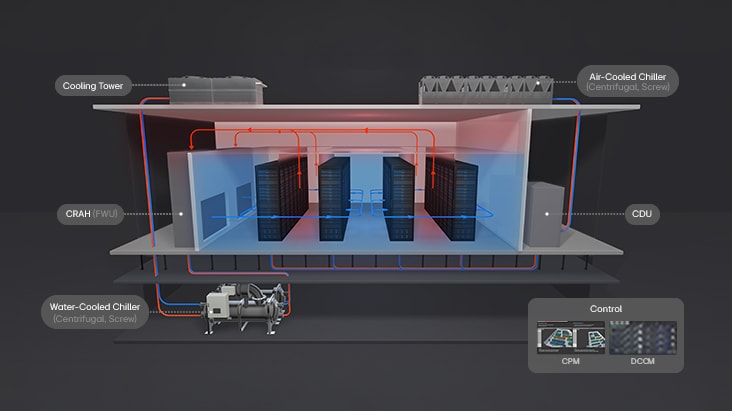
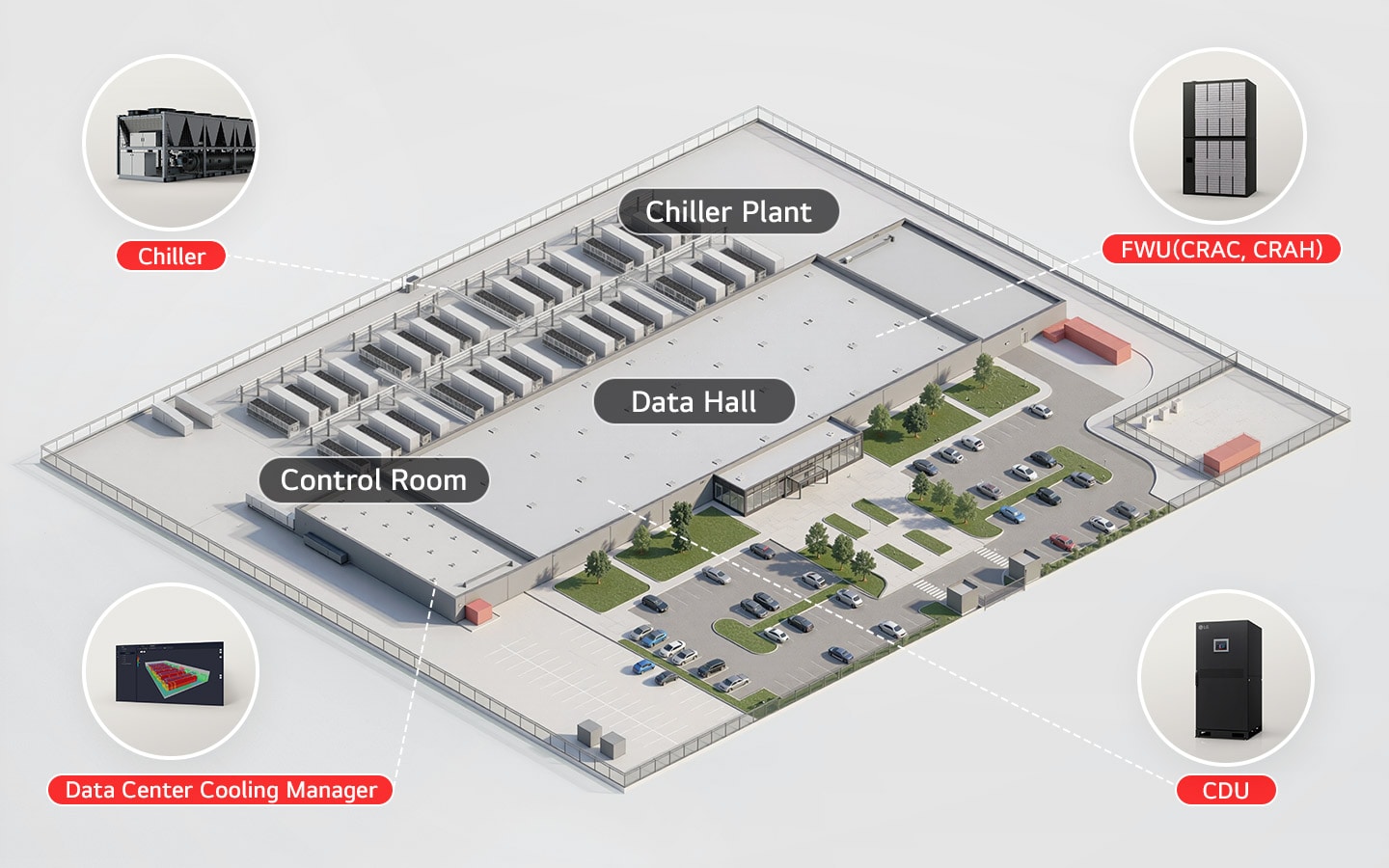
A comprehensive data center cooling system diagram connecting an external chiller plant to internal CDU and FWU units.

*The image is a conceptual representation created to illustrate our solution and may differ from the actual design.

Related Products and Solutions for Data Center

Discover the Latest News & Updates

LG Electronics Showcases “Chip-To-Chiller” Cooling Solutions at Data Center World Asia 2026

LG Electronics Becomes an NVIDIA Preferred Partner for Power and Cooling Solutions

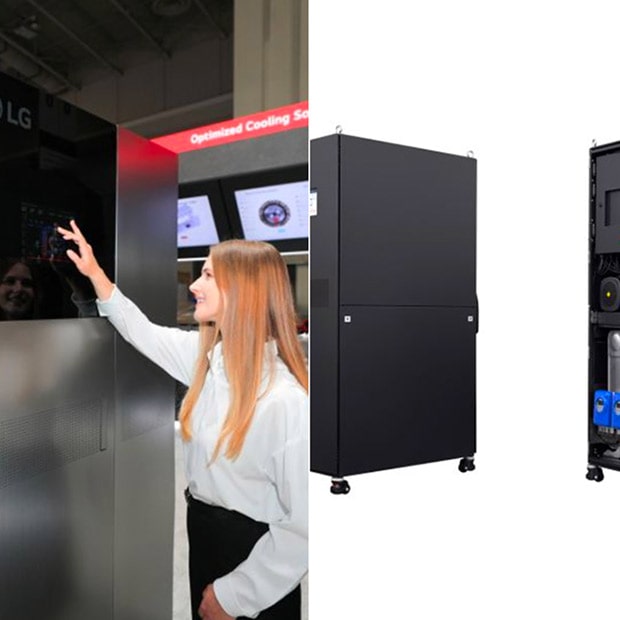
LG Electronics’ 2.6-Megawatt Coolant Distribution Unit Qualifies as NVIDIA DSX Ready CDU

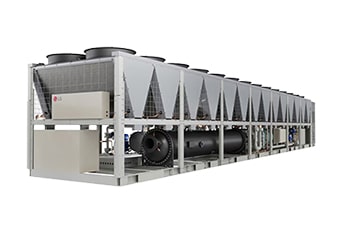
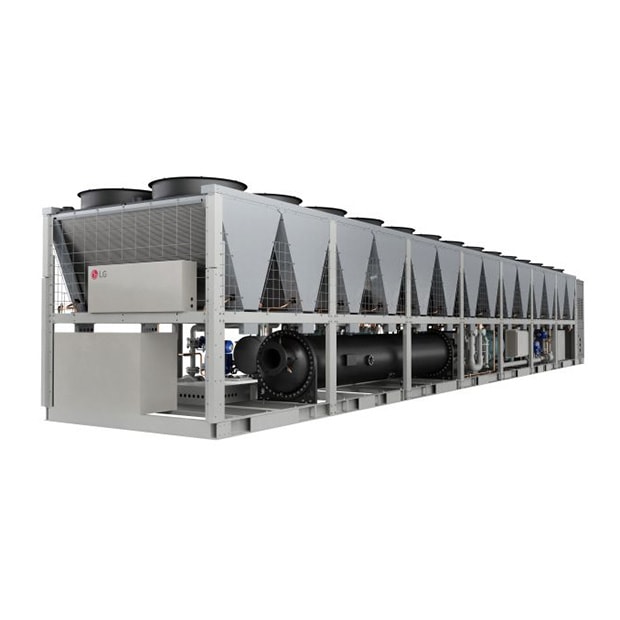
LG Electronics Launches Air-Cooled Centrifugal Chiller for AI Data Centers

Contents & Resources

Explore and download the latest articles, resources, and case studies about LG Data Center Solutions.

Why CRAH Still Matters: The Essential Role of Air Cooling in Modern Data Centers

What Is Free Cooling? A Guide to Energy-Efficient Data Center Cooling

Integrated Cooling Strategies for Data Centers

The Future of Data Centers: Energy Efficiency and Waste Heat Potential

FAQ

Q.

What types of cooling are used in data centers?

A.

Data center cooling is generally divided into air-side cooling and liquid cooling. The appropriate approach depends on heat load, rack density, and facility requirements.

• Air-side cooling – Conditioned air is circulated to remove heat from IT equipment. CRAH(C)s and FWUs manage heat and airflow within the data center, while chillers can supply chilled water to the air-side cooling system.

• Liquid cooling – Liquid is used closer to heat-generating IT components. Key approaches include

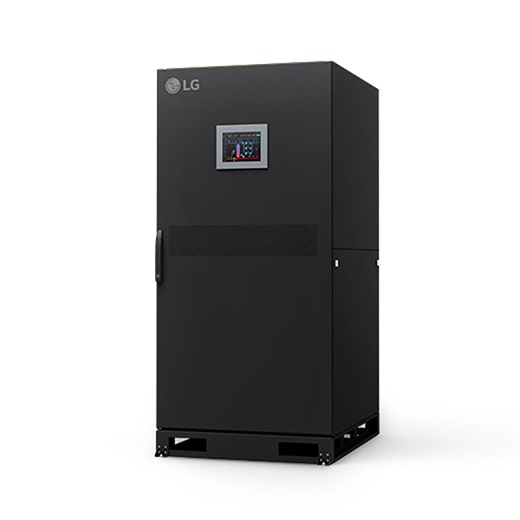
-Direct-to-Chip cooling – Coolant circulates through cold plates attached to components such as CPUs and GPUs, with a CDU managing coolant flow, temperature, and heat transfer.

-Immersion cooling – IT equipment is submerged in a dielectric fluid that absorbs heat directly from the components.


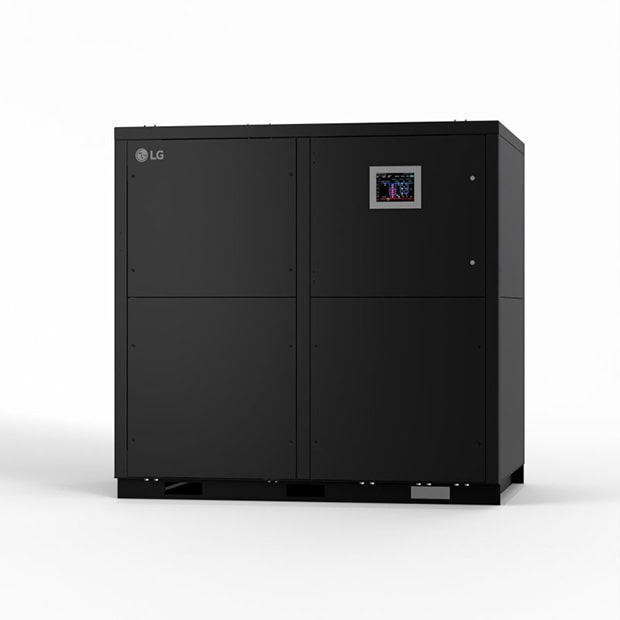
As chip heat loads increase, data centers are adopting greater use of liquid cooling, often alongside air-side systems. LG provides air-side and Direct-to-Chip liquid cooling solutions, supported by FWUs, CRAH(C), CDUs, and chillers.

Q.

How does an integrated data center cooling solution differ from a conventional data center HVAC system?

A.

Conventional data center HVAC systems are designed to remove heat from IT equipment and maintain appropriate operating conditions around critical loads. An integrated cooling solution extends this approach by bringing together cooling equipment, thermal controls, monitoring, analytics, and lifecycle service capabilities across the data center cooling infrastructure.


Key differences include:

• Evolving cooling architecture –As chip heat loads increase, data centers are adopting greater use of liquid cooling alongside air-side systems to address different heat loads, rack densities, and facility requirements.

• Centralized monitoring and analytics – Connected equipment data provides greater visibility into cooling conditions and overall system performance.

• Operational and maintenance support – Diagnostics, predictive capabilities, and lifecycle services help support timely response and stable operation.

• Scalable deployment – Cooling capacity and system configurations can adapt to changing IT loads, facility expansion, and large-scale deployment requirements.

Q.

Can cooling solutions be customized for different data center requirements?

A.

Yes. Data center cooling architectures can be configured based on the operating and deployment requirements of each facility. LG provides modular and flexible cooling solutions designed around factors such as:


• Facility scale and layout

• Server and rack density

• Cooling load

• Operating conditions

• Deployment and installation requirements

• Changes in AI workloads and capacity needs

Q.

How much water and energy does data center cooling use?

A.

Water and energy use vary depending on facility size, cooling load, climate, and system design. As demand for both resources increases, selecting the right cooling system requires balancing water availability, energy efficiency, deployment speed, and operating priorities.


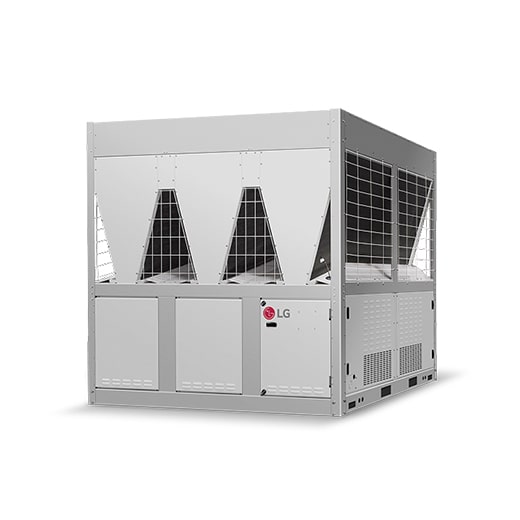
• Air-cooled chillers – Use outdoor air to reject heat, helping reduce water consumption and support simpler, faster capacity expansion. LG offers screw, scroll, and centrifugal air-cooled chillers to address different facility requirements. Selected models also use free cooling to help reduce compressor operation and energy use when outdoor conditions allow.

• Water-cooled chillers – Require cooling towers and water infrastructure but can deliver higher operating efficiency for large and continuous cooling loads. LG offers a broad water-cooled lineup that can be configured according to site conditions and long-term operational efficiency targets.


LG’s air-cooled and water-cooled chiller portfolios allow data centers to select a cooling approach based on local resource constraints, deployment requirements, and operating priorities.

Q.

How do chillers support high-density AI data centers?

A.

Chillers provide consistent, energy-efficient cooling across a wide capacity range to support the large and continuous cooling loads of high-density AI data centers.


Key features of LG chillers include:


• Cooling capacities ranging from 200 to 5,000 tons

• Oil-free inverter models using R-1233zd refrigerant

• Support for heat collected by both liquid- and air-side cooling systems

• Chiller technologies developed through LG’s expertise in compressors, heat exchangers, and fan motors

• Cooling performance designed to support demanding and continuous data center operation

Q.

How do FWUs and CRAH(C)s support data center cooling?

A.

FWUs and CRAH(C)s manage air-side heat, circulate conditioned air, and help maintain appropriate temperature conditions within the data hall.


Key features of LG FWUs and CRAH(C)s include:


• Precise, energy-efficient control – IE5-grade inverter motors support precise control with total harmonic distortion below 5%

• Enhanced airflow and lower noise – Shark-skin fan blades help reduce noise and enhance airflow

• Streamlined installation – Factory pre-assembled modular FWUs help simplify on-site work and shorten installation time

Q.

How does Data Center Cooling Manager support data center operation and maintenance?

A.

Data Center Cooling Manager supports centralized monitoring and operational management across connected data center cooling equipment.


Key capabilities include:


• Collection and analysis of equipment operating data

• Centralized monitoring of system conditions

• Identification of potential operational issues

• Faster and more efficient response by operators

• Data-driven diagnostics

• Predictive maintenance capabilities

• Support for stable operation, long-term system reliability, and lifecycle maintenance

"Connect with LG business" banner with a "Contact us" button for product quotes and questions.

"Connect with LG business" banner with a "Contact us" button for product quotes and questions.

Connect with LG Business

If you’d like to receive a quote for a product you’re interested in or have any other questions, feel free to let me know.