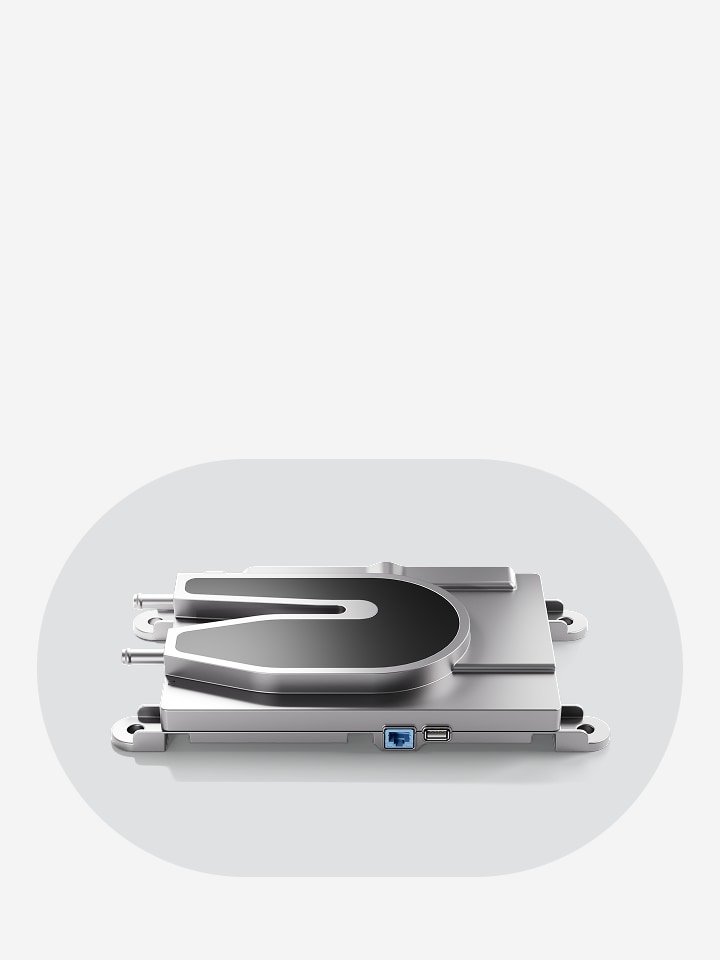
LG VS Next-Gen High Performance Computing unit for domain consolidation and high-speed processing on an SDV-ready platform.

LG VS Next-Gen High Performance Computing unit for domain consolidation and high-speed processing on an SDV-ready platform.

Next-Gen High Performance Computing

Providing automotive high-performance compute system for next generation mobility.

High Performance Computing

LG provides high performance computing systems that allow scalable computing hardware expansion, consolidation of safety/non-safety domains, advanced memory access and device-sharing technology for high capacity, low-latency and high-speed data processing, unified communication framework, micro service architecture and mixed critical orchestrator.

Why Do OEMs Need a Flexible Vehicle Architecture?

Addressing the challenges of the SDV transition requires a holistic, flexible architectural foundation that addresses hardware constraints, software coordination, and business viability as an integrated whole. The practical challenges confronting OEMs in the SDV era are not isolated technical hurdles, but an interconnected set of market demands and architectural pressures. Escalating software intricacy, structural dependencies on specific chipset solutions, intensifying regulatory mandates, and diverging cost constraints across vehicle lines form a compounding cycle of complexity. Attempting to address these elements with rigid, monolithic platforms has shown limitations, as a static single architecture cannot dynamically adapt to the diverse commercial and functional requirements of modern vehicle programs.

How Does LG Address the SDV Transition?

LG proposes a next-generation E/E architecture solution built on hardware virtualization, software orchestration, and open ecosystem collaboration to overcome the practical challenges of the SDV transition.

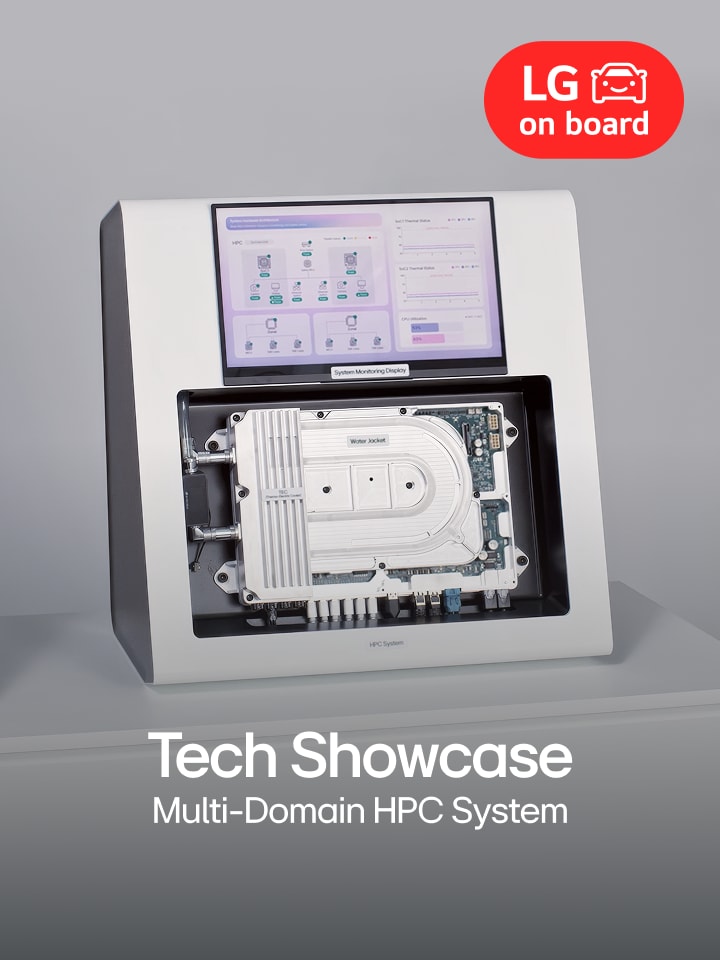
Multi-Domain HPC system image shows LG VS centralized computing and scalable vehicle architectures for SDVs.

What Are the Key Features of LG HPC Systems?

• Replaceable and upgradable compute modules to peripheral interface board

• Scalable platform from entry to premium with cockpit, autonomous driving (AD), and other vehicle domain consolidation

• Device sharing and system extension through peripheral component interconnect express (PCIe)

• High bandwidth ethernet/ time-sensitive networking (TSN) for supporting zonal architecture

• Advanced cooling system with failover mechanisms

• SDV-ready platform with safety certified OS and unified communication framework

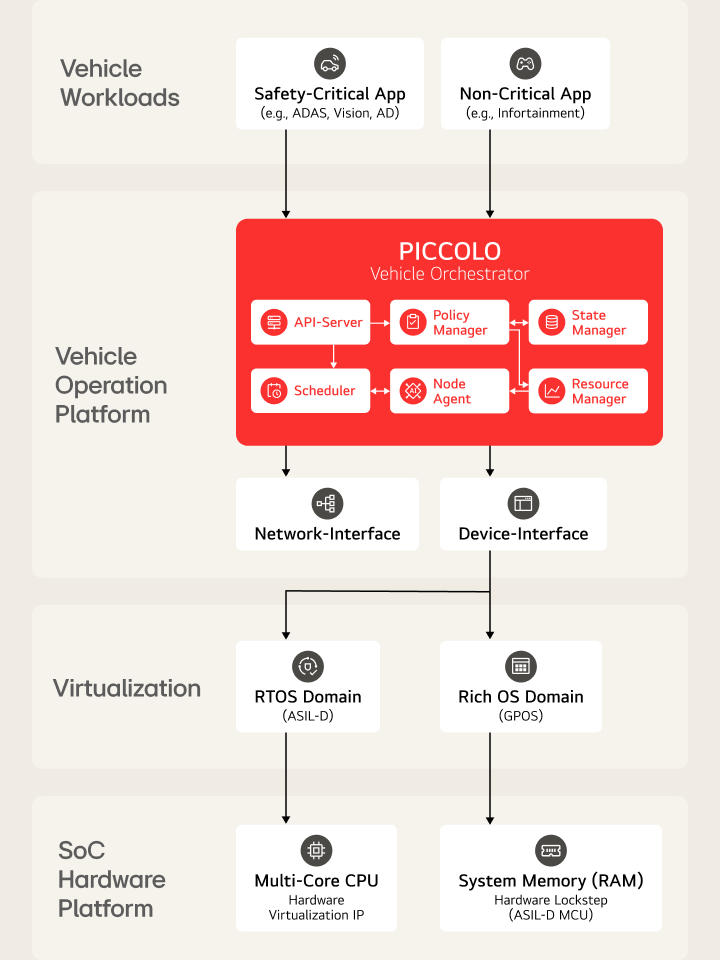
PICCOLO Resource Orchestration Diagram shows LG VS orchestrating mixed-criticality workloads across vehicle domains.

High-Performance Computer

LG’s solution surmounts the limitations of a ‘one-size-fits-all’ approach through a high-performance computer (HPC) platform engineered around physical modularity and kernel-level hardware virtualization. At a fundamental level, this centralized architecture provides a foundation for addressing modern vehicle regulations such as UN R155/R156, as it can help reduce the attack surface and provide a more unified underpinning for software lifecycle management compared to distributed systems.

Mixed Critical Orchestrator

LG introduces PICCOLO, an intelligent software orchestration platform engineered to directly address the challenges of managing mixed-critically workloads, a key consideration in functional safety architectures. This solution breaks down isolated sensor and domain silos across centralized and zonal controllers, enabling the coordinated operation of previously isolated software domains—supporting LG’s vision of Orchestrated Intelligence.

Open Platform Ecosystem

LG moves past proprietary confines to champion open-source automotive standards. To help resolve the structural inefficiencies, LG actively participates in foundational multi-party initiatives such as the Software-defined Vehicle Community Open Reference Architecture (S-CORE) project.
Via this collaborative strategy, LG is helping reduce proprietary dependencies, facilitate greater application portability, and support the lowering of non-recurring engineering (NRE) expenditures for global automakers.

HPC Reference

Our high performance computing is the backbone which enables high speed networking between cockpit domain controller and AD/ ADAS for high performance computing while profiling multiple computing resources.

Architecture Concept

Zonal E/E architecture that vehicle centralized with cockpit computing, vehicle gateway and zonal aggregator.

Abstract red background with large overlapping pink gradient shapes, creating a modern and minimalistic design

Abstract red background with large overlapping pink gradient shapes, creating a modern and minimalistic design

Connect with LG Business

We provide customized solutions to help your business achieve optimized growth.