Part 21. [Mobility Inside] LG Electronics’ ADAS

by Soonin Chung Professional Researcher, Vehicle component Solutions Company, LG Electronics
MobilityBlog06/04/2022
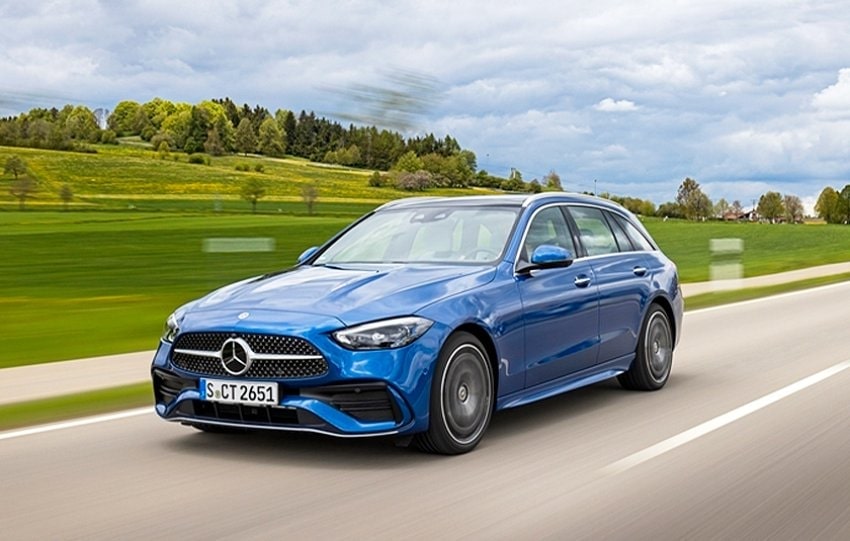
Mercedes-Benz C-class vehicle with ADAS front camera image

│ Mercedes-Benz C-Class with ADAS front camera was a collaborative work between LG Electronics and Mercedes-Benz AG
(Source: Mercedes-Benz Group Media Site)

It’s likely you have already heard about LG Electronics’ ADAS (Advanced Driver Assistance Systems), through publicity, international conferences, and the many awards it has collected over the years.


In November, LG Electronics won the Gold Award in the Hardware Development of the Year category, which is the highest award granted for this category at the AutoSensONLINE 2021 global conference. In the 2020 Vision Award category, together with Mercedes-Benz AG, LG won the Silver Award. As some may already know, AutoSens is a prestigious international community of experts that specialize in developing ADAS, an autonomous driving system, and artificial intelligence (AI).


Many readers have commented and were curious about its capabilities, asking and commenting, "I want to know how LG Electronics' products are included and where they are in Mercedes-Benz cars!", "I want to see them in the cars with my own two eyes!", and "I wonder just how easy driving will be with LG Electronics' solution!" So in this edition, let's explore the LG Electronics’ ADAS function installed in the Mercedes-Benz C-Class.

Off to work with ADAS

First, why don’t we follow LG Electronics' Mr. LG on his way to work at LG Science Park.

#1 When Getting Out of Your Lane

The ‘Lane Keeping Assistant’ function recognizes the road’s lanes and returns vehicles to their lane image

│ The ‘Lane Keeping Assistant’ function recognizes the road’s lanes and returns vehicles to their lane

Mr. LG, a less-experienced driver, is driving and has slightly crossed over the left lane while on his way to work due to his poor driving skills. Before noticing his own mistake, the car alerted the driver of his errors. The great thing about this is that it doesn't just end with an alert; it brings the car safely and smoothly back to its original lane. It works well not only for inexperienced drivers but also when driving on dark or complex roads late at night. Thanks to ADAS, Mr. LG feels reassured.

#2 When Approaching School Zones

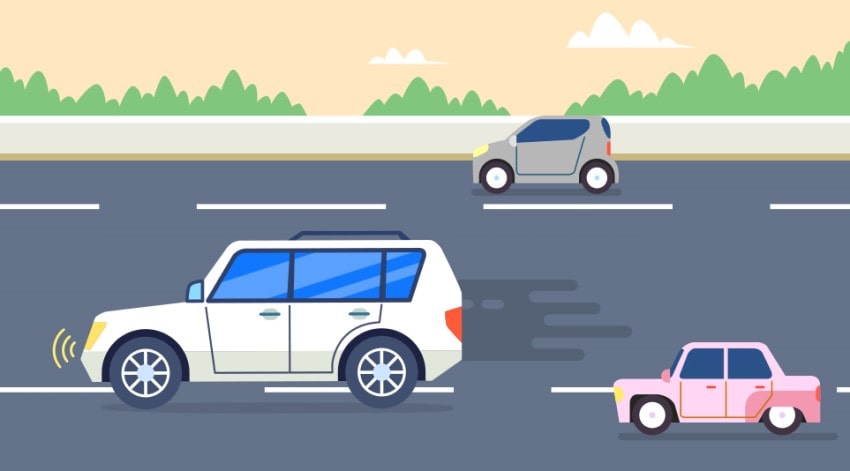
The ‘Adaptive Cruise Control’ function decelerates the vehicle on its own in accordance with School Zones image

│ The ‘Adaptive Cruise Control’ function decelerates the vehicle on its own in accordance with School Zones

While on his way to work at LG Science Park, Mr. LG must pass an elementary school nearby. When approaching streets located close to an elementary school, street regulations require vehicles to slow down in order to protect and maintain the children’s safe passage to school. However, in case Mr. LG isn’t paying close attention or doesn’t slow down, his car automatically recognizes the speed limit in the school zone, alerting Mr. LG. So, even if he weren’t to pay close attention to everything, the car essentially would read his mind and do everything for him. Is that right?

#3 When You Can't See Ahead

The 'Automatic Emergency Braking' function recognizes when obstacles are in front of the vehicle and applies automatically applies the brakes image

│ The 'Automatic Emergency Braking' function recognizes when obstacles are in front of the vehicle and applies automatically applies the brakes

Today Mr. LG has an important meeting where he has to make an important decision. That meeting has caused Mr. LG to be lost in thought while driving, and his car almost hit someone who was jaywalking in front of an apartment complex. However, this situation is no longer a problem for our new tech. In situations where the driver does not respond to the collision alert, the brakes will automatically be applied to stop the car. Thanks to the help of this safety function, Mr. LG, the pedestrian, and his car were all kept safe and sound.


Aren’t you quite impressed with these given examples? These amazing features of ADAS have now been introduced, so now let’s take a closer look at each feature using photos.

What is the ADAS front camera?

The ADAS front camera acts as the car’s 'eyes'. It is a major component that directly views, collects, and analyzes a variety of traffic information in autonomous vehicles and driver assistance systems. This front camera is crucial for cars to continuously understand, update, and inform the driver of the road, traffic system, and nearby car information. Without eyes, you can't drive, so it's a key component of future mobility.

Automatic Emergency Braking (AEB)

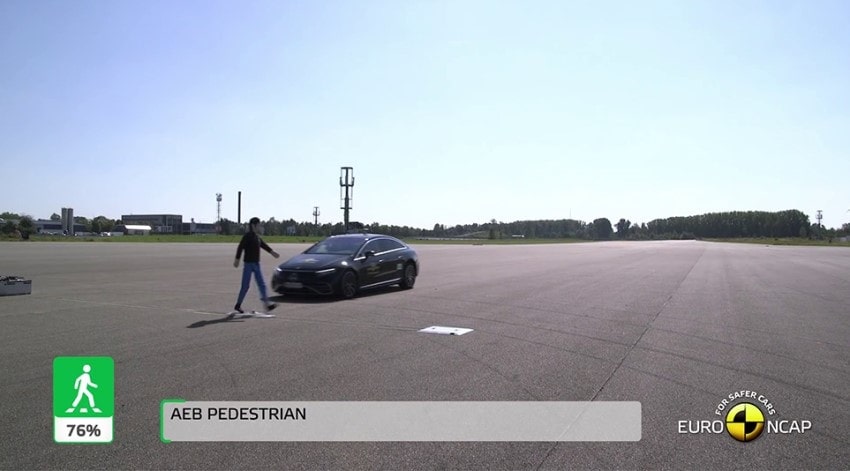
The 'Automatic Emergency Braking' function detects obstacles on its own through a radar attached to the vehicle, alerts the driver, and automatically stops the car image

│ The 'Automatic Emergency Braking' function detects obstacles on its own through a radar attached to the vehicle, alerts the driver,
and automatically stops the car, (Source: Euro NCAP Official YouTube Channel, Crash & Safety Tests of Mercedes-Benz EQS 2021)

Automatic emergency braking is a technique that allows the radar attached to the front of the vehicle to slow the vehicle down by sending either a sound or vibration to the driver when it detects danger. If the driver does not respond to the crash alert, the brakes will automatically stop the vehicle by themselves.


*Individual circumstances may vary depending on the network environment, car specifications, and road traffic conditions.

Lane Keeping Assistance (LKA)

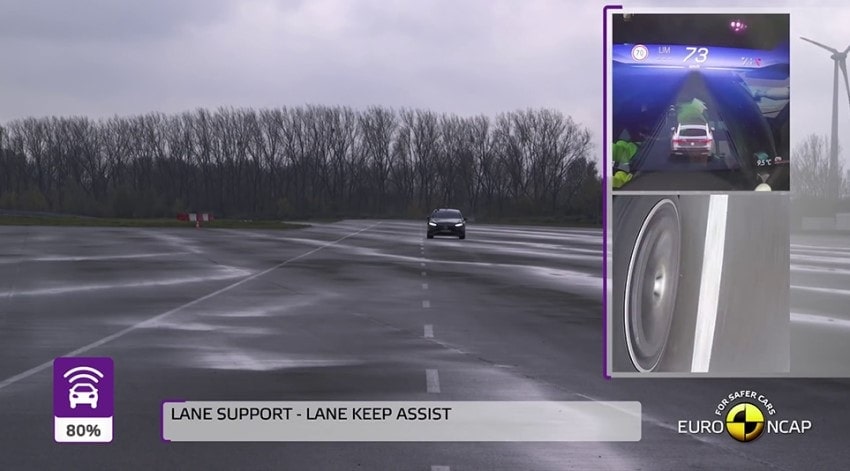
The 'Lane Keeping Assistant' function returns the vehicle to its original driving lane upon departure image

│ The 'Lane Keeping Assistant' function returns the vehicle to its original driving lane upon departure,
(Source: Euro NCAP Official YouTube Channel, Crash & Safety Tests of Mercedes-Benz EQS 2021)

The Lane Keeping Assistance is a control that alerts the driver when the vehicle is out of its lane and returns the vehicle to its original lane. Early forms of lane-keeping assistance only served as lane departure warnings; however, now its role has expanded to encompass a function for returning the vehicle to its lane upon departure.

Lane Departure Warning (LDW)

Lane Departure Warning is a device that warns the driver when the vehicle leaves its lane as a result of drowsy or inexperienced driving. It allows drivers to drive safely in line with the flow of traffic without leaving the lane, especially on main roads including highways.

Adaptive Cruise Control (ACC)

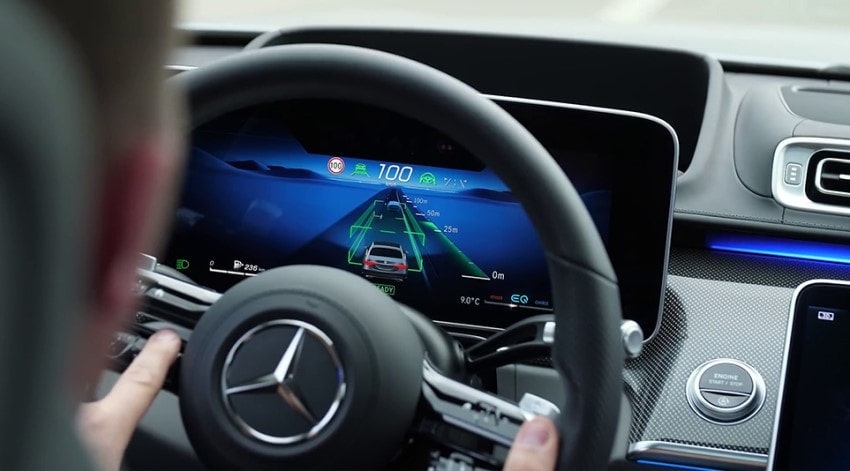
The 'Adaptive Cruise Control' feature maintains the vehicle at a constant speed without needing to step on the accelerator image

│ The 'Adaptive Cruise Control' feature in the Mercedes-Benz S-Class maintains the vehicle at a constant speed without needing to step on the accelerator,
(Source: Mercedes-Benz Official YouTube Channel)

The Automatic Cruise Control is a function that maintains the speed set by the driver without needing to step on the accelerator. This allows the driver to maintain a constant speed when on a highway or passing through a speed-monitored area without needing to pay attention.

Traffic Sign Recognition (TSR)

Automatic Traffic Sign Recognition is a function that recognizes traffic signs and lights on the road and alerts the driver in cases of speeding or signal violation. In the future, instead of alerting the driver, there will be an upgrade with the ability to automatically adjust the speed and position of the vehicle.

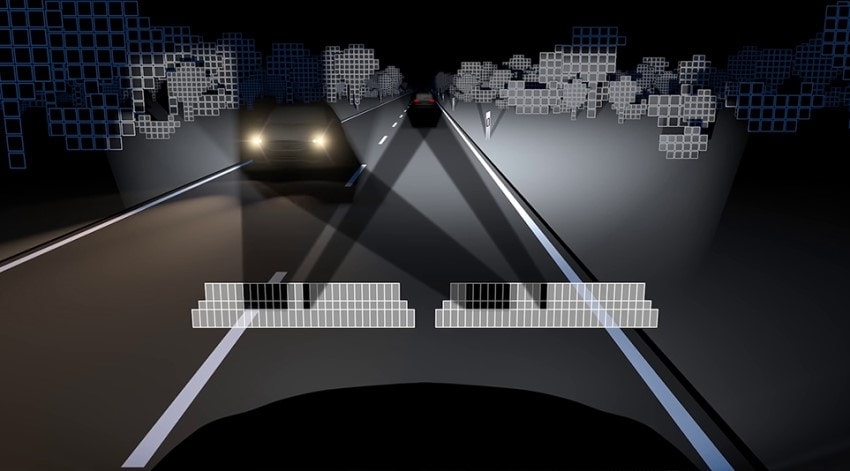
Intelligent Head-Light Control (IHC)

The 'Intelligent Head-Light Control' function controls the brightness and position of the headlights while driving at night image

│ The 'Intelligent Head-Light Control' function of the Mercedes-Benz E-Class controls the brightness and position of the headlights while driving at night
(Source: Mercedes-Benz Official YouTube Channel)

Intelligent Head-Light Control automatically adjusts the brightness and position of the vehicle’s headlights up to avoid obstructing other drivers’ views at night.


*Individual circumstances may vary depending on the network environment, car specifications, and road traffic conditions. ADAS is a field that combines mobile communication, connectivity, image recognition, big data processing, artificial intelligence (AI), deep learning technology, and know-how for vehicles. It must analyze, judge, and act on very complicated situations, the car, traffic situations, other cars, other people, and various objects that change rapidly in real-time.


The ADAS function will continue to develop through the application of algorithms developed independently by LG Electronics VS Business Headquarters. Please look forward to LG Electronics' ever-evolving electronic parts solution business.