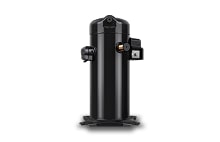
Why Compressor Replacement Fails — and What to Check First

Compressor & MotorBlog31/08/2026

Share this content. You can share the items you like with your friends.

HVAC technicians diagnosing an AC compressor failure on a residential condenser unit — why compressor replacement fails without proper root cause diagnosis

*Copyrights © LG Electronics 2026. All image rights reserved.

Most Diagnosed Compressor Failures Aren't Actually Compressor Problems

Even when a technician determines in the field that "the compressor is dead," when the manufacturer recovers and inspects the unit, the compressor itself is rarely the actual problem.[1][2] Recognizing early compressor failure symptoms — rather than assuming ac compressor failure on sight — is the first step toward an accurate diagnosis.

Most cases diagnosed as compressor failure are not defects in the compressor itself, but "system-created" problems.[1][2] Improper refrigerant charge, poor airflow, liquid floodback, contamination, incorrect line sizing, inadequate oil return, and power quality issues combine to create the false impression of compressor failure.[1][2] The compressor is simply the point where all of these problems ultimately surface — it is rarely the root cause.[1][2]

This distinction matters for a clear reason.[1][2] A replacement performed without correcting the root cause will simply repeat the same failure, and the cost falls on the end user.[1][2] A failed compressor should therefore never be treated as an isolated component failure until the entire system has been evaluated.[1][2]

KEY TAKEAWAYS

  • Most diagnosed compressor failures aren't compressor defects — they're system-created problems. Never replace before diagnosing.[1][2]
  • There is no standard age at which compressor replacement is recommended.[1][2] In a properly installed and maintained unit, the compressor can outlast the surrounding components.[1][2]
  • Accurate capacity and electrical-rating (MCC/LRA) matching is a precondition for a successful replacement.[1][2][11]
  • Refrigerants cannot be substituted without approval — refrigerant, oil, metering device, and operating range must all be verified together.[7][8]
AC compressor failure diagnosis checklist covering five root causes — electrical faults, mechanical wear, refrigerant charge and leaks, airflow restriction, and control system errors

*Copyrights © LG Electronics 2026. All image rights reserved.

1. Diagnosis — Check the System Before You Touch the Compressor

Why do most compressor failures actually happen?

Most compressor failures are not the result of a single cause — they stem from a combination of installation quality, system design, operating conditions, maintenance history, and equipment age.[1][2] The most common mistake technicians make is concluding the compressor has failed before checking the surrounding electrical and refrigerant components.[1][2] A structured compressor failure analysis across these categories helps avoid replacing a compressor that was never actually defective.

Symptoms such as "no-start" or poor cooling can actually originate from a capacitor, contactor, control board, pressure switch, thermostat, wiring, or supply power issue rather than the compressor itself.[1][2] Even when compressor error codes, repeated trips, or pump-down failure are observed, don't assume a compressor defect — check control signals and the refrigerant circuit together.[1][2] Rather than checking isolated components, it's more effective to evaluate the entire system across five diagnostic categories.[1][2] Tracking a compressor pump-down failure separately from a true compressor defect is one of the most valuable diagnostic distinctions a technician can make.

Category Key Items to Check Misdiagnosis Prevention Point
Electrical Supply voltage/current, wiring, capacitor, contactor, winding resistance, insulation resistance, protective devices[1][2] Check the electrical system before concluding a no-start condition is compressor failure[1][2]
Mechanical Unusual noise/vibration, mounting, line stress, oil return, internal compression condition, locked rotor[1][2] Check that external stress or oil-return issues aren't mistaken for internal failure[1][2]
Refrigerant Refrigerant type/charge, leaks, suction/discharge pressure, superheat/subcooling, discharge temperature, liquid floodback[1][2] Confirm that undercharge, overcharge, or leaks aren't mistaken for reduced compressor performance[1][2]
Airflow Filter, coil contamination, fan operation, ductwork, whether design airflow is achieved[1][2] Confirm poor cooling caused by restricted airflow isn't attributed to the compressor[1][2]
Controls Thermostat, sensors, pressure switches, control board, expansion device, protection logic, error codes, pump-down operation[1][2] Confirm operating-signal and protection-circuit issues aren't mistaken for a compressor defect[1][2]


Table 1. Five-Category Diagnostic Checklist Before Compressor Replacement


Only after ruling out abnormalities in each of these categories — and if startup, compression performance, or electrical issues persist — should you consider the possibility that the compressor itself has failed.[1][2]

Approach Compressor Condition in Three Categories

Before recommending replacement, distinguishing whether the compressor is "running normally / running with abnormal symptoms / not running at all" can significantly reduce unnecessary replacements.[1][2]

•      Running normally: The compressor is unlikely to be the root cause.[1][2] First check for frost around the 4-way valve, a clogged suction filter, refrigerant shortage from a leak, a faulty capacitor, restricted airflow, or a blockage in the refrigeration circuit.[1][2]

•      Running with abnormal noise: Internal damage is possible but cannot be assumed.[1][2] Noise can also result from a malfunctioning fan, operation under vacuum, refrigerant imbalance (overcharge or undercharge), or liquid return caused by a system blockage.[1][2]

•      Not running at all: Rule out the electrical system and protection circuits first, then evaluate the compressor itself.[1][2]


The Manufacturer's Most Common Misdiagnosis — Mistaking Internal Overload for Winding Burnout


A compressor that has tripped on internal overload will temporarily measure as if the windings are open.[1][2] Diagnosing this immediately as "winding burnout" results in replacing a perfectly good compressor, and a significant share of returned compressors are recovered for exactly this reason.[1][2] For an accurate diagnosis, let the compressor cool down fully, then re-measure winding resistance, insulation resistance, voltage, current, and starting components.[1][2]


Refrigerant Charge Accuracy and Compressor Overheating Causes — Newer Systems Have Tighter Tolerances

Undercharge causes high superheat, insufficient motor cooling, elevated discharge temperature, and overheating.[1][2] Overcharge causes elevated head pressure and liquid floodback.[1][2] Both directly affect compressor lifespan.[1][2]

It's worth noting that as equipment becomes more efficient and designs are further optimized, tolerances get tighter.[1][2][12] In other words, a charge error that was acceptable in older systems can become a failure cause in newer systems.[1][2][12] A compressor running abnormally hot needs to be checked not only for refrigerant charge but also for restricted airflow, power quality, and oil-return issues.[1][2] Avoid rule-of-thumb charging methods — use a precision scale, charge according to manufacturer guidelines, and verify superheat, subcooling, airflow, and outdoor air temperature together.[1][2][12]


Power Quality — Why It Matters More Now

Grid instability, peak loads driven by extreme weather, rising electricity demand, and the growing share of electronic control components have combined to make power quality more important than in the past.[9][10] In three-phase systems especially, small voltage imbalances are amplified into much larger current imbalances.[9][10]

Because of this relationship, a power supply that looks fine to the eye can still be damaging to a motor.[9][10] A 5% voltage imbalance can produce a current imbalance of up to 40%, and NEMA does not recommend operation above a 5% voltage imbalance.[9][10] If current imbalance exceeds 10%, either correct the supply voltage to under 1% imbalance or de-rate the motor.[9][10]

Low voltage can cause hard starting or a locked-rotor condition; surges can damage windings and control components.[9][10] Check voltage, phase balance, and grounding under load rather than no-load conditions, and consider surge protection or phase-monitoring devices where needed.[9][10]


Key point — Compressor failure diagnosis doesn't start with the compressor.[1][2] It should start with the system and narrow down to the compressor.[1][2]

1:1 exact-match compressor selection guide showing capacity, voltage, MCC/LRA, refrigerant and oil compatibility, and mounting dimension checklist for HVAC replacement

*Copyrights © LG Electronics 2026. All image rights reserved.

2. Decision — Repair or Replace?

Should you replace the compressor or the whole system?
There is no standard age at which compressor replacement is recommended.[1][2]
A properly installed and maintained unit will run normally for a long time, and the compressor's service life can actually exceed that of the surrounding components.[1][2] Conversely, excessive liquid floodback or other system-created problems can dramatically shorten it.[1][2] A single rule like "replace after X years" therefore doesn't hold, and replacement decisions shouldn't be based on system age alone.[1][2]

The decision to repair or replace a compressor should be based not on age but on four factors: the condition of key components, refrigerant availability, the customer's long-term cost, and warranty terms.[1][2]


First, Visually Assess the Condition of the Aging System
Check the condition of key components such as the coil and fan motor, and inspect the system for leaks.[1][2] If the overall condition is good, replacing the compressor alone — combined with proper service steps such as system flushing, acid-neutralizer treatment, and filter-drier replacement — can successfully extend the equipment's service life.[1][2] Conversely, if the coil, fan motor, controls, and refrigerant circuit are mostly nearing end of life, full system replacement offers better long-term value.[1][2]


2026 Regulatory Changes Have Shifted This Calculus
"If a system runs on a legacy refrigerant, full replacement is the better choice" has long been the conventional rule of thumb.[3][5][6] In the U.S. market, that premise actually changed in 2026.[3][5][6]

Category Details Impact on Compressor Replacement Decision
Manufacture/Import Ban Effective January 1, 2025, manufacture and import of new residential and light-commercial air conditioners and heat pumps using refrigerants with GWP above 700 (including R-410A) are prohibited[3][4] New equipment has effectively completed the transition to A2L refrigerants (R-32, R-454B, etc.)[3][4]
Installation Deadline Withdrawn Finalized by the EPA on May 21, 2026, effective July 27, 2026. R-410A residential and light-commercial equipment manufactured or imported before January 1, 2025, can now be installed until stock is depleted — the prior January 1, 2026 installation ban deadline has been removed[3][5][6] The remaining useful life of R-410A systems is longer than expected, increasing the viability of a compressor-only replacement[3][5][6]
VRF Exception The January 1, 2027 deadline for VRF/VRV systems remains in place[3] Commercial VRF systems still need earlier consideration of full replacement[3]
State Regulations Some states — such as New York under Part 494 — independently maintain a January 1, 2026 installation deadline[3][5][6] Don't rely on federal rules alone — state regulations must always be checked[3][5][6]
Long-Term Direction Under the AIM Act, HFC production and consumption are set to be cut by 85% by 2036[3][4] The long-term direction toward low-GWP refrigerants is fixed — consider full replacement if the equipment will run 10+ more years[3][4]


Table 2. Status of U.S. R-410A and Low-GWP Transition Regulations


Practical implication — As of the second half of 2026, replacing only the compressor in an R-410A residential system has become a more defensible decision than before.[3][5][6]
This does not mean it's fine to keep a legacy-refrigerant system indefinitely.[3][4] Refrigerant production cuts continue on the AIM Act schedule, so R-410A's price and availability will keep getting worse over time.[3][4] The real question isn't "does a regulation prohibit it," but "how many more years will the customer run this equipment, and can refrigerant be secured at a reasonable cost during that time."[3][4]


* The regulatory status above reflects information as of the publication date and should not be relied on as a basis for legal determinations. Before performing any installation or replacement, reconfirm current federal and state regulations against official EPA and state government sources, and consult legal counsel if needed.

What Contractors Most Often Overlook — Replacement Compressor Warranty

As a general principle, manufacturers apply the same product warranty policy across OEM and Aftermarket channels.[1][2] (Exact warranty terms are governed by the official product warranty and sales agreement, and can vary by country, region, and distribution channel.) However, as the compressor moves through the distribution chain — OEM, distributor, contractor — to the end consumer, the final warranty terms can be altered by any party along the way.[1][2] Contractors need to be clearly aware of this and communicate it to the end consumer.[1][2]

In particular, the warranty period for a replacement part is often shorter than that of new equipment (typically 5 or 10 years).[1][2] (These figures are general examples; actual warranty periods vary by product model and contract terms.) This difference directly affects the customer's repair-versus-replace decision, and if it isn't disclosed up front, it becomes a source of disputes later.[1][2] A question contractors hear often — how long is compressor warranty coverage — has no single answer; it depends on whether the part is original equipment or an aftermarket replacement, and on the terms set by each party in the distribution chain.


▶ Internal link: "Aftermarket" → https://www.lg.com/global/business/compressor-motor/aftermarket/

Decision Factor Consider Compressor-Only Replacement Consider Full System Replacement
Key Component Condition Coil, fan motor, controls, and refrigerant circuit are generally in good condition[1][2] Most key components are aging or likely to fail soon[1][2]
Refrigerant Availability The existing refrigerant can be sourced at a reasonable cost[3][4] Refrigerant is hard to source, or rising prices create a heavy long-term cost burden[3][4]
Remaining Service Period Customer plans roughly 5 more years of use[1][2][3][4] Customer plans 10+ years of long-term operation (considering the low-GWP transition direction)[1][2][3][4]
Regulatory Conditions Federal/state regulations permit installing and maintaining that refrigerant system[3][5][6] The category has a fixed deadline (e.g., VRF) or state regulations are stricter[3][5][6]
Customer Priorities Minimizing upfront repair cost and fast restoration of service are the priority[1][2] Long-term energy cost, new-equipment warranty, and system efficiency are the priority[1][2]
Warranty/Service Perspective Replacement-part warranty terms and service scope are clearly defined[1][2] New-equipment warranty and long-term operating stability provide greater value[1][2]
Profitability Structure Lower part cost but longer service time[1][2] Higher upfront part cost but shorter service time[1][2]


Table 3. Decision Matrix — Compressor-Only Replacement vs. Full System Replacement


Key point — The basis for a replacement decision isn't the age of the equipment, but a combination of component condition, refrigerant availability, remaining service plan, and regulatory conditions.[1][2][3]

Three-step HVAC compressor commissioning process — root cause correction, correct installation procedure, and startup verification with superheat and subcooling data — plus a technician confirming system performance with a homeowner

*Copyrights © LG Electronics 2026. All image rights reserved.

3. Selection — Accurate Matching Determines Success

How do you select the right replacement compressor?

Replacement compressors are typically built with newer technology than the original unit, giving them equal or higher efficiency.[1][2][11] Manufacturers offer lineups spanning a range of displacements, so a field technician can select a product that matches the original compressor's capacity.[1][2][11] But that breadth of choice is also the risk of a mis-selection.[1][2][11]

Undersized capacity leaves the system short of cooling at peak load; oversized capacity causes short cycling, which degrades both dehumidification and comfort.[1][2][11]

Oversizing is a particularly common misconception.[1][2][11] It's tempting to think "bigger for safety margin" is the safe choice, but in practice, more frequent cycling means repeated inrush current and unstable oil return — both of which shorten compressor life.[1][2][11] Understanding why compressor short cycling happens — almost always traced back to oversized capacity — is central to avoiding this misconception.

Verifying electrical ratings is also essential.[1][2][11] Confirm that the replacement compressor's Max Continuous Current (MCC) and Locked Rotor Amps (LRA) meet the existing system's control and electrical requirements.[1][2][11] Overlooking this can lead to undersized contactors, protective-device malfunction, and safety issues.[1][2][11]

Special Considerations for Legacy and Phase-Down Refrigerant Systems

Never assume a refrigerant can be substituted without approval.[7][8]

Always confirm the compressor refrigerant type and compressor oil type for the specific model first.[1][2][7][8] Refrigerant compatibility affects pressure, temperature, oil type, compressor operating range, metering-device performance, and overall system capacity.[1][2][7][8] Using an unapproved refrigerant or mixing refrigerants can create performance, reliability, and safety problems.[1][2][7][8] Because a compressor is engineered for a specific refrigerant and specific operating conditions, compatibility across compressor, refrigerant, oil, and existing system components must be cross-checked before installation.[1][2][7][8] Ongoing compressor oil management, including scheduled compressor oil change intervals and monitoring compressor oil pressure, further protects the replacement unit once it's in service.

Systems converted to A2L refrigerants (R-32, R-454B, etc.) carry additional requirements due to their mild-flammability classification.[7][8] Refrigerant detection devices, ventilation requirements, installer qualifications, and handling procedures differ from those for A1 refrigerants, so confirm the refrigerant classification of the system being serviced before determining the scope of work.[7][8]

Supply-chain complexity is also increasing.[3][4][8] New equipment has shifted to A2L, but a large installed base of R-410A systems remains in the field, and the July 2026 regulatory update keeps this situation in place for now.[3][4][8] Legacy systems often need a specific scroll or rotary compressor model that can be hard to source, so provide distributors and manufacturers with accurate system information and use approved Cross Reference tools and compressor replacement guides to minimize selection errors.[1][2][11] In these legacy systems, scroll compressor failure and scroll compressor overheating are often misdiagnosed the same way — as a defect in the compressor itself rather than a system-created condition — so sourcing the correct rotary type compressor model matters as much as diagnosing it correctly.

LG's replacement compressor lineup is engineered from the design stage to reduce this selection burden.[13] It uses 100% copper stubs to shorten brazing time, a dedicated oil formulation for performance reliability, and is designed for drop-in replacement matching the existing installation footprint and pipe connections. These designs are validated through testing under real field conditions.[13]


Item to Check What to Verify
Capacity Matching Confirm the replacement matches the existing system's rated capacity, displacement, application range, and peak-load conditions — beware of oversizing[1][2][11]
Electrical Ratings Confirm voltage, phase, frequency, MCC, LRA, and contactor/protective-device ratings[1][2][11]
Refrigerant Compatibility Confirm refrigerant type and approval status, safety classification (A1/A2L), operating pressure/temperature range, and impact on system capacity (no arbitrary substitution or blending)[7][8]
Oil/Metering Compatibility Confirm oil type, metering-device (expansion valve/capillary) performance, and compatibility with coil and piping configuration[1][2][7][8]
Mechanical Compatibility Confirm mounting configuration, connection sizes, line stress, and installation clearance[1][2]
Regulatory Compliance Confirm the refrigerant and equipment configuration are permitted under applicable federal/state regulations[3][4][7][8]
Use Approved References Do a final verification against the manufacturer's/distributor's Cross Reference materials and model-specific installation guides[1][2][11]


Table 4. Checklist Before Selecting a Replacement Compressor


Key point — If capacity and electrical ratings don't match, the new compressor will fail in the same way, in the same place.[1][2][11]

Three-step HVAC compressor commissioning process — root cause correction, correct installation procedure, and startup verification with superheat and subcooling data — plus a technician confirming system performance with a homeowner

*Copyrights © LG Electronics 2026. All image rights reserved.

4. Commissioning — Not the Replacement, But the Commissioning Determines Lifespan

How do you install a compressor so it lasts?

The most common reason a replacement compressor fails prematurely is that the root cause wasn't corrected and commissioning steps were skipped.[1][2][12]

Before repairing or replacing a compressor, identify and correct the root cause of the original failure.[1][2][12] Check for contamination, acid, moisture, refrigerant leaks, restricted airflow, metering-device problems, electrical issues, and evidence of liquid floodback or overheating.[1][2][12] If the root cause remains, the new compressor will fail the same way, under the same conditions.[1][2][12]

Moisture management is especially critical.[1][2][12] Moisture in the system reacts with refrigerant and compressor oil to form acid, which corrodes copper, damages motor windings, and clogs metering devices.[1][2][12] If this process isn't handled thoroughly after a burnout, the new compressor starts operating in an already-contaminated environment.[1][2][12]


Key point — Commissioning quality, more than the replacement itself, determines the new compressor's lifespan.[1][2][12]

Stage Required Procedure Pass Criteria
Before Replacement Correct the root cause; determine whether system flushing and acid-neutralizer treatment are needed[1][2][12] Confirm removal of acid, moisture, and contamination[1][2][12]
Component Replacement Replace the filter drier (mandatory for burnout systems)[1][2][12] New drier installed[1][2][12]
Piping Work Braze under nitrogen purge[1][2][12] No internal oxide scale formed[1][2][12]
Leak Testing Pressurize with dry nitrogen for a leak test; verify braze quality[1][2][12] No leaks[1][2][12]
Evacuation Evacuate to the specified micron level[1][2][12] Reaches 500 microns or below[1][2][12]
Decay Test Isolate the vacuum pump and confirm the system holds (decay test)[1][2][12] Holds below 1,000 microns for at least 10 minutes[1][2][12]
Before Startup Verify electrical wiring, voltage, grounding, control operation, and refrigerant valve open/close status[1][2][12] For three-phase systems, verify phase rotation[1][2][12]
Charging Charge refrigerant accurately per manufacturer specifications[1][2][12] Use a precision scale; charge by weight[1][2][12]
After Startup Monitor current, pressure, superheat, subcooling, temperature, airflow, and cycling behavior[1][2][12] Within manufacturer's specified range[1][2][12]
Safety Verification Test safety control devices such as high/low-pressure switches[1][2][12] Operating normally[1][2][12]
Documentation Fully document all startup data[1][2][12] Retain as a basis for future diagnostics and warranty claims[1][2][12]


Table 5. Compressor Replacement Commissioning Checklist

5. What Changes Over the Next 3–5 Years

What should HVAC contractors prepare for?

Starting in 2026, the low-GWP refrigerant transition, stricter safety requirements, and more advanced electronic controls will all progress together over the next three to five years.[1][2][3][4][7][8] Systems will become more efficient and more electronically complex — and correspondingly more sensitive to installation and commissioning quality.[1][2][3][4][7][8]

In practice, three changes can be expected.[1][2][7][8][12] First, A2L refrigerant handling qualifications and safety procedures will become a standard requirement.[1][2][7][8][12] Second, documenting diagnostic and startup data will become a precondition for warranty processing.[1][2][7][8][12] Third, as systems grow more complex, replacing parts without identifying the root cause will become unacceptable — both technically and commercially.[1][2][7][8][12]

HVAC companies should therefore prioritize training in electrical diagnostics, refrigeration-cycle analysis, airflow measurement, and commissioning procedures.[1][2][12] Many compressor-related callbacks stem from misdiagnosis or incomplete system evaluation.[1][2][12] Specific training areas should include electrical testing, component diagnostics, superheat/subcooling analysis, airflow measurement, evacuation, contamination control, and accurate refrigerant charging.[1][2][12]


Key point — Compressor replacement will remain an important service opportunity.[1][2] But the condition for success is shifting from "can you replace it" to "can you diagnose and verify it."[1][2]

Closing

Success in compressor replacement doesn't come from the skill of swapping a part — it comes from the ability to read the whole system.[1][2][12] Preventing unnecessary replacement through correct diagnosis, basing decisions on condition and regulatory context, precisely matching capacity and electrical ratings, and following commissioning through to completion — these four steps are the surest path to preventing repeat failures and earning customer trust.[1][2][12]

When applying this standard in the field, from diagnosis through commissioning, LG Compressor & Motor's Aftermarket solutions and Cross Reference resources are practical tools that support accurate model selection and drop-in replacement. Replacement compressor information and Cross Reference resources are available at the links below.

Legal notice: This content is provided for general technical and informational purposes only and does not substitute for legal or regulatory advice. The laws and regulations referenced in this article reflect information as of the publication date and are subject to change; applicability should always be confirmed through qualified legal counsel or the relevant regulatory authority (EPA, state government, etc.). Field work involving diagnosis, refrigerant handling, and electrical work should be performed by qualified professional technicians in accordance with the manufacturer's official manuals and applicable local regulations. We assume no liability for outcomes resulting from reliance on the information in this document.

References and Source Links

- Original Interview Sources:

[1] Contracting Business — Compressor Replacement Q&A with LG Compressor Engineering (2026)

[2] ACHR News (The NEWS) — Compressor Change-Out Q&A with LG Compressor Engineering (2026)

- Regulations and Standards:

[3] U.S. EPA — Technology Transitions HFC Restrictions by Sector : https://www.epa.gov/hfcs/technology-transitions-hfc-restrictions-sector

[4] U.S. EPA — Technology Transitions GWP Reference Table : https://www.epa.gov/climate-hfcs-reduction/technology-transitions-gwp-reference-table

[5] ACHR News — EPA Removes R-410A Installation Deadline (2026) : https://www.achrnews.com/articles/166226-epa-removes-r-410a-installation-deadline

[6] NAHB — EPA Finalizes Refrigerant Rule Update to Allow Older HVAC Unit Installation (2026.05) : https://www.nahb.org/blog/2026/05/epa-hvac-refrigerants-r-410a-final-rule

[7] U.S. EPA — Section 608 of the Clean Air Act : https://www.epa.gov/section608/section-608-clean-air-act

[8] ASHRAE — Refrigerant Designations (Standard 34) : https://www.ashrae.org/technical-resources/standards-and-guidelines/ashrae-refrigerant-designations

[9] NEMA MG-1 — Motors and Generators (voltage imbalance limits and de-rating criteria) : https://www.nema.org/standards/view/motors-and-generators

[10] U.S. DOE / NREL — Eliminate Voltage Unbalance, Motor Systems Tip Sheet #7 : https://docs.nrel.gov/docs/fy13osti/56005.pdf

[11] AHRI Standard 540 — Performance Rating of Positive Displacement Refrigerant Compressors and Compressor Units : https://www.ahrinet.org/search-standards/ahri-540-si-i-p-performance-rating-positive-displacement-refrigerant-compressors-and-compressor

[12] ANSI/ACCA 5 QI — HVAC Quality Installation Specification : https://www.acca.org/viewdocument/hvac-quality-installation-specification-english

[13] LG Compressor & Motor — Aftermarket product page (replacement compressor design specifications) : https://www.lg.com/global/business/compressor-motor/aftermarket/

FAQ

Q.

Is there a set system age at which compressor replacement is recommended?

A.

No.[1][2][3] A properly installed and maintained unit runs normally for a long time, and the compressor can outlast the surrounding components.[1][2][3] Conversely, system-created problems such as excessive liquid floodback can dramatically shorten its life.[1][2][3] The replacement decision should be based on component condition, refrigerant availability, remaining service plan, and regulatory conditions — not age.[1][2][3] In short, there is no single reason of compressor failure — and to the common question of what is the most common cause of compressor failure, the answer is almost always a system-created condition rather than the compressor itself.

Q.

As of 2026, is it acceptable to replace only the compressor in an R-410A system?

A.

In the U.S., yes.[3][5][6] Through a rule finalized in May 2026 and set to take effect July 27, 2026, the EPA withdrew the installation deadline for R-410A residential and light-commercial equipment manufactured or imported before January 1, 2025.[3][5][6] However, some states — such as New York under Part 494 — maintain their own deadlines, and the January 1, 2027 deadline for VRF/VRV systems remains in effect.[3][5][6] Always confirm the applicable state regulations before starting work.[3][5][6]

Q.

Winding resistance measured as open. Does that mean the compressor has burned out?

A.

Not necessarily.[1][2] When an internal overload has tripped, the windings will temporarily measure as if they're open.[1][2] Let the compressor cool down fully, then re-measure winding resistance, insulation resistance, voltage, current, and starting components before making a determination.[1][2] Replacing without this check risks replacing a perfectly good compressor.[1][2]

Q.

Is it safer to install a compressor with more capacity than the original?

A.

No.[1][2][11] An oversized compressor causes short cycling, which degrades dehumidification and comfort, and results in repeated inrush current and unstable oil return — actually shortening its lifespan.[1][2][11] Select a unit that matches the existing system's rated capacity and displacement.[1][2][11]

Q.

Can I replace an aging system's refrigerant with a different one?

A.

Unapproved refrigerant substitution or blending should never be done.[7][8] Refrigerant compatibility affects pressure, temperature, oil type, compressor operating range, metering-device performance, and system capacity, and arbitrary substitution creates performance, reliability, and safety problems.[7][8] Always verify against manufacturer-approved documentation.[7][8]

Q.

After replacing the compressor, how deep should the vacuum be pulled?

A.

The typical target is 500 microns or lower.[1][2][12] However, reaching 500 microns while the vacuum pump is still running isn't sufficient on its own.[1][2][12] Isolate the pump and run a decay test — confirming the system holds below 1,000 microns for at least 10 minutes — to verify the system is free of moisture and leaks.[1][2][12]

Q.

How should a system with a burned-out compressor be handled?

A.

A burned-out system retains acid and contaminants.[1][2][12] Determine whether system flushing and acid-neutralizer treatment are needed, and always replace the filter drier with a new one.[1][2][12] If this process is incomplete, the new compressor starts operating in an already-contaminated environment, leading to premature failure.[1][2][12]

Q.

What if the same compressor model isn't available?

A.

Use the manufacturer's or distributor's approved Cross Reference materials.[1][2][11] Before finalizing selection, always re-verify capacity, electrical ratings (MCC/LRA), refrigerant/oil compatibility, mounting configuration, connection sizes, and application range.[1][2][11] The more accurate the system information you provide to the distributor, the fewer selection errors occur.[1][2][11]

Q.

How much voltage imbalance is acceptable?

A.

NEMA MG-1 sets a voltage imbalance limit of 1%.[9][10] Current imbalance is amplified to roughly 6 to 10 times the voltage imbalance, so a 5% voltage imbalance can produce up to 40% current imbalance.[9][10] NEMA does not recommend operation above a 5% voltage imbalance, and if current imbalance exceeds 10%, either correct the voltage or de-rate the motor.[9][10] Measurements should be taken under load, not no-load.[9][10]

Q.

What makes a replacement compressor design "drop-in ready"?

A.

Three design factors matter most: joint compatibility, oil formulation, and footprint. LG's replacement compressor lineup, for example, uses 100% copper stubs for faster brazing, a proprietary oil formulated for reliability, and footprints matched to existing installations — all validated under real-world operating conditions.[13] Confirming these three factors against the original unit is what separates a true drop-in replacement from one that requires field modification.