We use cookies, including cookies from third parties, to enhance your user experience and the effectiveness of our marketing activities. These cookies are performance, analytics and advertising cookies, please see our Privacy and Cookie policy for further information. If you agree to all of our cookies select “Accept all” or select “Cookie Settings” to see which cookies we use and choose which ones you would like to accept.
Part 10. Heart of future Mobility delivered by LG Electronics, Display

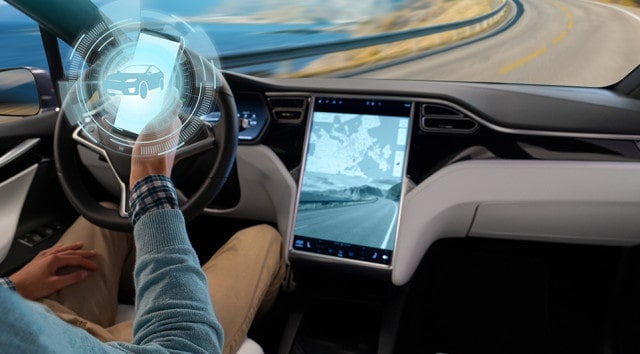
Autonomous driving technology is making driving more convenient. Various driver-assist systems such as lane assist and frontal collision prevention technologies are providing greater convenience. Future automobiles with fully autonomous driving will enable people to do more in cars, such as work or watch a movie, instead of driving.
That's why automakers are focusing on providing an outstanding in-vehicle experience when developing their cars. And one of the essential elements for providing this special experience is the automotive display. When searching information for work or watching a movie, a large and easy-to-use, high-quality screen is a must. Today, let's take a look at how the automotive display trend is changing.
What are automotive displays?

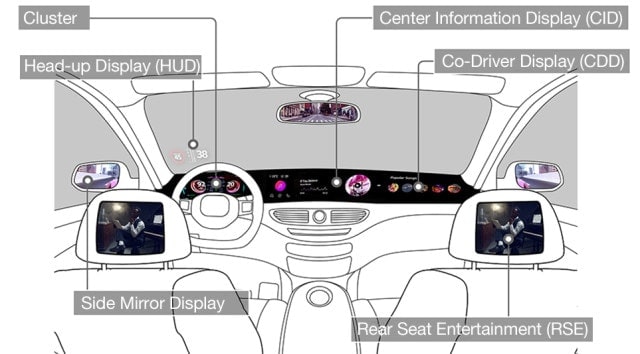
Various automotive displays provide information to the driver
Automotive displays refer to screens that provide information about the car's interior and exterior conditions. They include the 'Center Information Display (CID)' that shows the overall information of the vehicle, the 'cluster' that shows the speed and engine status to the driver, and the head-up display (HUD) that displays information through a reflection on the windshield. In addition, various other displays provide necessary information to drivers and passengers.

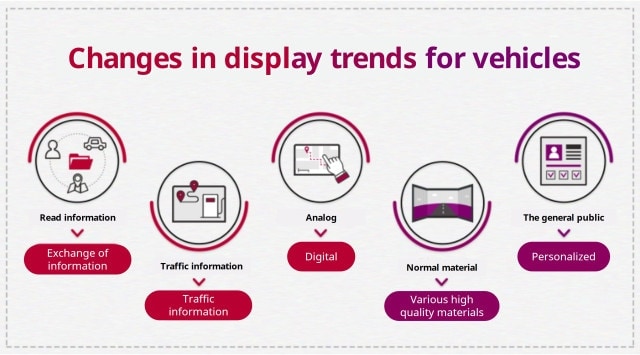
A chart showing changes in automotive display trends
As cars shift to autonomous driving, automotive display trend is also changing to meet the needs of consumers. So, let's take a look at how the trend is changing.
Switching from one-way to two-way communication

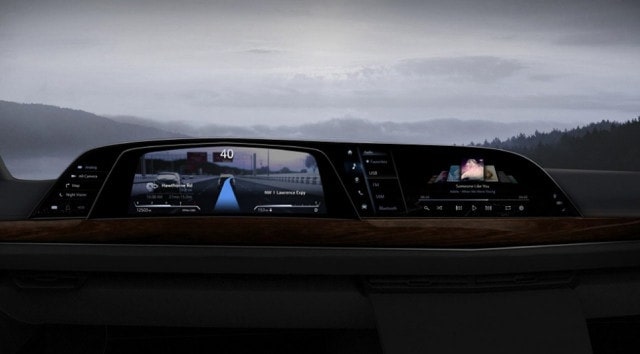
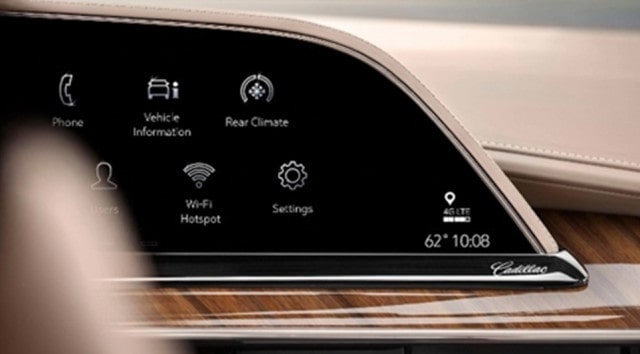
LG Electronics automotive display in a Cadillac Escalade providing various driving information
In the past, we could only 'read' the traffic information necessary for driving. It was a one-way communication where we only received the information. But as automotive displays advance, we are entering an era where the driver, the vehicle and things outside the vehicle are exchanging information.
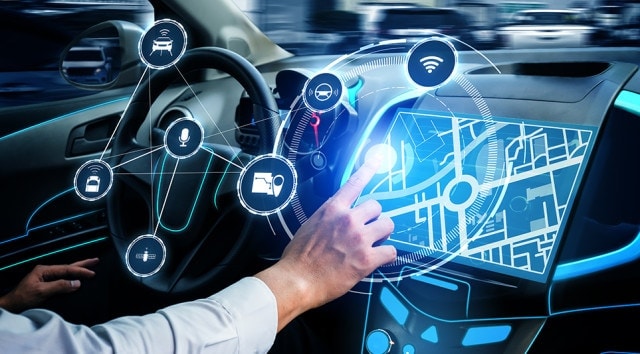
One example of this technology is navigation. If you input your destination, the vehicle searches and suggests the optimal route. If there's a traffic jam, or if the driver requests an alternate route, the system finds alternate routes with best one on top. In addition to traffic information, temperature, and external environment of the vehicle, automotive displays in recent cars feature new technologies such as voice, facial, and gesture recognition. In other words, it acts as a medium between the driver, vehicle, and external elements to enable continuous communication and exchange of information.
Shifting from a source of basic traffic information to more diverse range of information

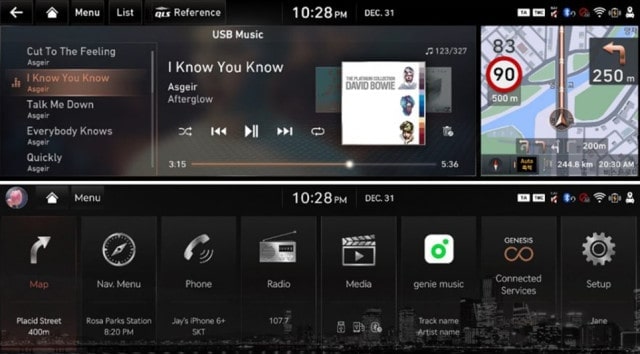
Genesis Infotainment UX Design (Source: Genesis website https://www.genesis.com/)
In the past, only limited information related to driving and traffic could be viewed on the automotive displays. But now, various types of information are updated within the car. In the future, cars will automatically provide information tailored to the driver. This will happen not only on personally owned vehicles, but in car sharing services as well.
Cars will identify the driver and the passengers, and provide various information tailored by age, day of the week and time. Let's assume an office worker gets in a car on Monday morning during rush hour. The display will show latest economy news, current road conditions, and weather forecast for the evening. If high school students wearing school uniforms get in the car on a weekday afternoon, it will show ads for academic reference books, a delicious dumpling ad, a game ad, or new songs by a K-pop group. Automotive displays will provide curated information like a smartphone. It will deliver a smartphone-like experience, or even more customized information, in your car.

Switching from analog to digital

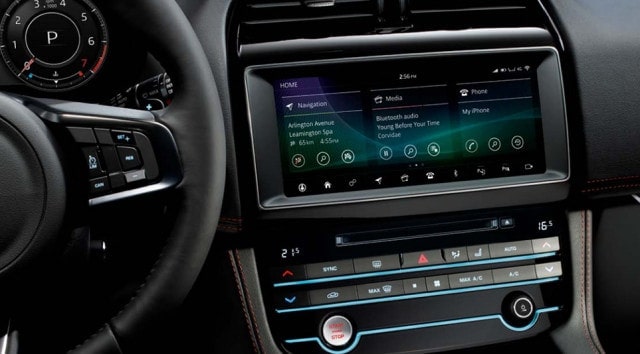
LG Electronics' digital display on a Jaguar F-PAC (Source: Jaguar Korea website https://www.jaguarkorea.co.kr)
People obtain more than 80% of external information through vision. That's why recent automotive displays are switching from analog to digital to provide information to the driver faster and more accurately. Latest automotive displays have fewer physical buttons and use a touch interface such as smartphones and tablets for easier use.
Their designs are changing to mee the consumers' needs. The screen sizes are getting bigger and curved flexible displays are being adopted to deliver a more elegant interior.
Switching from common material to high-end material

LG Electronics' automotive display in 2021 Cadillac Escalade (Source: Cadillac website www.cadillac.com)
Automotive displays will become the center of a car's interior and a hub. Whatever the passenger wants to do in the car, they will need to touch the automotive display because everything from searching information to starting entertainment all starts with the display.
That's why the material and form of displays that meet the consumers' needs is becoming more important. Automotive displays are featuring elegant look as well as materials and design that meet the user's personal preference. This includes various form factors including Plastic OLD or Rollables.
Switching from general information to personalized information

When the vehicle connects to other devices outside the vehicle, the automotive display serves as a bridge for connectivity services. Unlike the past when only more common features such as navigation and radio were available, automotive displays are now used to provide convenient, personalized services to the passengers.
The driver or passenger can connect their own smartphones to check their schedule or work while moving. They can listen to music tailored to their personal profile, or find information relevant to them on maps. This personalized display allows passengers to change the settings to their preference with a touch of a button on the display.
As displays make up a bigger portion of activities in the car, displays are getting bigger to be able to show more information.
CID that connects cars to people

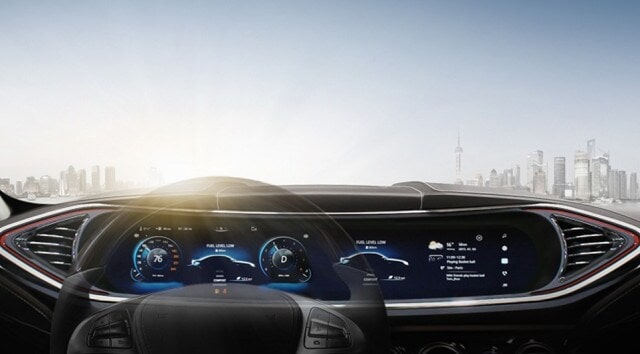
Display that integrates cluster, AVN, and CID
CID (Center Information Display) is the most well-known automotive display, It provides information about a vehicle's driving status and entertainment. Among automotive displays, it is the primary example that serves as a Human Machine Interface (HMI).
One of the characteristics of CID is its outstanding accessibility from being located at the center of the vehicle. As they provide a wide range of convenient features such as audio, video, navigation, HVAC and Bluetooth controls, convenient and intuitive user experience is a must.
LG Electronics CID that gain international standard quality certification

LG Electronics VS Division researchers working on CID projects
LG Electronics is also developing CID through its VS (Vehicle Component Solutions) Division, and works closely with global premium automakers. CIDs developed by LG Electronics is already equipped on finished vehicles, and the list of models with LG CID will continue to expand.
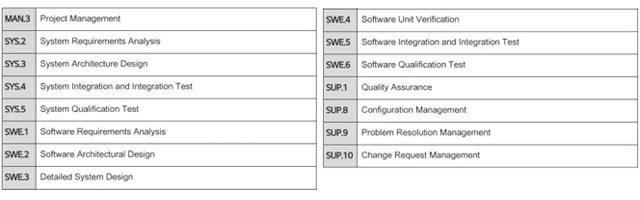
The outstanding quality of LG Electronics' CID has been certified by the international standard quality certification model known as A-SPICE. A-SPICE (Automotive Software Process Improvement and Capability dEtermination) is an internationally-recognized quality certification model created by European automakers to evaluate software capabilities such as design, verification, and management, and classifies quality in different levels.

Software process that passed A-SPICE Capability Level 2 certification
LG Electronics CID acquired A-SPICE certifications in 2016 and 2019, and most recently, it acquired Capability Level 2 certifications in January of 2021. A-SPICE Level 2 certification is proof that LG Electronics' CID development process meets the international standards in terms of quality control and monitoring, and is a recognition of LG's highly reliable development capability and quality.
LG Electronics CID recognized for excellence by global automakers

Awarded Excellent Vendor Award from Renault Group
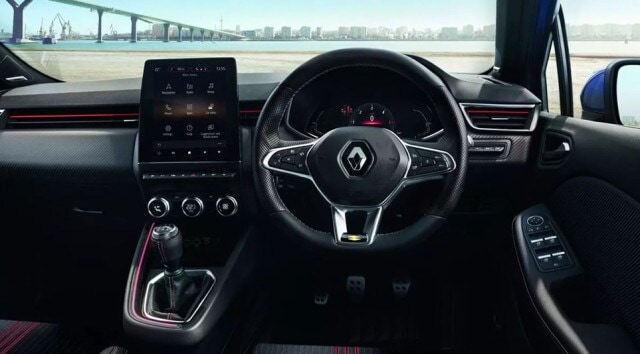
In addition to A-SPICE certification, LG Electronics was selected as an excellent automotive display vendor in the Excellent Vendor Awards three times in 2014, 2017 and 2020. The 9.3-inch CID supplied to the Renault Group was developed using LG Electronics' proprietary technology and removes any gap between the screen and the touch panel. It was evaluated to have excellent legibility, visibility, and design.
Moreover, LG Electronics CID was also awarded the Inspiration Award at the Daimler Supplier Awards by Daimler Automotive Group in 2020. Following this award, LG Electronics Digital Cockpit was awarded the Innovation Award at Supplier of the Year Awards Ceremony from GM.

Image of LG Electronics CID on Renault vehicle
As you can see, LG Electronics CID has proven its outstanding competitiveness to many global automakers. In 2021, LG Electronics will continue to advanced its CID to be the best HMI (Human Machine Interface) that connects you to the automobiles of the future.
- Previous
- Next
The URL has been copied to the clipboard.