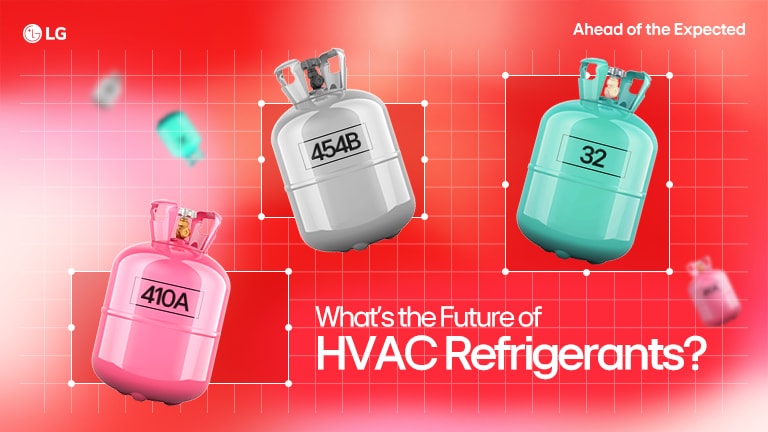
LG's residential single-split and multi-split air conditioners include R-32 as a key refrigerant option, alongside R-410A models that remain available in some markets. EPA identifies HFC-32 as an acceptable low-GWP alternative for small self-contained, small split, single and multi-split, and VRF systems, which shows that one refrigerant can scale from a single room to multi-zone applications.[1] For larger central systems such as chillers, LG and other manufacturers deploy a range of low-GWP refrigerants matched to the class; for example, EPA lists R-513A, R-450A, HFO-1234ze, and HFO-1233zd among the acceptable substitutes in chillers.[1]
Efficiency is measured differently from one product to the next because a room air conditioner and a large central plant serve very different needs, and each is rated by the standardized efficiency metric suited to its type. The key point is that the refrigerant and the system design work together: R-32 keeps the climate impact lower than higher-GWP alternatives while still meeting the efficiency standards that apply to each application.[1]
[1] https://www.epa.gov/sites/default/files/2021-02/documents/transitioning_to_low-gwp_alternatives_in_res_and_com_ac_chillers.pdf