Part 27. [Mobility Inside] How Do Cars Communicate?

by Soonin Chung Professional Researcher, Vehicle component Solutions Company, LG Electronics
MobilityBlog24/10/2022

Automatic cars, big data, AI, cloud and 5G: a combination of all these would be the future of cars. LG Electronics Vehicle components Solutions is relentlessly working to provide customers best in-vehicle experiences. Meet the future of cars experienced by one of our senior researchers, Soonin Chung in ‘Mobility Inside’.


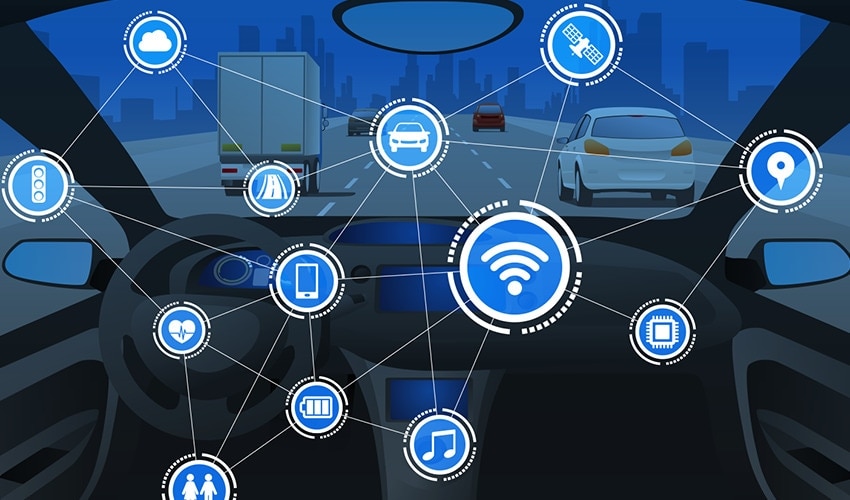
The development of Wireless communication technology enables real-time communication between people. In addition, it combines communication and artificial intelligence technology to connect home appliances and people. What if there is a technology that connects people and cars? A technology that detects objects, prevents collisions, and warns about blind spots. At the heart of this technology are V2X (Vehicle to Everything) and TCU (Telemetric Control Unit). Let’s find out how these are making in-vehicle experiences better.


Smartphones are called small computers and provide many conveniences in our daily lives. It is said that if there were no smartphones, the technological development of modern society would have been slower than it is now. However, cars have recently been attracting attention as moving computers. TCU and V2X technology, communication equipment for vehicles, are the core of future cars. Let's take a closer look at what the new in-car experiences these two will bring.


※ The images in this article have been created for advertisement purposes only and might differ from actual images.

V2X: The Core Technology of Automatic Cars

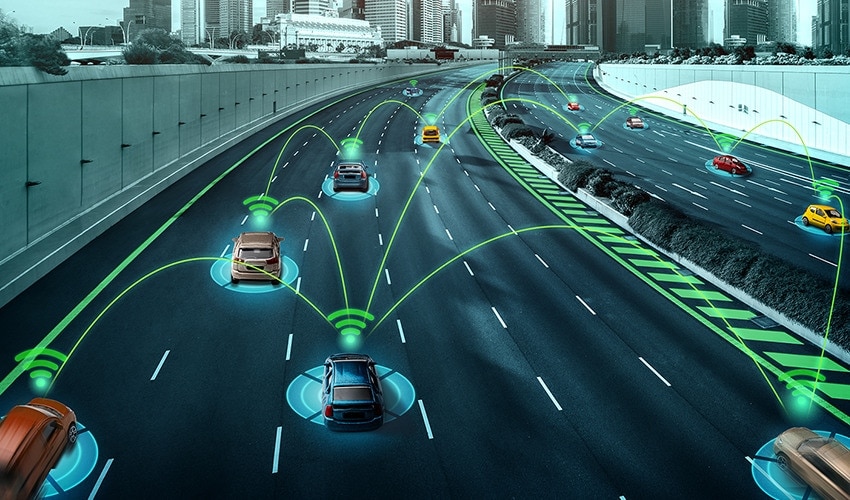
Communication technology, V2X, that exchanges information using wired and wireless networks

│ Communication technology, V2X, that exchanges information using wired and wireless networks (Source: Shutterstock)

V2X refers to a communication technology in which a car exchanges information with various objects using a wired or wireless network. It includes all forms of communication technology that can be applied to vehicles on the road. It is considered the core technology for automatic vehicles. It reflects real-time traffic and detects objects in front of the vehicle to significantly improve safety.


Automatic cars are receiving a lot of attention due to the several comforts they provide to their users. At the same time, they also make driving safer. IHS Markit has estimated a demand of 33.7 million automatic cars in 2040. [Source]

What Can a V2X Be Connected To?

V2V shares speed information between vehicles and detects potential dangers in the direction of travel

│ V2V shares speed information between vehicles and detects potential dangers in the direction of travel (Source: Shutterstock)

V2V (Vehicle to Vehicle)

V2V refers to wireless communication between two vehicles connected via a network. To put it simply, it means that two cars can communicate with each other. V2V serves the purpose of preventing collisions between two cars and avoiding accidents. It helps to exchange information on speed and warns you about potential dangers. It supports electronic sensors for emergency brakes and gives over taking warnings.

V2I (Vehicle to Infrastructure)

Connection to infrastructure is possible too. V2I, in general, is used to comprehend the traffic situation, control the traffic signals, and to control the flow of traffic. The most archetypal example of V2I technology is the “fast route” we have on navigation systems. Besides the school zone, speed limit warnings that pop up on average navigation systems, it warns you about large vehicles, construction sites, etc., so that you can avoid traffic jams and accidents.

V2N (Vehicle to Nomadic)

V2N enables the user to exchange information between a smartphone and a vehicle. The vehicle alerts both the driver and the pedestrian if the vehicle gets too close, forestalling any accident. Plus, you can monitor the state of the vehicle through your smartphone. On top of that, it can notify you of available parking spots, and inform electric cars about charging stations, etc.

5G and WI-FI, V2X at Crossroads

V2X: largely uses two networks

│ V2X: largely uses two networks (Source: Shutterstock)

V2X can be largely divided into two types: the WAVE (Wireless Access in Vehicle) type DSRC (Dedicated Short Range Communication), which operates with the help of a Wi-Fi, and cellular system, which operates on the basis of mobile communication, also commonly known as LTE or 5G.


An example of DSRC-type WAVE is the high-pass communication module, which is an automatic toll collection system. It is the principle of communication between the roadside base station and the vehicle terminal located on the roadside. There is a cost burden because the base station and the vehicle have to be in close proximity and the roadside base station must be installed all over the road. However, WAVE has already proven its stability through long-term development and investment and has the advantage of being introduced immediately as technology standardization has been completed.


The other method of communication, like 5G, is based on cellular systems. V2X, which operates on mobile communication is also called C-V2X. Unlike WAVE, mobile communication has the leverage of relying on cell towers for use. It is characterized by fast data transfer, high stability, support for large-scale connection, and delays are shorter. Short delays are an inevitable aspect of automatic driving because it is crucial to perceive and respond to the traffic situation quickly. Nonetheless, since it is a newer technology compared to WAVE, it requires considerable scrutiny from stabilization and commercialization points of view.

TCU, the Bedrock of Vehicle Communication

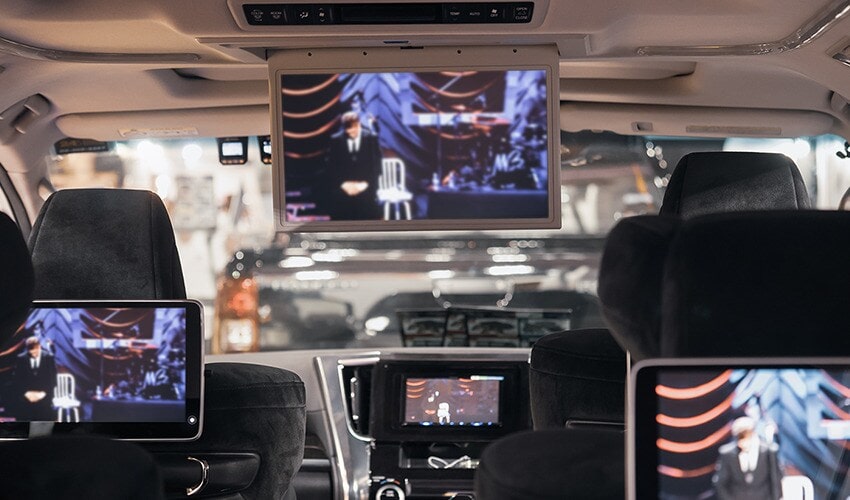
In-vehicle experience made rich by TCU

│ In-vehicle experience made rich by TCU (Source: Shutterstock)

Telematics refers to the combination of computer and mobile communication technology communication equipment based on the Telematic Control Unit (TCU). TCU is required for the operation of V2X, which is responsible for external communication. TCU acts as the brain of a car. It guesses the location of a vehicle via Wi-Fi or GPS, links you to nearby vehicles, and exchanges information for a safer driving experience.


TCU is also at the heart of infotainment technology. Thanks to TCU, you can enjoy high-definition movies inside your car, and next-generation technology like Virtual Reality and Augmented Reality. With the advancement of technology, vehicles are being updated with the newest technology. TCU-based infotainment systems are now providing passengers the pleasure of video conferencing and vlogging, etc.

The Champion of Growing Telematics Industry

In this way, automobiles are playing a role more than just a means of transportation. The telematics industry, which is attracting attention as future mobility communication, is an area in which not only automobiles but also audio equipment and home appliance companies are investing. LG Electronics surpassed Germany's Continental to take the first place in the global telematics market in 2021. According to market research firm Counterpoint’s 2017-2021 survey results, last year LG Electronics TCU market share exceeded 30% for the first time resulting in its jump to the first place. [Source]

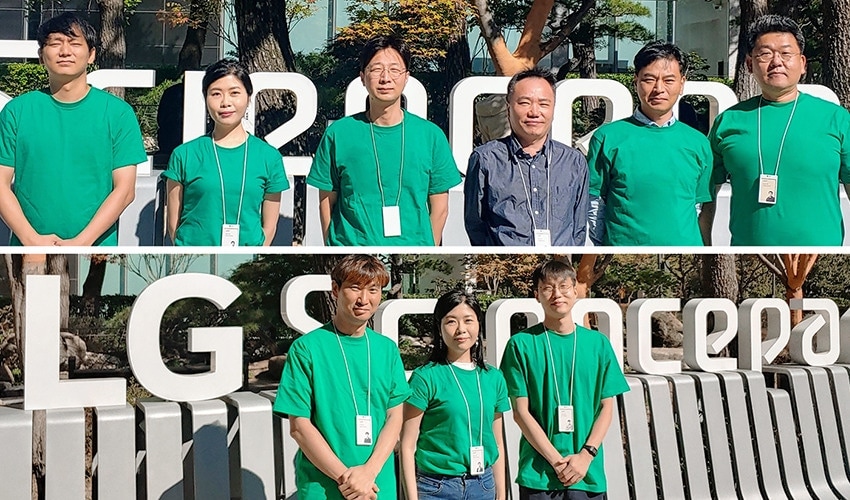
LG Electronics Telematics Transceiver Module Team

│ LG Electronics Telematics Transceiver Module Team

V2X, based on TCU, is an essential element of future mobility and a future companion of humans. LG Electronics is working hard with the LG Electronics Telematics Development Team to enable more customers to experience next-generation mobility through new telematics technology. Please look forward to LG Electronics' telematics and various electronic component solutions that will be installed in more global premium automobiles in the future.